Learning
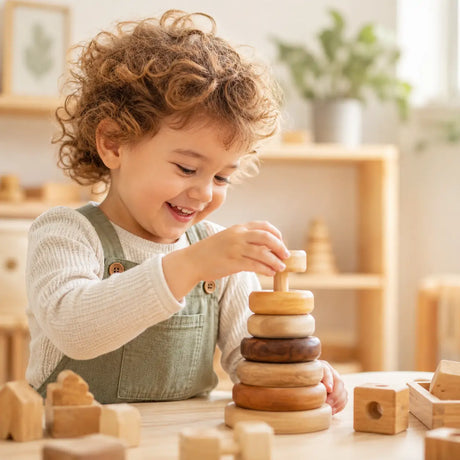
Play is how little minds make sense of the world. Explore expert tips, activity ideas, and age-based guidance to support your child’s learning and curiosity every day.
Explore all articlesFind Play by Age & Stage
Pick your child’s age to see what they’re working on, the toys that suit it best, simple activity ideas, and guides worth reading.
Discovering the World
The first year is all about sensory exploration, bonding, and big beginnings — reaching, mouthing, and learning that actions make things happen.
Milestones
- Focuses on faces and high-contrast patterns
- Reaches, grasps, and mouths objects
- Develops head control and rolling
- Responds to sounds and voices
- Begins to grasp cause and effect
Recommended Toys
Activity Ideas
- Tummy time with a mirror or contrast cards
- Sensory play with different textures
- Sing simple songs and read together
- Gentle rolling and reaching games
- Shake, rattle, and explore
On the Move
Newly upright and mobile, one-year-olds love to carry, fill, empty, and figure out how things fit — the earliest problem-solving.
Milestones
- Pulls up, cruises, and takes first steps
- Fills containers and empties them again
- Puts objects in and takes them out
- Points, waves, and imitates actions
- Says first words, understands more
Recommended Toys
Activity Ideas
- Filling and dumping games with baskets
- Simple posting and dropping toys
- Push-along walking play
- Naming objects as you play
- Big stacking rings and nesting cups
Imitating & Pretending
Two-year-olds want to do what they see you doing — cooking, feeding, loading, and driving — and can follow short sequences of steps.
Milestones
- Runs, climbs, and kicks a ball
- Copies adults and older children
- Follows two-step instructions
- Sorts by shape and color
- Uses short two- to three-word phrases
Recommended Toys
Activity Ideas
- Pretend cooking and feeding toys
- Simple shape sorting and matching
- Two- and three-piece knob puzzles
- Threading large wooden beads
- Naming and sorting by color
Pretend & Early Math
Pretend play gets inventive and early math thinking appears — counting, patterns, quantity, and a real interest in letters and numbers.
Milestones
- Builds elaborate pretend stories
- Counts a few objects one by one
- Recognizes and extends simple patterns
- Completes more complex puzzles
- Shows interest in letters and numbers
Recommended Toys
Activity Ideas
- Open-ended building projects
- Counting and pattern games
- Storytelling with figures and animals
- Matching letters and numbers
- Sorting and grouping collections
Rules, Logic & Building
Four- and five-year-olds plan ahead, follow rules, and will happily return to the same project across several days.
Milestones
- Holds a goal in mind and plans ahead
- Plays simple rule-based games
- Builds and engineers with more parts
- Sorts, sequences, and reasons
- Returns to projects over several days
Recommended Toys
Activity Ideas
- Simple memory and matching games
- STEM building and engineering play
- Balance and coordination challenges
- Multi-step building projects
- Early logic and sequencing games
Browse Learning
Why Play Is the Foundation of Learning
Discover how everyday play builds the fine motor, language, and problem-solving skills children carry into school and life.
Read the Full Guide →Latest Articles
View all articles →Montessori at Home: A Simple Start
Easy ways to bring Montessori principles into your everyday routine.
Math Skills Through Play
Fun, hands-on activities that build early math confidence.
Building Focus and Independence
How open-ended play helps children build concentration and confidence.
Are Wooden Toys Safer Than Plastic?
An honest look at materials, small-parts risk, finishes, and footprint.
Popular Topics
Shop by Learning Goal
Find toys and tools that support the skills your child is building.
Shop All Learning Toys →Frequently Asked Questions
What is Montessori-inspired play?
How do I choose the right toys for my child?
What age are your toys best for?
How can I support learning at home?
Are your toys safe and non-toxic?
Where can I find more activity ideas?
Grow Learning Moments
Get play ideas, learning tips, and special offers delivered to your inbox.