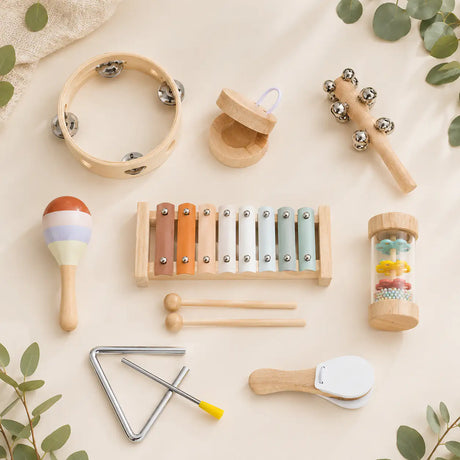
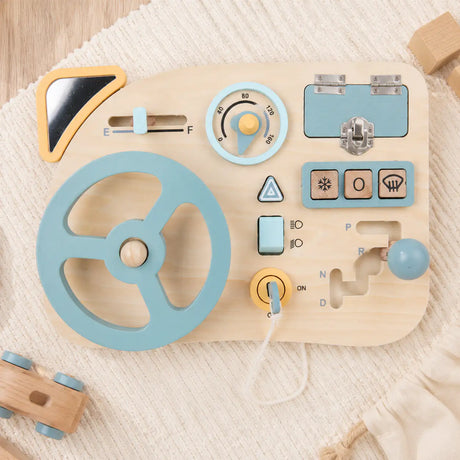
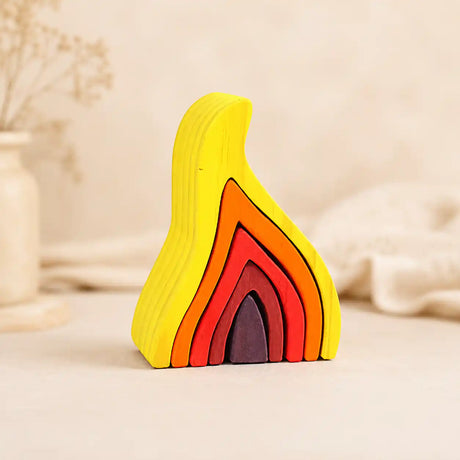
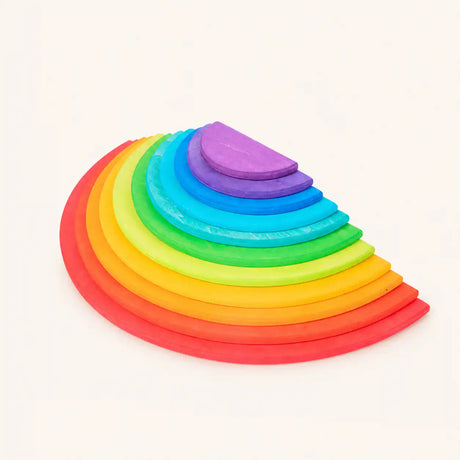
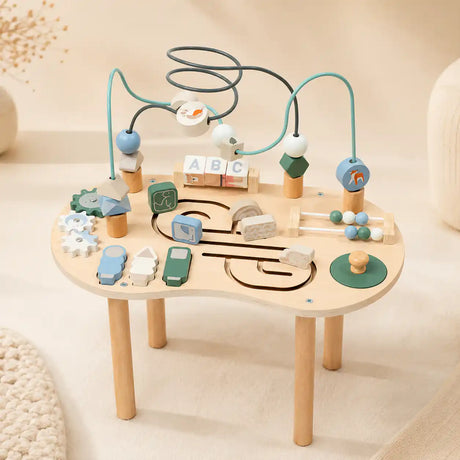
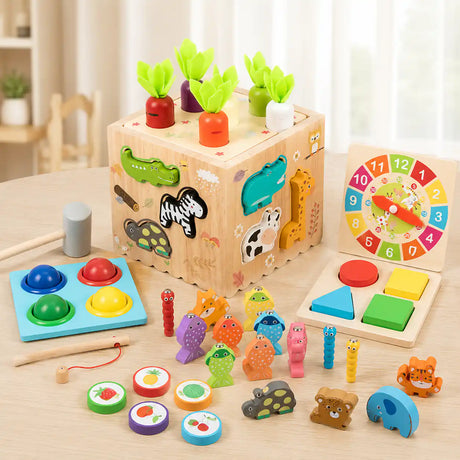
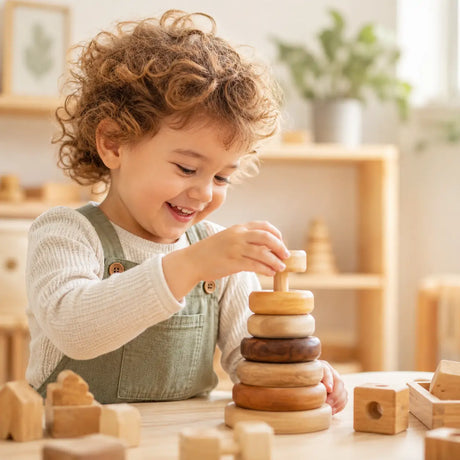
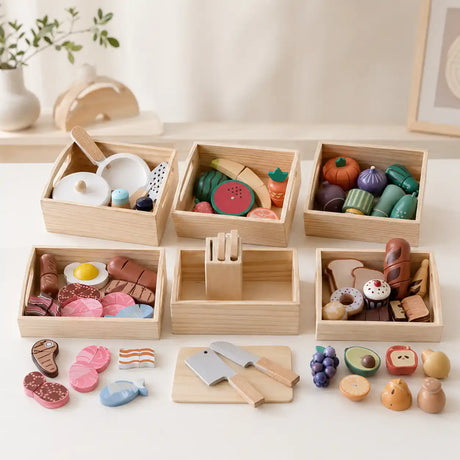
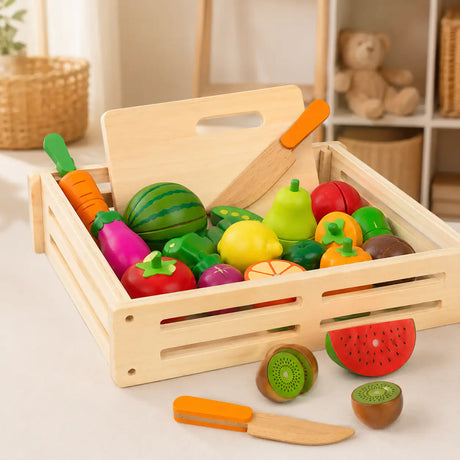
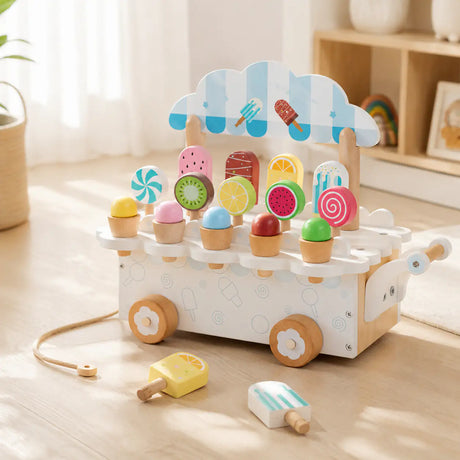
Slice, serve, and share — our wooden play food and pretend kitchen sets turn everyday routines into rich imaginative play. From cutting fruit to market carts and tea-party cakes, each set invites toddlers into stories of their own making.
 2-3 year30% off
-
![Wooden Knife Set variant with pot, pan, utensils, and cutting board for pretend kitchen play]()
![Wooden Fruit Set variant with watermelon, banana, strawberry, kiwi, orange, and avocado]()
![Wooden Vegetable Set variant with eggplant, mushrooms, corn, cucumber, and pumpkin]()
![Wooden Meat Set variant with steak, salmon, ham, bacon, egg, and sausage pieces]()
![Wooden Bread and Bakery Set variant with croissant, baguette, donuts, cupcake, and macaron]() 3-4+ yearUp to 30% off
3-4+ yearUp to 30% off -
1-2 year29% off
-
2-3 year30% off
-
1 year30% off
-
2-3 year30% off
-
1-2 year30% off






Why Play Kitchens Earn Their Space
Cooking is the household activity children witness most and are least able to join. A play kitchen hands them a version they can run entirely themselves — which is why these sets tend to hold attention for years rather than weeks.
- Language — food names, actions, and the whole vocabulary of hosting
- Sequencing — wash, chop, cook, serve, in an order that has to make sense
- Social play — serving someone else requires attending to what they want
- Food familiarity — handling vegetables in play often makes them less alarming at the table
What's in This Collection
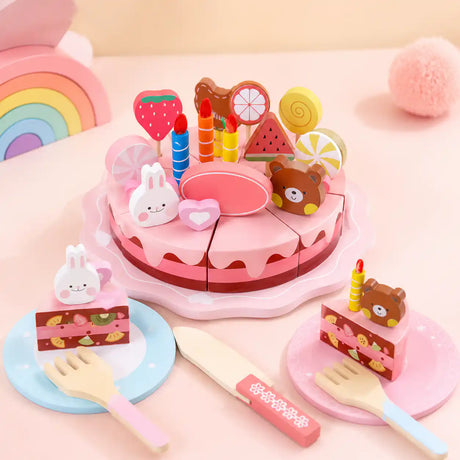
Cutting fruit and vegetable sets, birthday cake and tea party sets, market and harvest carts, ice cream carts, and food lacing toys — Montessori play food and kitchen toys in natural wood, most joined with fabric hook-and-loop so they slice apart and reassemble.
Play Food & Kitchen Questions
What comes in a wooden play food set?
Our play food sets range from cutting fruit and vegetables to cakes, market-cart produce, and lacing food — wooden "fake food" toys with realistic shapes and colors that slice, serve, and reassemble. Each set lists its exact pieces and toy food count on the product page.
What age is play food for?
Simple sets work from around two, once pretend play is established. Sets with knives, smaller pieces, or lacing cords are usually graded higher — several in this collection start at three. Each product page lists its own guidance.
Are toy knives safe for toddlers?
Wooden play knives are blunt and designed for the fabric join in the fruit, not for cutting anything real. They're safe under supervision at the graded age. They're also good preparation for using a real child-safe knife later, which Montessori practice introduces surprisingly early.
Does play food help with picky eating?
It can help, though it isn't a cure. Handling and naming foods in a no-pressure setting builds familiarity, and familiarity is a genuine factor in willingness to try. Treat it as one small input among many rather than a strategy.
What skills does pretend cooking teach?
Sequencing, vocabulary, social turn-taking, and fine motor control from slicing and assembling. It also gives children a way to practice hospitality — offering, asking, serving — which is more socially sophisticated than it looks.
Do you need a full play kitchen unit?
Not at all. A set of food and a basket works perfectly well on a floor or table, and many families find the food gets more use than the furniture. Start with the food and add a kitchen only if the play is clearly asking for one.
Adult supervision is recommended. Some sets contain small parts and cords; see each product page for age guidance.
Read more about Play Kitchen & Pretend Food Show less
You May Also Like
View all-
1 year29% off
-
1 year31% off
-
1 year30% off
-
1 year31% off
-
2-3 year31% off
-
1-2 year31% off
-
3-4+ year31% off
-
3-4+ year30% off
-
1 year30% off
-
2-3 year30% off