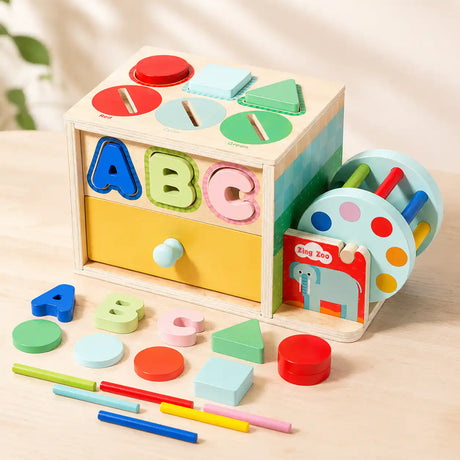
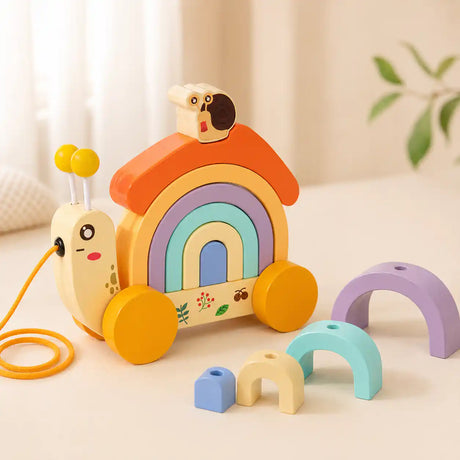
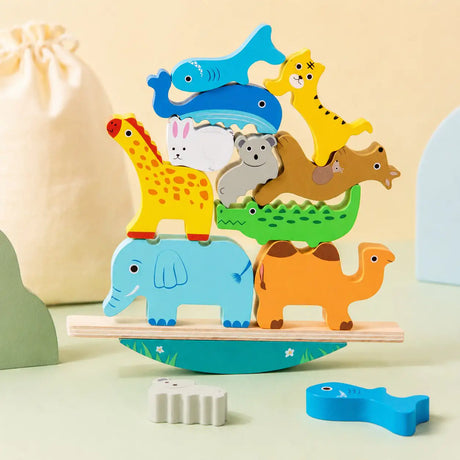
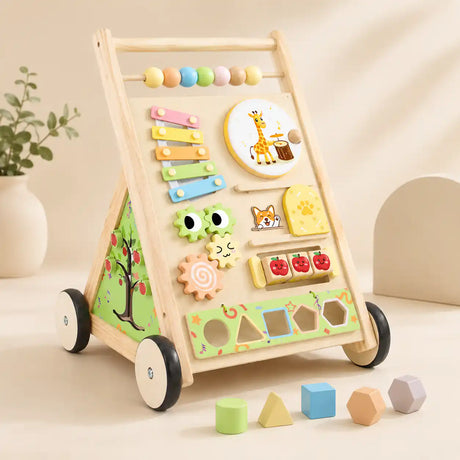
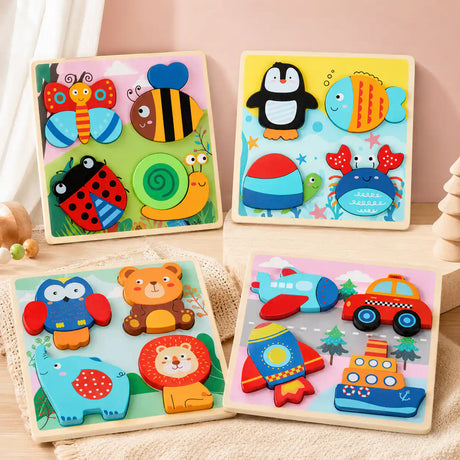
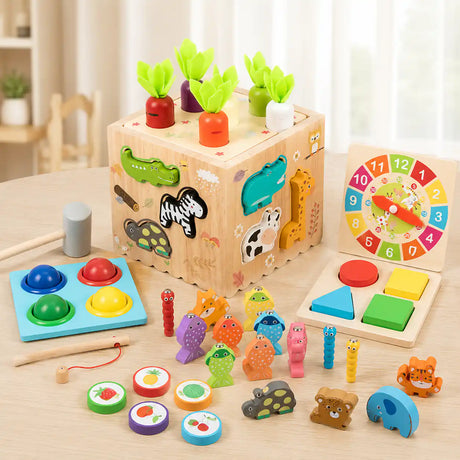
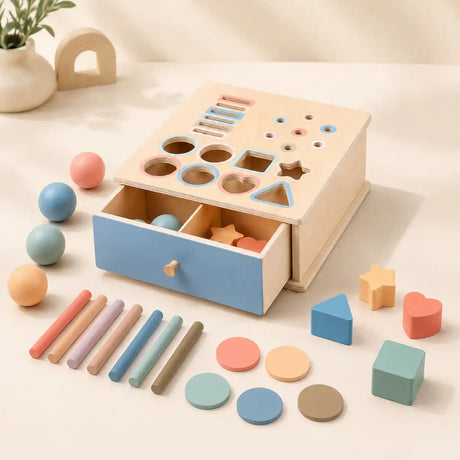
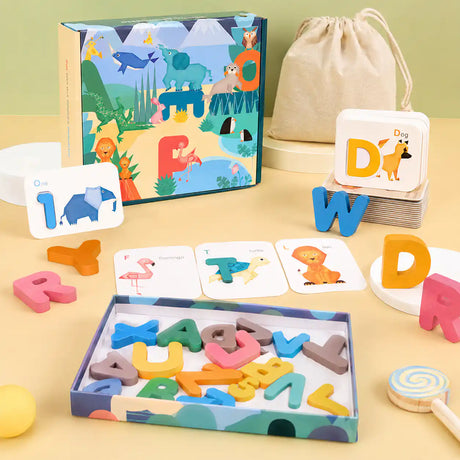
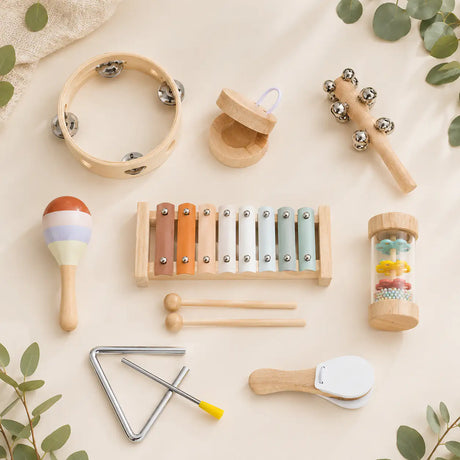
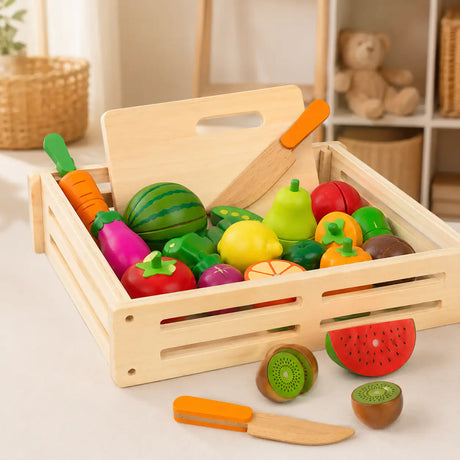
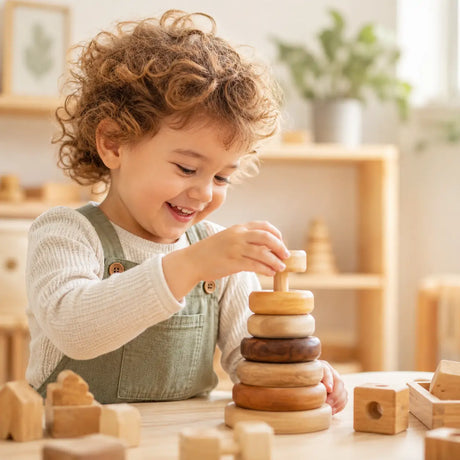
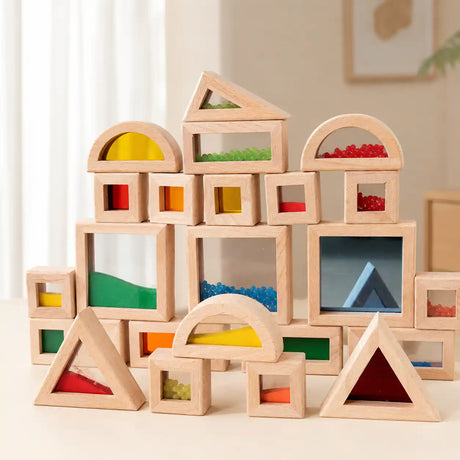
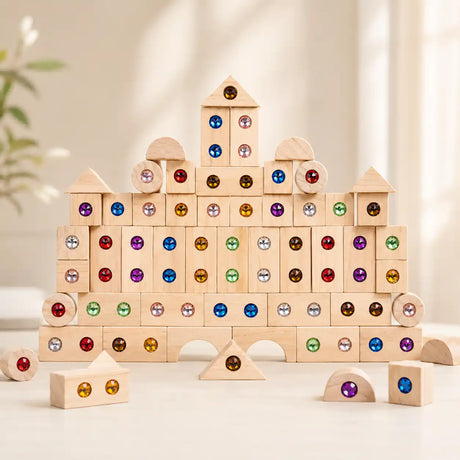
There's a reason wooden building blocks have stayed in playrooms for generations — they're the original open-ended toy. This collection brings together JuniSprouts' block and construction sets, from chunky gem and sensory blocks to number blocks and loose-parts stackers that a child can build, balance, and rebuild a hundred different ways.
 2-3 year29% off
-
3-4+ year31% off
-
2-3 yearSold out
-
3-4+ year30% off
-
2-3 year30% off
-
1-2 year30% off
-
2-3 year31% off
-
1-2 year30% off
-
1-2 year30% off
-
1-2 year31% off










Why Building Blocks Matter
Blocks are one of the few toys a child never really outgrows — they just play with them in more complex ways. A one-year-old topples a tower; a four-year-old plans a castle. The toy stays the same; the thinking grows.
- Spatial reasoning — fitting, balancing, and arranging builds early geometry
- Fine motor control — placing and stacking strengthens hands and coordination
- Early math — counting, comparing, and sorting by size, color, and shape
- Persistence and problem-solving — rebuilding after a tower falls is where the learning lives
What's in This Collection
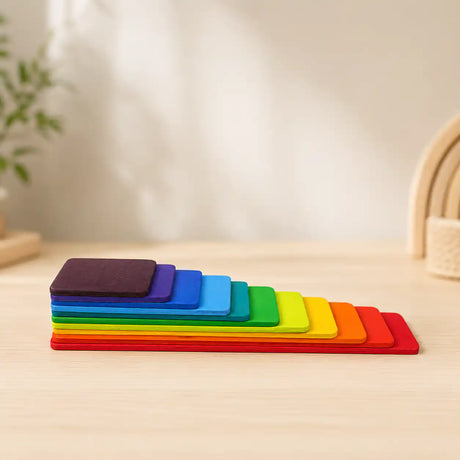
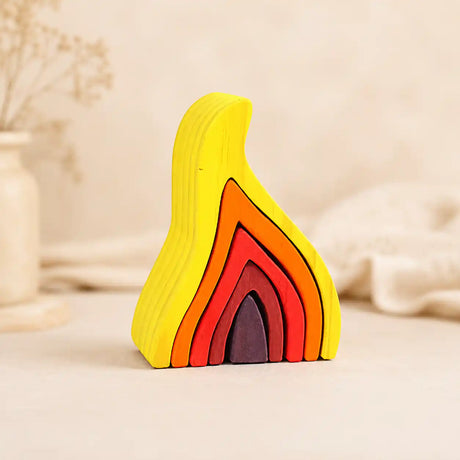
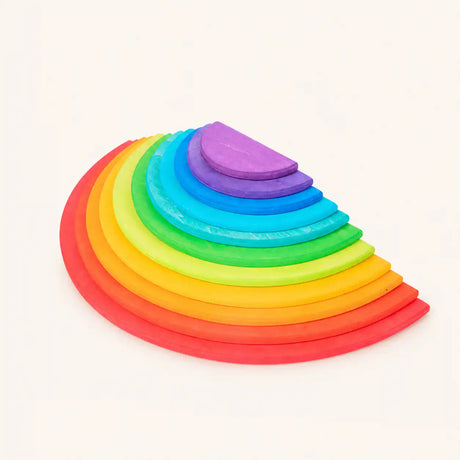
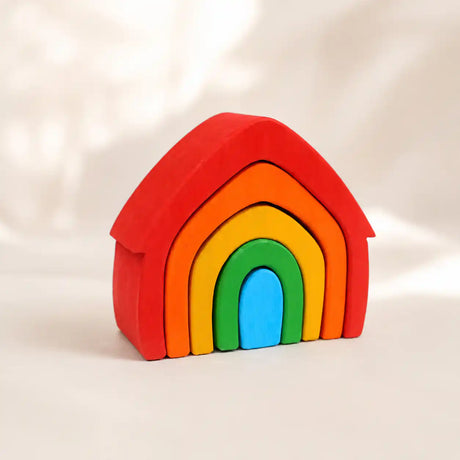
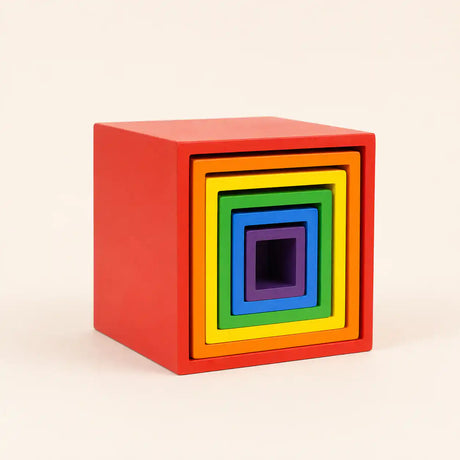
Wooden gem building blocks, sensory blocks, and stacking number blocks, alongside open-ended nesting cubes, geometric stackers, arches, and loose-parts sets. Pieces are chunky, lightweight, and sized for little hands — easy to grip, satisfying to stack, and calm to look at on a shelf.
Questions About Wooden Blocks
What age are wooden building blocks for?
Blocks suit an unusually wide range. Chunky sets work from around eighteen months for simple stacking and toppling, while three- and four-year-olds use the same pieces for planned building, patterns, and pretend scenes. Each product page lists its own age grading.
Are wooden blocks good for 3 year olds?
Very — three is often the age blocks really come into their own. Children this age start building with intention, counting and sorting pieces, and telling stories around what they've made. Number and gem blocks add early math to the play.
Do you have large wooden blocks for little hands?
Our block and construction sets use chunky, lightweight pieces designed to be easy for toddlers to grip and stack. Larger pieces also make early building more successful, which keeps young children engaged rather than frustrated.
What can children build with them?
Towers, walls, bridges, patterns, enclosures for small animals, and whatever their imagination invents. Open-ended pieces like arches, semicircles, and nesting shapes especially reward creative, no-wrong-answer building.
Are wooden blocks educational?
Quietly, yes. Block play supports spatial thinking, early math, fine motor skills, and persistence — all through self-directed play rather than instruction.
Adult supervision is recommended. Age guidance and full details are on each product page.
Read more about Wooden Building Blocks Show less
You May Also Like
View all-
1 year29% off
-
1 year31% off
-
1 year31% off
-
1 year30% off
-
1-2 year31% off
-
1-2 year30% off
-
1 year30% off
-
1 year30% off
-
2-3 year31% off
-
1 year30% off