"STEM toy" is on every toy box these days — but for a toddler, what does it actually mean? The good news: real STEM learning at this age looks nothing like a coding kit. It looks like a child stacking blocks, rolling a ball down a ramp, and asking "why?". This Toy Spotlight is part of our Skills & Development hub on what children learn through play.
Here's a plain-language look at what counts as a STEM toy for a toddler — and what to ignore.

Key takeaways
- STEM stands for science, technology, engineering, and maths — but for toddlers it means hands-on exploring, not gadgets.
- The best toddler STEM toys are often simple and open-ended: blocks, ramps, sorters, and stackers.
- Real STEM skills at this age are curiosity, cause and effect, problem-solving, and early maths.
- A toy doesn't need batteries, screens, or the word "STEM" on the box to build these skills.
- Follow the child's questions; wondering "what happens if…?" is the heart of it.
What does "STEM" mean for a toddler?
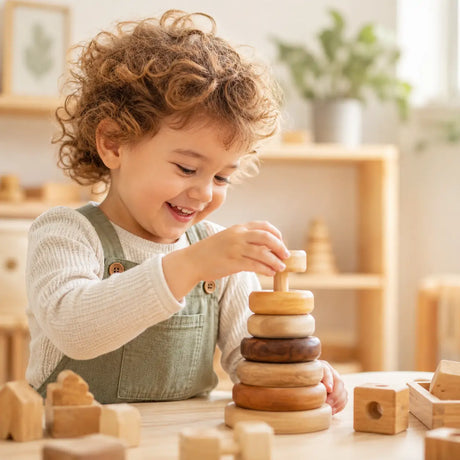
STEM stands for science, technology, engineering, and maths, and in the toddler years it's less a subject than a way of exploring. A one-year-old dropping a ball to watch it fall is doing science. A three-year-old building a tower that won't topple is doing engineering. Counting the pieces is maths. None of it requires a special product — it requires a child free to experiment and an adult happy to wonder alongside them.
A Wooden Dinosaur Ramp Racer is a simple cause-and-effect toy in this spirit: a child sets a car at the top, lets go, and watches it zig-zag down — picking up slopes, momentum, and "what happens if" with every run.

That's worth saying plainly, because "STEM" is now a marketing label as much as anything. A flashing plastic gadget with the word on the box often builds less real STEM thinking than a set of wooden blocks, because it does the interesting part for the child.

What makes a good toddler STEM toy?
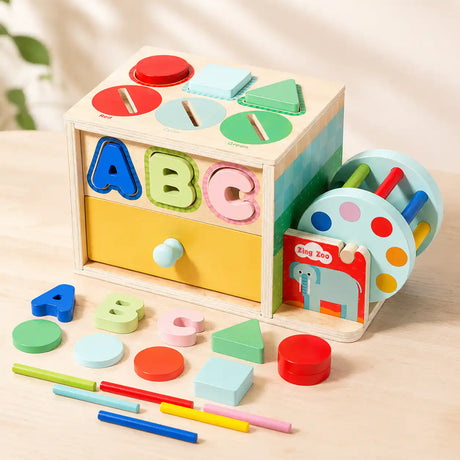
The best early STEM toys are open-ended and invite testing: build it, knock it down, try again a different way. Multi-activity toys that combine several cause-and-effect challenges are a natural fit — a wooden 6-in-1 activity cube offers gears, sliders, and sorting in one place. Browse our STEM-inspired toys for more.

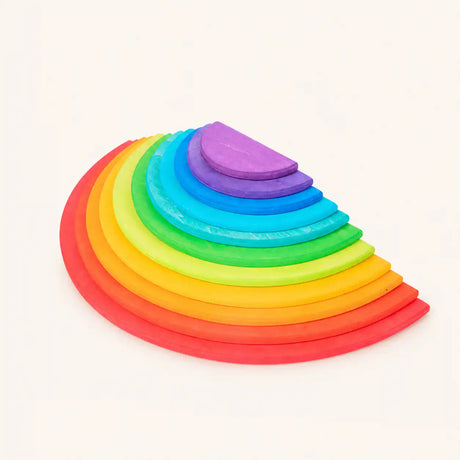
 Wooden Rainbow Semicircles
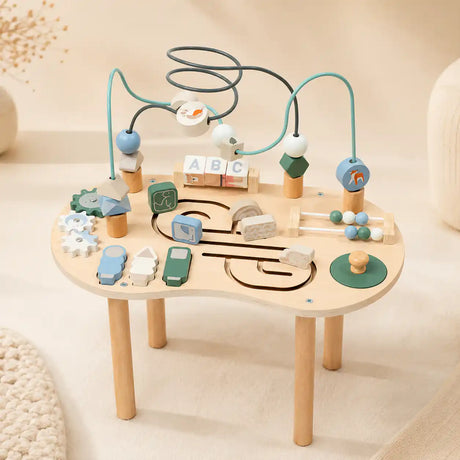
 Wooden Activity Table
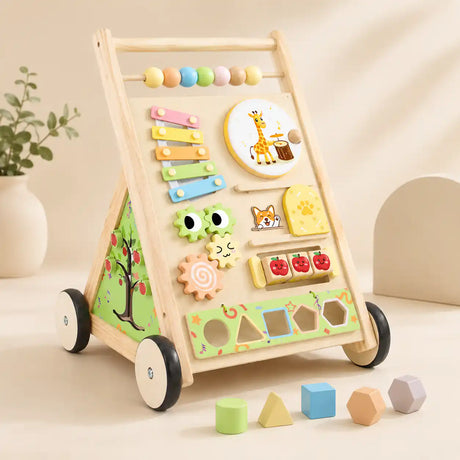
 Wooden 10-in-1 Activity Walker
 Wooden Rainbow Stacking Discs Set
 Wooden Animal Puzzle Stacker
Which STEM skill does which play build?
| Play | What the child does | STEM skill |
|---|---|---|
| Blocks & building | Builds, tests, and rebalances | Engineering, spatial reasoning |
| Ramps & balls | Rolls, drops, predicts | Science, cause and effect |
| Sorting & counting | Groups and compares quantities | Maths, classification |
| Puzzles & logic | Works out what fits where | Problem-solving, reasoning |
Do toddlers need "technology" toys?
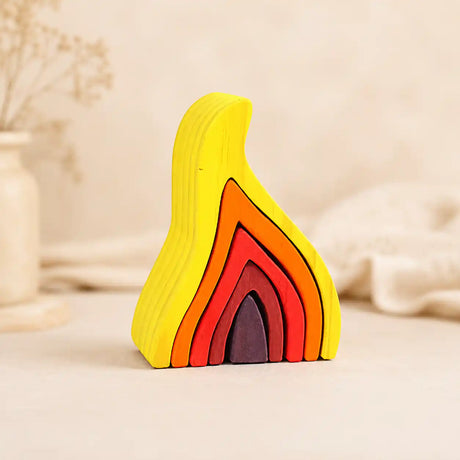
Not the electronic kind. The "T" in STEM makes parents reach for screens and battery toys, but at this age technology-thinking is really about tools and how things work — a scoop, a lever, a wheel, a latch. Hands-on toys that use simple mechanisms teach far more than a tablet does. Counting and early-logic play belongs here too; our counting & math toys support the maths side, and a wooden flame stacking puzzle turns balance and problem-solving into a game.

 Wooden Montessori 10-in-1 Learning Board
 Montessori Busy Book Set
 Wooden Rainbow Arch Stacker
How do I encourage STEM thinking at home?
Follow the questions. When your toddler wonders "what happens if I…?", give them the chance to find out safely, and resist jumping in with the answer. Narrate what you notice ("the big one rolled faster!"), offer open materials rather than one-answer gadgets, and let trial and error do the teaching. This is the same curious, hands-on spirit behind our guides to early math before numbers and what stacking and balancing teach.

Frequently asked questions
-
What is a STEM toy for a toddler?
For a toddler, a STEM toy is any toy that invites hands-on exploring of science, engineering, or maths ideas — blocks, ramps, sorters, and stackers. It doesn't need batteries, screens, or the word "STEM" on the box. -
Are STEM toys necessary for toddlers?
Not as a special category. Real STEM skills — curiosity, cause and effect, problem-solving, and early maths — grow through simple, open-ended play. A set of blocks often builds more than a flashing gadget. -
What skills do STEM toys build?
Early STEM play builds curiosity, cause-and-effect understanding, spatial reasoning, problem-solving, and number sense. These grow through building, rolling, sorting, and testing ideas. -
Do toddlers need electronic or tech toys?
No. At this age, technology-thinking is about simple tools and mechanisms — scoops, levers, wheels, latches — which hands-on toys teach far better than screens or battery toys. -
What are good STEM toys for 2 and 3 year olds?
Open-ended blocks, activity cubes, ramps and balls, sorting and counting sets, and simple logic puzzles. Look for toys that let the child test ideas rather than doing the interesting part for them. -
How can I encourage STEM thinking at home?
Follow your child's "what happens if…?" questions, let them experiment safely, narrate what you both notice, and offer open materials instead of one-answer gadgets. Trial and error is the real teacher.
A note on development: the skills and milestones described here are typical patterns, not targets. Children develop at their own pace, and this guide is not a substitute for medical advice. If you have any concerns about your child's development, please speak with your pediatrician.
Last reviewed: July 2026.
Sources & further reading
- American Academy of Pediatrics — Selecting Appropriate Toys for Young Children in the Digital Era (Healey & Mendelsohn, 2019)
- NAEYC — Ten Things Children Learn From Block Play