If one-year-olds are busy learning how their bodies move, two-year-olds are busy learning how the world is organized. They sort, match, line things up, and imitate everything you do. Choosing the best toys for 2 year olds means meeting that drive to make sense of things — with toys that invite sorting, building, threading, and the first sparks of pretend play.
This guide covers what two-year-olds are typically working on and the kinds of toys that support it, with real picks along the way. It's part of our Play by Age series, and a natural next step from our guide to the best toys for 1 year olds.
Key takeaways
- Two-year-olds are working on fine motor control, sorting and matching, early language, and the very beginnings of pretend play.
- The best toys reward a growing attention span: sorting sets, threading and lacing toys, chunky puzzles, and simple building.
- This is the age when imitation takes off — toys that mirror real life (play food, dolls, tools) become deeply engaging.
- Open-ended toys that can be used in more than one way grow with your child and get more play over time.
- Age labels are a safety starting point, not a rule — keep supervising, and store small parts safely.
What are 2 year olds working on developmentally?
At two, children are steadier on their feet and far more precise with their hands, which frees up energy for thinking. Many are beginning to sort objects by color or size, match pairs, and complete simple puzzles. Their fine motor skills are sharp enough for threading beads, stacking small blocks, and turning puzzle pieces to fit.
Language is booming too. A two-year-old is soaking up words and starting to combine them, so toys that invite naming and describing — animals, foods, everyday objects — do double duty. And you'll see the earliest pretend play emerge: feeding a doll, stirring an empty pot, or "talking" on a toy phone, as children replay the moments they see at home.
There's a big push for independence at this age, too — the famous "me do it!" of the twos. Two-year-olds want to pour their own water, carry their own bag, and copy real chores. Toys and simple real-life tasks that let them practice this build confidence and coordination, and they channel all that determination into something satisfying.

As always, every child arrives at these milestones on their own schedule, and there's a wide, normal range. Toys support what a child is already reaching for; they don't rush it. If you have questions about your child's development, your pediatrician is the best person to ask.
What kinds of toys are best for a 2 year old?
The best toys at this age give a child a small, satisfying problem to solve and a way to do it again and again. Here are the categories that earn their keep.
Sorting and matching toys. Two-year-olds love to group things. A wooden feed the bear set or a color-sorting toy turns that instinct into practice with color, counting, and one-to-one matching. Browse more in sorting toys.

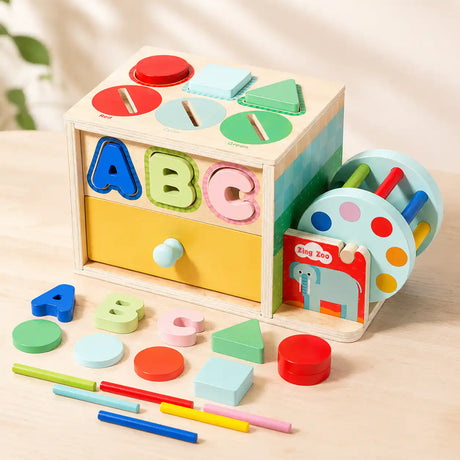
 Wooden 8-in-1 Activity Cube
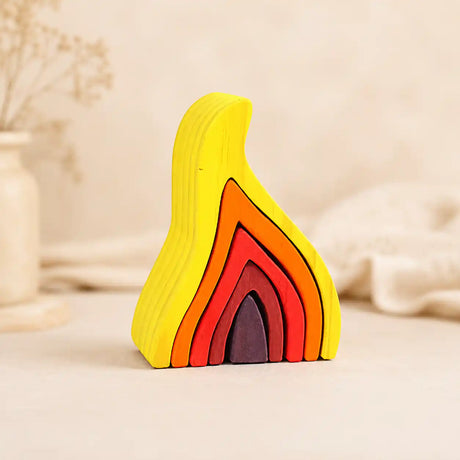
 Wooden Flame Stacking Puzzle
 Wooden 6-in-1 Activity Cube
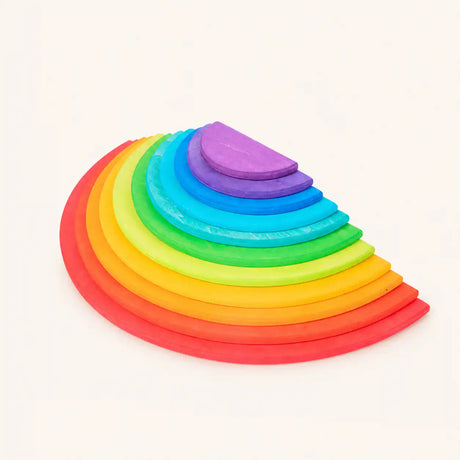
 Wooden Rainbow Semicircles
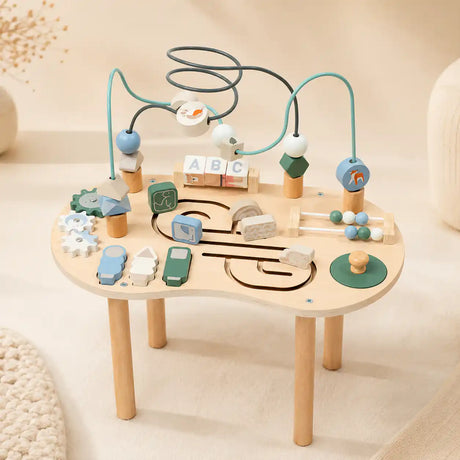
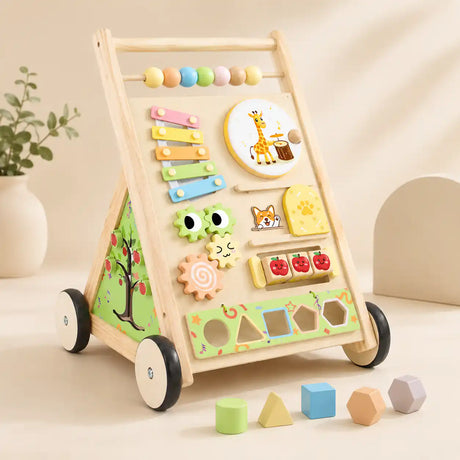
 Wooden 10-in-1 Activity Walker
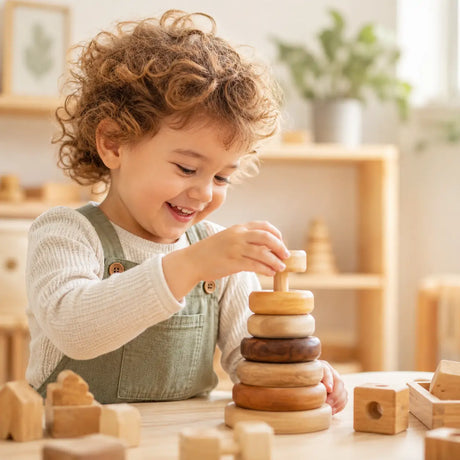
 Wooden Rainbow Stacking Discs Set
Threading and lacing toys. Threading builds serious hand-eye coordination and concentration. A wooden food lacing set is a favorite first lacing toy, and doubles as pretend play. You'll find related picks in fine motor toys.

Stacking and building. Now that towers can get taller, building becomes a real project. A wooden 3-in-1 geometric stacker adds shape and color sorting to the classic stack, while wooden stacking number blocks quietly introduce numbers. See more in stacking toys.


Chunky puzzles. Simple wooden puzzles reward persistence and spatial thinking. A wooden chunky puzzle set with easy-grip pieces is sized just right for two-year-old hands.

First pretend play. Small, realistic props — play food, a doll, a tea set — invite a child to act out daily life and stretch their language. It's the seedbed of the imaginative play that takes over at three.
Books and language toys. With language taking off, sturdy board books, picture-matching games, and simple first-word puzzles turn a two-year-old's word hunger into play. Naming pictures together, then letting them "read" back to you, builds vocabulary and an early love of books.

Which toy supports which skill?
Matching a gift to what your two-year-old is practicing? This quick table lines up common toy types with the skills they tend to build.
| Toy type | What the child does | Skills it supports |
|---|---|---|
| Sorting & matching | Groups by color, size, or pair | Classification, early math, focus |
| Threading & lacing | Passes a lace through beads | Fine motor, hand-eye coordination, patience |
| Stacking & building | Builds and balances taller structures | Spatial reasoning, planning, control |
| Chunky puzzles | Fits pieces into place | Problem-solving, shape recognition |
| First pretend play | Feeds a doll, stirs a pot | Language, imagination, empathy |
How do I keep a 2 year old engaged without overwhelming them?
Two-year-olds concentrate best when they aren't swimming in choices. A small, well-chosen set of toys on an open shelf invites more focused play than a crammed toy box. Many families rotate toys in and out every week or two, which keeps favorites feeling fresh and makes clean-up manageable. This gentle "less is more" rhythm is a cornerstone of Montessori at home — and it saves you money, too.
What about practical-life play?
Alongside toys, two-year-olds are drawn to the real work of the household — and Montessori leans right into this. Letting a child help pour, wipe a table, sweep with a child-sized brush, or sort socks by color turns everyday moments into meaningful play. These practical-life activities build the same fine motor skills, sequencing, and focus that toys do, while giving a two-year-old the sense of contributing that they crave. You don't need special equipment: a small pitcher, a low shelf they can reach, and a little patience for spills go a long way. A few good toys plus a bit of real work makes for a rich, satisfying day.
What should I look for in a safe toy for a 2 year old?
Two-year-olds still mouth and throw things, so sturdiness and safe finishes matter. Choose solid wooden toys without small parts that could be a choking hazard, check painted surfaces are made for young children, and inspect pieces for chips or splinters before play. Take the recommended-age label seriously — it often reflects hazards, not just difficulty. Our toy safety guide explains what those labels mean, and active adult supervision is still essential.
What are the best gift ideas for a 2 year old?
For a birthday or holiday, look for toys with room to grow — a stacker that becomes a sorting game, or a puzzle a child will master and then re-solve for fun. Natural wooden toys hold up to daily handling and look lovely on a shelf. You can shop the full range in Montessori Toys for 2 Year Olds, and when your child is ready for more, our guide to the best toys for 3 year olds shows what comes next.
 Wooden Rainbow Car & Peg Doll Set
Frequently asked questions
-
What are the best toys for a 2 year old?
The best toys for a two-year-old are sorting and matching sets, threading and lacing toys, chunky puzzles, simple building toys, and first pretend-play props. These support fine motor skills, early language, and the sorting instinct most two-year-olds are working on. -
What skills are 2 year olds developing?
Around age two, many children develop fine motor control, sorting and matching, rapidly growing language, and the very first pretend play. Every child moves at their own pace. -
How is a 2 year old's play different from a 1 year old's?
One-year-olds focus on movement and cause and effect; two-year-olds start organizing the world — sorting, matching, building, and imitating daily life through early pretend play. -
Are wooden toys good for 2 year olds?
Yes. Well-made wooden toys are durable, easy to grip, and screen-free, so the child leads the play. Check for child-safe finishes and no small parts. -
How many toys should a 2 year old have out?
Just a few at a time. A small, rotated selection keeps a two-year-old focused and makes tidy-up easier than a full toy box. -
What is a good gift for a 2 year old?
Open-ended toys that grow with them — a geometric stacker, a lacing set, or a chunky puzzle. Our Montessori Toys for 2 Year Olds collection is a good place to start. -
Do 2 year olds need learning or electronic toys?
No. Simple, hands-on toys that a child has to act on tend to teach more and hold attention longer than light-up or electronic toys. -
When is a toddler ready for pretend play?
The first pretend play usually appears around age two — feeding a doll or stirring a pot — and blossoms into rich imaginative play around age three.
A note on development: the milestones described here are typical patterns, not targets. Children develop at their own pace, and this guide is not a substitute for medical advice. If you have any concerns about your child's development, please speak with your pediatrician.
Last reviewed: July 2026.
Sources & further reading
- CDC — Developmental Milestones (Learn the Signs. Act Early.)
- American Academy of Pediatrics — The Power of Play: A Pediatric Role in Enhancing Development in Young Children