Fine motor skills are the small, precise hand and finger movements a child uses to pick up, hold, turn, and place objects — the same skills that will one day power buttoning a coat, holding a pencil, and using scissors. They develop gradually through everyday play, and the right toys give little hands plenty to practise on. This guide is part of our Skills & Development hub, where we look at what toddlers learn through play, one skill at a time.
Below we cover what fine motor skills actually are, why they matter, and the kinds of hands-on play — and specific wooden toys — that help them grow.

Key takeaways
- Fine motor skills are the small, controlled movements of the hands and fingers — grasping, pinching, threading, twisting, and placing.
- They build gradually from the whole-hand grab of babyhood toward the precise pincer grasp and, later, a pencil grip.
- The best fine motor toys ask a child to repeat a small, satisfying hand movement many times — posting, threading, stacking, turning.
- Everyday practical-life tasks (pouring, using a spoon, peeling a sticker) build the same skills as any toy.
- Every child develops on their own timeline; toys support what a child is reaching for rather than setting the pace.
What are fine motor skills?
Fine motor skills are the coordinated movements of the small muscles in the hands, fingers, and wrists, working together with the eyes. They're what let a toddler pick up a single raisin, fit a peg into a hole, or turn the page of a board book. They sit alongside gross motor skills — the big movements of the arms, legs, and torso — but where gross motor is about power and balance, fine motor is about precision and control.
These skills develop in a rough order. A baby starts with a whole-hand rake, then learns to pass an object from hand to hand, and gradually refines the pincer grasp — thumb and forefinger together — somewhere around the end of the first year. From there, toddlers spend the next few years getting steadily more accurate and more patient with their hands.
Why do fine motor skills matter?
Strong fine motor control is the quiet foundation under a lot of later independence. Dressing, feeding, drawing, cutting, and eventually writing all rest on hands that can grip, aim, and adjust with control. Fine motor play also builds hand-eye coordination, concentration, and the patience to keep trying a fiddly task — habits that reach well beyond the toy shelf.
How does play build fine motor skills?
The most useful fine motor toys share one feature: they invite a child to repeat a small, precise hand movement over and over, with a satisfying result each time. A few kinds are especially good at it.

Threading and lacing. Passing a lace through a bead is demanding, absorbing work for small hands. A wooden food lacing set is a favourite first lacing toy, and it doubles as pretend play once the child is confident.

Posting, sorting, and puzzles. Fitting a shape into the right hole or a piece into its slot builds precision and problem-solving together. A wooden animal puzzle stacker pairs puzzling with a little balance challenge.

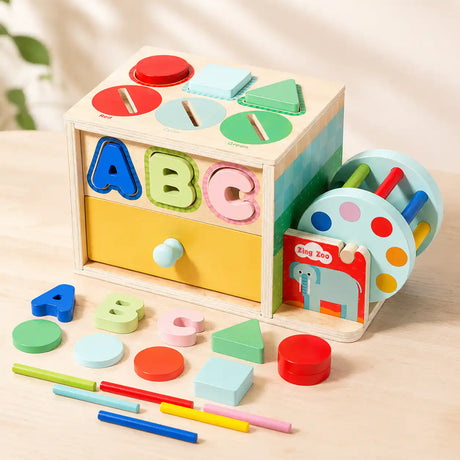
Twisting, sliding, and turning. Multi-activity toys pack several hand movements into one place. A wooden activity cube offers beads to slide, dials to turn, and doors to open — plenty for busy fingers. You'll find more options across our fine motor toys collection.

 Wooden Snail Pull-Along Rainbow Stacker
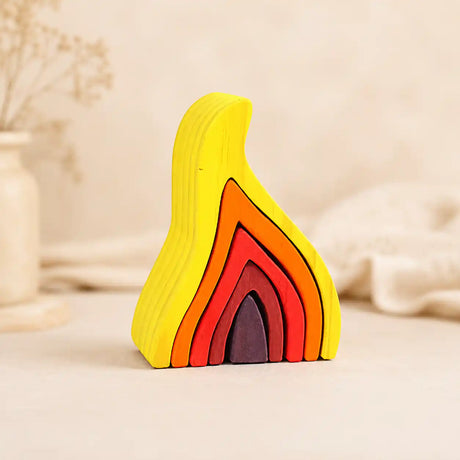
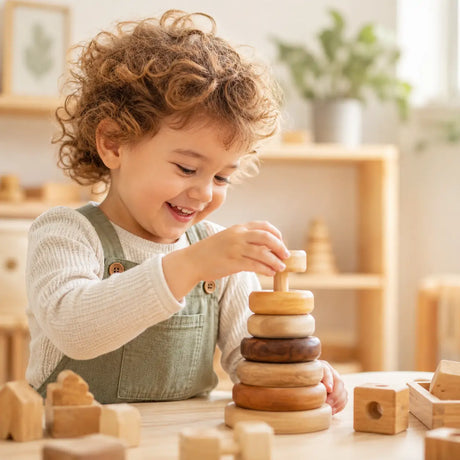
 Wooden Flame Stacking Puzzle
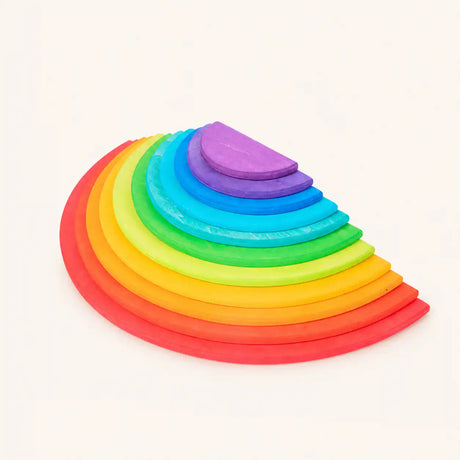
 Wooden Rainbow Semicircles
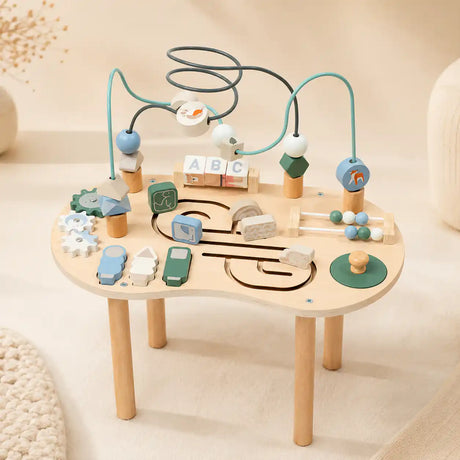
 Wooden Activity Table
Which activities build which fine motor skills?
If you're matching a toy to what your child is practising, this table lines up common activities with the specific hand skills they tend to support.
| Activity | What the child does | Fine motor skill it supports |
|---|---|---|
| Threading & lacing | Guides a lace through a bead | Pincer grasp, hand-eye coordination, patience |
| Posting & sorting | Aims a shape into a slot | Precision, wrist rotation, problem-solving |
| Stacking | Places and balances small pieces | Control, release, spatial aim |
| Twisting & sliding | Turns dials, slides beads | Finger strength, bilateral coordination |
| Peeling & pressing | Peels stickers, presses buttons | Pincer strength, isolated finger control |
Everyday ways to build fine motor skills at home
You don't need a cupboard of special toys. Some of the best fine motor practice is hiding in ordinary life — and Montessori leans right into this. Letting a toddler use a small spoon, pour water from a little pitcher, peel a satsuma, drop coins into a piggy bank, or help squeeze a sponge all build the same strength and control that toys do. These practical-life activities also give a child the sense of contributing that they crave. Keep it low-pressure: offer the chance, then step back and let them work at their own pace.
What about busy boards and activity centres?
Busy boards gather lots of fine motor challenges — latches, zips, laces, switches — onto one surface, which suits a child who likes to move quickly from one thing to the next. They're a good option for independent, seated play, and they travel well. Browse our busy boards for age-appropriate choices.
If you'd rather start small, the Wooden Busy Board Mini gathers latch-and-fasten activities onto a compact, take-along board that suits little hands and travel bags.


 Wooden Montessori Busy Board
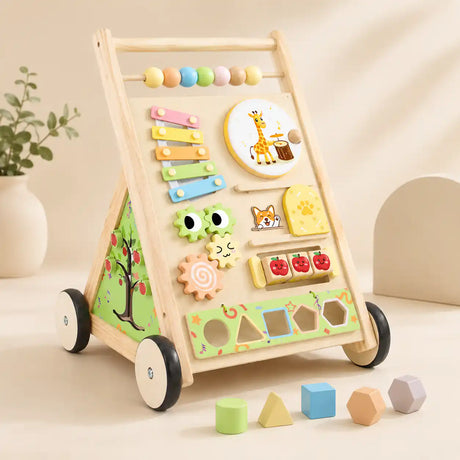
 Wooden 10-in-1 Activity Walker
 Montessori Busy Book Set
 Wooden 8-in-1 Activity Cube
When should I be concerned about fine motor development?
Fine motor skills develop across a wide, normal range, and comparing children rarely helps. That said, you know your child best. If you notice your toddler consistently avoiding hand play, not using both hands together, or seeming to lose skills they once had, it's worth a conversation with your pediatrician — not as a cause for alarm, but because they're the right person to answer developmental questions. For more on how skills grow through play, see our Skills & Development hub and our guides to why toddlers love to sort and what stacking and balancing teach.
Frequently asked questions
-
What are fine motor skills in toddlers?
Fine motor skills are the small, precise movements of the hands and fingers — grasping, pinching, threading, and placing — that let a toddler pick up small objects, use a spoon, and eventually hold a pencil. -
How can I improve my toddler's fine motor skills?
Offer hands-on play that repeats a small movement — threading, posting, stacking, and turning — plus everyday practical-life tasks like pouring, spooning, and peeling stickers. Keep it playful and let your child set the pace. -
What toys are best for fine motor skills?
Threading and lacing sets, shape sorters and puzzles, stacking toys, and multi-activity cubes and busy boards. Look for pieces sized for small hands and, for younger toddlers, no small parts that pose a choking hazard. -
At what age do fine motor skills develop?
They develop gradually across the toddler years, building from the whole-hand grab of babyhood toward a precise pincer grasp around age one and steadily more control after that. Every child follows their own timeline. -
Are wooden toys good for fine motor skills?
Yes. Well-made wooden toys are easy to grip, durable, and screen-free, so the child provides the effort. Check for child-safe finishes and age-appropriate piece sizes. -
What is the difference between fine and gross motor skills?
Fine motor skills are the small, precise movements of the hands and fingers; gross motor skills are the big movements of the arms, legs, and body, like crawling, walking, and climbing.
A note on development: the skills and milestones described here are typical patterns, not targets. Children develop at their own pace, and this guide is not a substitute for medical advice. If you have any concerns about your child's development, please speak with your pediatrician.
Last reviewed: July 2026.
Sources & further reading
- CDC — Developmental Milestones (Learn the Signs. Act Early.)
- American Academy of Pediatrics — The Power of Play: A Pediatric Role in Enhancing Development (Yogman et al., 2018)