Early math has almost nothing to do with worksheets or reciting numbers. Long before a toddler can count with meaning, they're building the real foundations — comparing amounts, spotting patterns, and matching one thing to one thing. This guide, part of our Skills & Development hub, looks at the maths hiding inside everyday toddler play, and how to support it without a single flashcard drill.
We'll cover what "early math" actually means at this age, the concepts that come before numbers, and the hands-on toys that make them click.

Key takeaways
- Early math for toddlers is about quantity, comparison, patterns, and one-to-one matching — not memorising numbers.
- Children build number sense by handling real objects: sorting, matching, and comparing "more" and "fewer".
- Rote counting ("one, two, three…") comes before children understand that each number stands for a quantity — both matter.
- Patterns and sequencing are early math too, and toddlers love making and extending them.
- Keep it playful and hands-on; pressured drilling tends to backfire at this age.
What is early math for toddlers?
Early math — sometimes called numeracy or number sense — is a child's growing feel for quantity and relationships between things. It shows up when a toddler notices they have "more" crackers than their sibling, lines up cars in a row, or hands you exactly one cup for each person at the table. None of that requires knowing the numeral "3." It requires understanding what threeness feels like, which is the deeper skill.
Rote counting and real understanding are two different things. A toddler might chant "one, two, three, four" long before they can count four objects accurately by touching each one. Both are worth encouraging — the chant builds the sequence, and the touching builds the meaning.

What comes before numbers?
Several concepts lay the groundwork for counting, and toddlers meet them all through play.
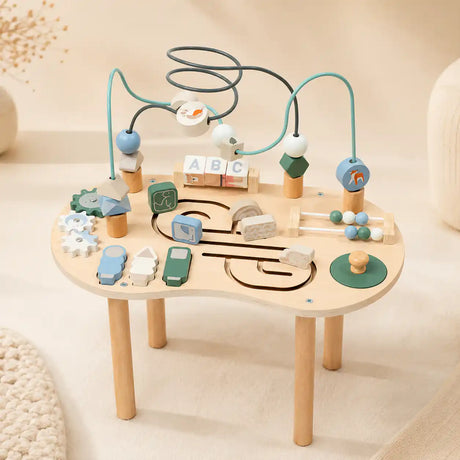
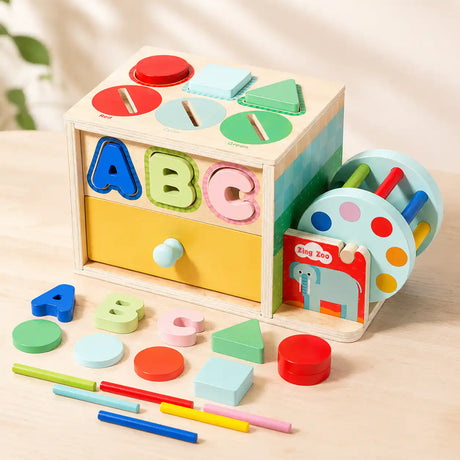
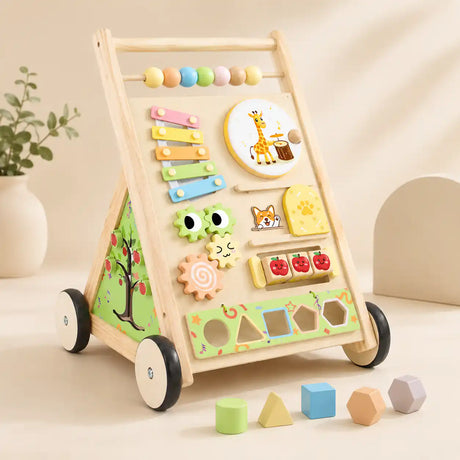
One-to-one correspondence. Matching one object to one other — a spoon for each bowl — is the single most important early-math idea. It's what makes counting mean something later. A hands-on tool like a wooden Montessori 10-in-1 learning board gives lots of matching and counting practice in one place.

Comparing quantity. More, fewer, the same, bigger, smaller — comparison words are early math in disguise. Narrate them as they come up in daily life.
Counting with meaning. Once a child touches each object as they count, numbers start to stick. Wooden stacking number blocks pair the look of a numeral with a physical quantity to build. Browse more in our counting & math toys.

 Wooden Activity Table
 Wooden 10-in-1 Activity Walker
 Wooden Rainbow Stacking Discs Set
 Montessori Busy Book Set
 Wooden Rainbow Arch Stacker
Which play builds which early-math skill?
| Play | What the child does | Early-math skill |
|---|---|---|
| Setting the table | One cup per person | One-to-one correspondence |
| Sorting and grouping | Makes sets by feature | Classification, quantity |
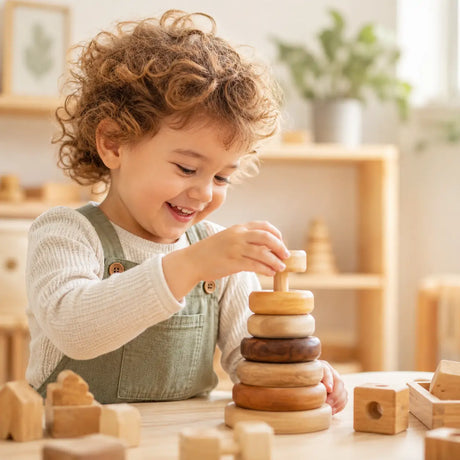
| Stacking rings by size | Orders small to large | Seriation, comparison |
| Making bead patterns | Repeats red-blue-red-blue | Patterns and sequencing |
| Counting steps aloud | Touches each as they count | Counting with meaning |

What about patterns?
Patterns are one of the most underrated early-math skills. Making and extending a simple sequence — red, blue, red, blue — teaches children to spot rules and predict what comes next, which is the same reasoning that later powers arithmetic and algebra. Threading beads, lining up coloured pieces, and clapping rhythms are all pattern play. Toys with clear, repeatable colours and shapes make it easy; you'll also find letter and number play in our letters & numbers collection as your child moves toward symbols.
 Wooden 6-in-1 Activity Cube
 Wooden Magnetic Alphabet Fishing Game
 Wooden Alphabet & Numbers Flashcards
 Wooden Magnetic Fishing Game
 Wooden Bunny Balance Scale
How can I support early math at home?
Weave it into the day rather than setting it apart. Count the stairs as you climb, compare who has more grapes, sort the shopping, and talk about shapes on a walk. Keep the tone light and curious — early math thrives on noticing, not testing. This everyday, hands-on approach fits naturally with the sorting and grouping in our guide to why toddlers love to sort, and the hand skills in our fine motor skills guide.
Frequently asked questions
-
What is early math for toddlers?
Early math is a toddler's growing sense of quantity and relationships — comparing more and fewer, matching one to one, making patterns, and counting with meaning. It comes well before memorising numerals. -
How do I teach a toddler math?
Keep it hands-on and woven into daily life: count stairs together, compare amounts, sort objects, and make simple patterns. Skip drills and flashcards — toddlers build number sense through play, not pressure. -
What is one-to-one correspondence?
It's matching one object to one other — a spoon for each bowl, one number word for each item counted. It's the key idea that makes counting meaningful, and it develops through everyday matching play. -
What toys help with early math?
Counting and stacking sets, number blocks, sorting toys, and pattern-making beads all help. Look for toys that pair a quantity you can handle with the idea of a number, rather than screens that count for the child. -
At what age do toddlers learn to count?
Many toddlers chant number words around age two, but counting objects accurately — touching each one — usually comes later, around three to four. Rote counting and counting with meaning develop separately. -
Are patterns part of early math?
Yes. Making and extending simple patterns, like red-blue-red-blue, teaches children to spot rules and predict what comes next — the same reasoning behind later arithmetic.
A note on development: the skills and milestones described here are typical patterns, not targets. Children develop at their own pace, and this guide is not a substitute for medical advice. If you have any concerns about your child's development, please speak with your pediatrician.
Last reviewed: July 2026.
Sources & further reading
- NAEYC — Nurturing Early Math Play and Discovery
- NAEYC — The Beauty of Early Childhood Mathematics: Playful Math = Engaged Learning