"My toddler can't focus on anything for more than two minutes." If that sounds familiar, take heart: short attention spans are completely normal at this age, and focus is a skill that grows with gentle support — not something you can drill into a child. This guide is part of our Skills & Development hub on what toddlers learn through play.
Here's what's realistic to expect, and how to help concentration develop without forcing it.

Key takeaways
- Short attention spans are normal for toddlers; focus builds slowly over the early years.
- Fewer toys out at once leads to deeper, calmer play than a crowded shelf.
- Open-ended toys that don't "do the playing" invite longer, more absorbed concentration.
- Uninterrupted time and a calm space matter as much as any toy.
- Follow your child's lead; the goal is absorbed play they choose, not a task you set.
What's a normal attention span for a toddler?
Much shorter than most of us expect. A rough rule of thumb is a few minutes per year of age for a self-chosen activity — so a two-year-old might stay with something for a handful of minutes, and even that varies enormously by mood, hunger, and interest. Crucially, a child who flits between toys isn't failing to concentrate; they're exploring. Deep focus shows up in flashes at first and lengthens gradually. Comparing your child to another rarely tells you anything useful.

How can I help my toddler concentrate?
The single most effective change is usually counterintuitive: offer fewer toys. A crowded shelf overwhelms a toddler and keeps them skipping from one thing to the next. A small, well-chosen selection invites them to settle in. Many families keep most toys stored and rotate a few out every week or two, which also makes familiar toys feel new again. Our guide to why your toddler ignores the new toy digs into this rotation idea, which is a cornerstone of Montessori at home.
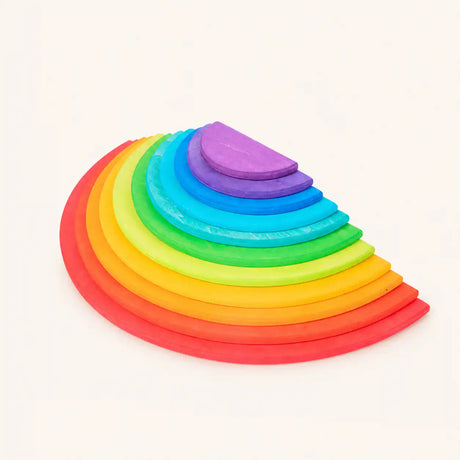
Open-ended toys help, too, because the child has to supply the ideas — which is exactly what sustains attention. Calm, versatile pieces like a wooden rainbow arch stacker can be built, balanced, and re-imagined for as long as a child stays curious.

 12 Piece Wooden Rainbow Stacker - Macaron
 Wooden Rainbow Semicircles
 Wooden Snail Pull-Along Rainbow Stacker
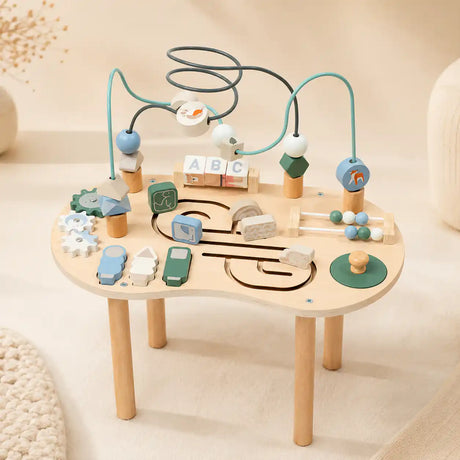
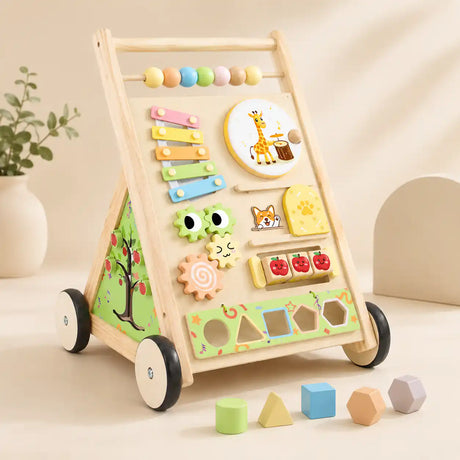
 Wooden Activity Table
 Wooden Rainbow Stacking Discs Set
 Wooden Rainbow Stacking Tablets
What helps and what hurts toddler focus?
| Helps focus | Works against focus |
|---|---|
| A few toys out at a time | An overflowing toy box |
| Open-ended toys the child acts on | Light-and-sound toys that entertain for them |
| Uninterrupted stretches of time | Frequent interruptions and transitions |
| A calm, low-clutter space | Background screens and noise |
| Following the child's chosen play | Steering or quizzing mid-play |

Should I let my child play undisturbed?
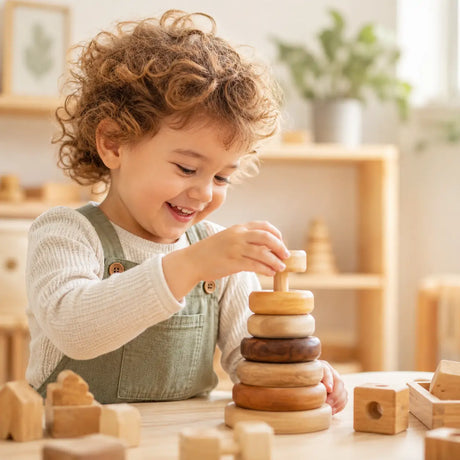
Yes — protecting uninterrupted play is one of the kindest things you can do for developing focus. When a toddler is absorbed, resist the urge to praise, redirect, or offer a "better" idea; each interruption breaks the very concentration you want to grow. Let them finish in their own time. When they're stuck rather than absorbed, you can help lightly — turn a piece, tap a spot — without taking over. Simple, hands-on toys like those in our stacking toys collection reward this kind of quiet, self-directed attention.
A Wooden Marble Run Music Tree is the kind of toy that quietly holds a toddler's gaze: they drop a marble at the top and follow it, chiming, all the way down — then do it again, building the sustained attention that focus is made of.

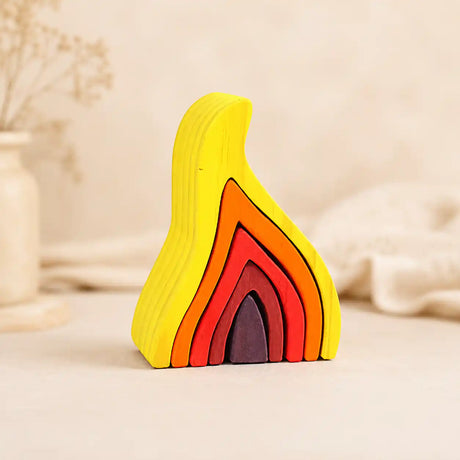
 Wooden Flame Stacking Puzzle
 Wooden Animal Puzzle Stacker
When should I be concerned about attention?
Attention varies hugely in early childhood, and brief spans are almost always normal. If you have ongoing concerns — for example, your child seems unable to settle to anything, even things they enjoy — your pediatrician is the right person to talk to. For related ideas on calm, regulating play, see our guide to sensory play, and for choosing toys that hold attention, our guide to open-ended vs. single-purpose toys.
Frequently asked questions
-
What is a normal attention span for a toddler?
Short — a rough guide is a few minutes per year of age for a self-chosen activity, and even that varies with mood and interest. Flitting between toys is normal exploration; deep focus lengthens gradually. -
How can I help my toddler focus better?
Offer fewer toys at once, choose open-ended toys the child has to act on, protect uninterrupted play time, and keep the space calm and low-clutter. Follow their chosen play rather than steering it. -
Does having fewer toys help concentration?
Usually, yes. A crowded shelf overwhelms toddlers and keeps them skipping between things, while a small, rotated selection invites them to settle into deeper play. -
Should I interrupt my toddler when they're playing?
Try not to. When a child is absorbed, praise, redirection, or a "better" idea all break their concentration. Let them finish in their own time, and help lightly only when they're genuinely stuck. -
Do electronic toys affect attention?
Toys that light up and make sounds do the entertaining for the child, which tends to hold attention only briefly. Simple, open-ended toys that require the child to act usually sustain focus longer. -
When should I worry about my toddler's attention?
Brief attention spans are almost always normal. If your child seems unable to settle to anything, even activities they enjoy, or you have ongoing concerns, speak with your pediatrician.
A note on development: the skills and milestones described here are typical patterns, not targets. Children develop at their own pace, and this guide is not a substitute for medical advice. If you have any concerns about your child's development, please speak with your pediatrician.
Last reviewed: July 2026.
Sources & further reading
- Center on the Developing Child, Harvard University — A Guide to Executive Function
- Center on the Developing Child, Harvard University — Executive Function Activities (Enhancing & Practicing)