Puzzles are a quiet powerhouse of early learning — but hand one to a child too soon and it just becomes something to throw. So when is a toddler ready for puzzles? The short answer: earlier than many parents expect, as long as you start with the right kind and build up gently.
This is a Toy Spotlight from our Play by Age series, taking a closer look at one toy type across the toddler years.
Key takeaways
- Most children are ready for their first simple knob puzzles around 12–18 months.
- Puzzles build problem-solving, fine motor skills, shape recognition, and patience.
- Start with single-shape knob puzzles, then chunky puzzles, then simple jigsaws.
- Match the puzzle to the child's current skill — a little challenge is good, constant failure isn't.
- Let the child lead; puzzles should feel like play, not a test.
When can toddlers start doing puzzles?
Most toddlers are ready for their first puzzle around 12 to 18 months, beginning with simple wooden knob puzzles where each piece has its own spot. At this stage a child is refining the pincer grasp and learning that a shape fits one particular place — a small, satisfying problem to solve. From there, readiness grows quickly: by two, many enjoy chunky shape puzzles, and by three, simple jigsaws with a few interlocking pieces.

As with everything, children arrive here at their own pace. Some are posting pieces confidently at a year; others take to it later. Follow your child's interest rather than the calendar.
What skills do puzzles build?
Puzzles are deceptively rich. Fitting a piece into place develops hand-eye coordination and fine motor control. Working out which piece goes where builds problem-solving, spatial reasoning, and shape and color recognition. And sticking with a puzzle until it's finished grows patience and focus — the quiet satisfaction of completing something. Because a puzzle has a clear "done," it offers a toddler a real sense of accomplishment.
Puzzles also quietly teach persistence. A child who keeps trying a piece a different way, then another, is building the very habit of sticking with a problem — a skill that pays off far beyond the puzzle mat.
How do I choose the right puzzle for my toddler?
Match the puzzle to where your child is now, with just a little room to grow. Here's the usual progression.
Knob puzzles (around 12–18 months). Big pieces with easy-grip knobs, each with its own dedicated hole. Look for single objects a toddler can name.
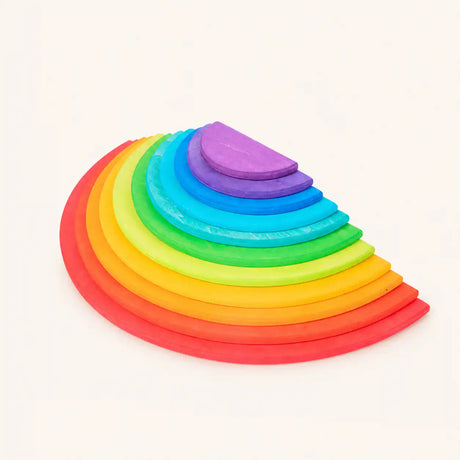
Chunky puzzles (around 2 years). Thicker pieces that stand up, often with a picture underneath. A wooden chunky puzzle set is a great step up from knob puzzles.

Simple jigsaws (around 3 years). A few interlocking pieces that form one picture — the first taste of "real" puzzling. A wooden animal puzzle stacker adds a balance twist that keeps things playful.


You'll find age-right options across our puzzles & memory games collection. For where puzzles fit alongside other toys, see our guides to the best toys for 2 year olds and best toys for 3 year olds.
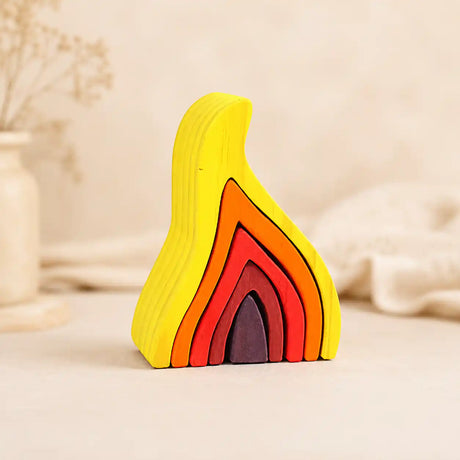
 Wooden Flame Stacking Puzzle
 Wooden Memory Game Board
 Wooden Carrot Memory Game
 Wooden Magnetic Alphabet Fishing Game
How can I make puzzles more engaging?
A few small touches turn a puzzle from a chore into a favorite. Name each piece as your child places it ("there's the apple!") to weave in language. Start with the puzzle picture-side up so it feels achievable, then flip pieces over as skills grow. Sit alongside your child rather than across from them, so you're a partner, not a judge. And rotate puzzles in and out with the rest of the toys — a puzzle that disappears for a couple of weeks comes back feeling brand new. Above all, let your child do as much as they can themselves; the goal is the satisfaction of "I did it," not a perfectly finished picture.
What if my toddler gets frustrated with puzzles?
A little frustration is part of learning, but constant failure isn't. If your child is struggling, drop back a level: fewer pieces, bigger knobs, or a puzzle they've mastered before. You can also help without taking over — turn a piece so it's almost right, or tap the spot it belongs. Keep the mood light and let them stop when they're done. Puzzles should feel like a game they choose, not a task they're set.
Frequently asked questions
-
When is a toddler ready for puzzles?
Most children are ready for simple wooden knob puzzles around 12 to 18 months, then progress to chunky puzzles around age two and simple jigsaws around age three. -
What is a good first puzzle for a toddler?
A wooden knob puzzle with large, easy-grip pieces, each with its own dedicated hole and a single recognizable object per piece. -
What skills do puzzles teach toddlers?
Puzzles build fine motor skills, hand-eye coordination, problem-solving, shape and color recognition, and patience. -
How many pieces should a toddler's puzzle have?
Start with just a few individual knob pieces. Move to chunky puzzles around two, and simple jigsaws of a handful of pieces around three. -
Why does my toddler throw puzzle pieces?
Usually the puzzle is too hard or they're not yet interested. Try an easier one, or come back to it later — readiness varies a lot. -
Are wooden puzzles better than cardboard?
Wooden puzzles are sturdier, easier for small hands to grip, and last longer — a good choice for the toddler years.
A note on development: the ages here are typical patterns, not targets. Children develop at their own pace, and this guide is not a substitute for medical advice. If you have any concerns about your child's development, please speak with your pediatrician.
Sources & further reading
Last reviewed: July 2026.