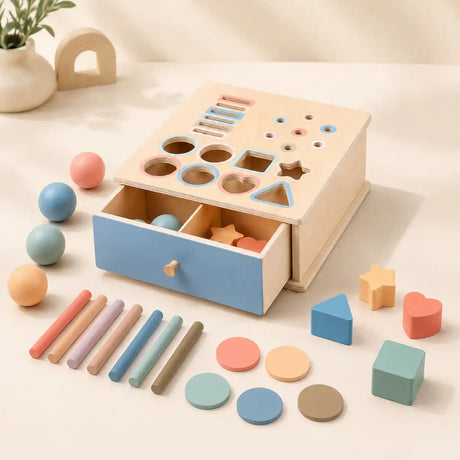
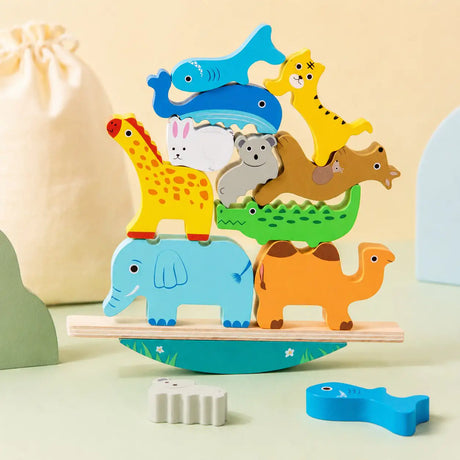
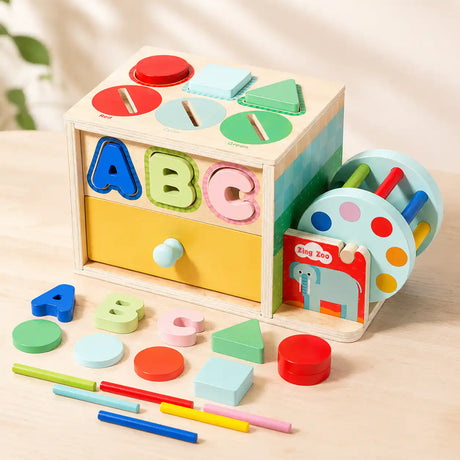
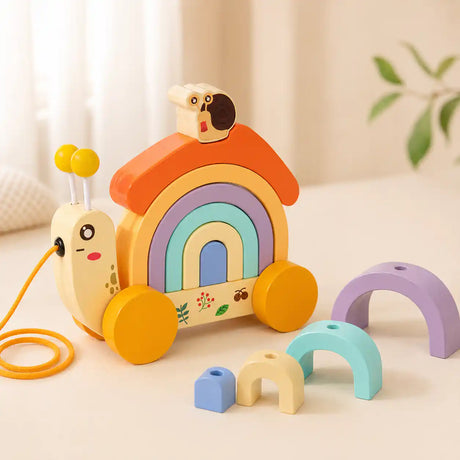
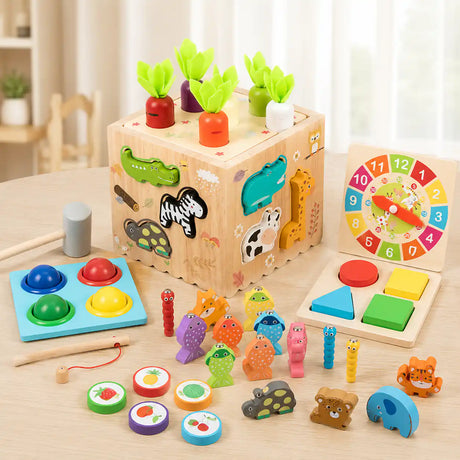
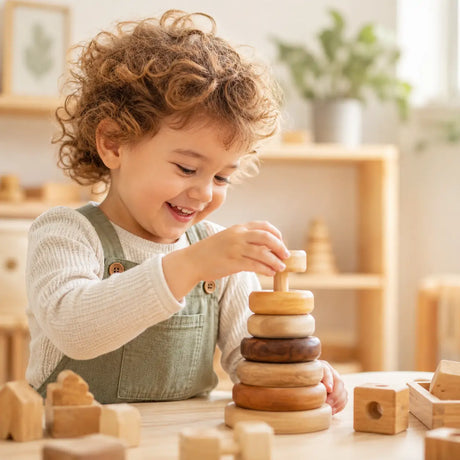
Wooden puzzles and memory games made for little hands and growing attention spans. From chunky first puzzles to matching and memory play, each one helps promote focus, patience, and problem-solving.
 1-2 year31% off
-
3-4+ year31% off
-
3-4+ year29% off
-
2-3 year29% off
-
2-3 year31% off
-
2-3 year29% off
-
3-4+ year30% off






What Puzzles Build
A puzzle is one of the few toys with a clear finish line, and that matters more than it sounds. Working steadily toward a completed picture — and getting there — is how young children first experience the satisfaction of persistence.
- Visual discrimination — noticing shape, edge, and pattern differences
- Spatial reasoning — mentally rotating a piece to see whether it fits
- Working memory — holding locations in mind during matching games
- Task persistence — staying with something difficult until it's finished
What's in This Collection
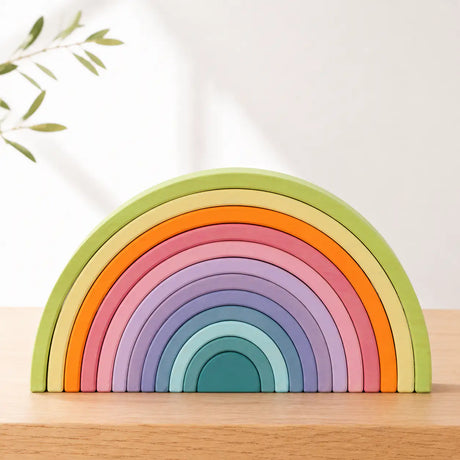
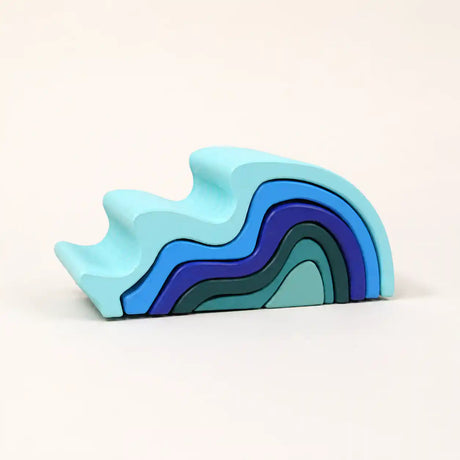
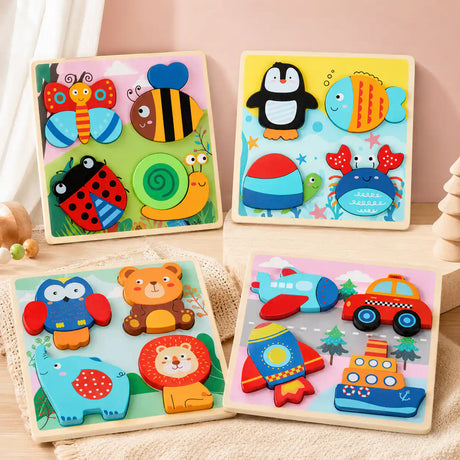
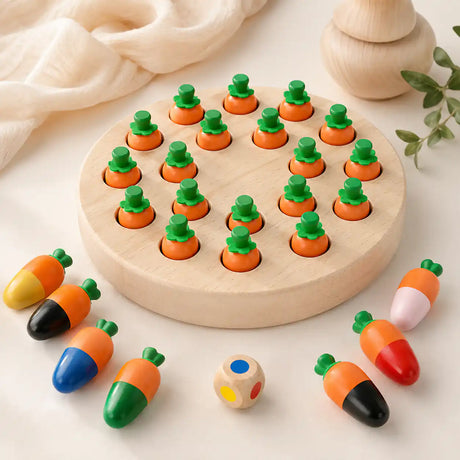
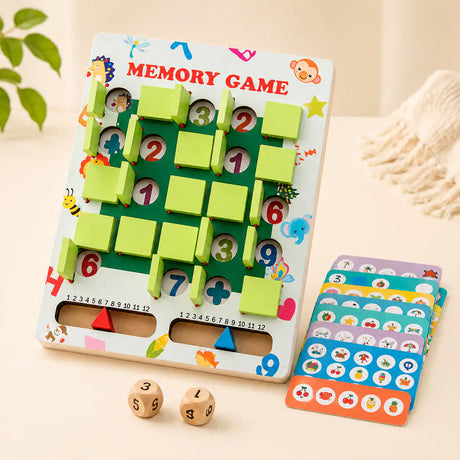
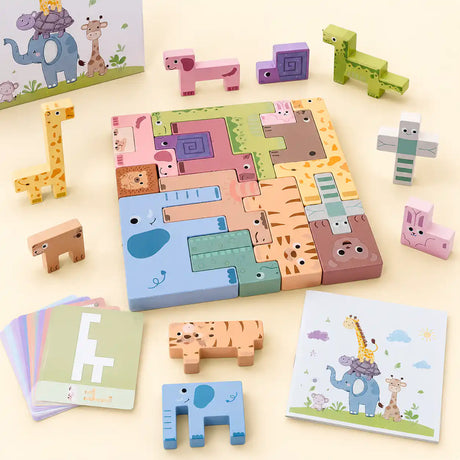
Chunky knob puzzles, animal and vehicle jigsaws, 3D stacking puzzles, memory match boards, and carrot-pulling games — Montessori puzzles and memory games spanning first baby puzzles through genuinely challenging preschool sets.
Puzzle & Memory Game Questions
Do you have memory and matching games for kids?
Yes — alongside puzzles, this collection includes wooden memory match and matching games, from a memory match board with picture cards to a carrot-pulling memory game. They build working memory, visual matching, and turn-taking through simple, repeatable play.
What age can a child do puzzles?
Chunky knob puzzles with two or three pieces suit around eighteen months. Four to six pieces works at two, twelve or more by three, and by four many children manage twenty-plus. Progress is individual, and a child who loves puzzles will outpace these ranges considerably.
How many pieces should a toddler's puzzle have?
Fewer than you'd think. A puzzle a child can complete with a little effort gets done repeatedly; one that defeats them gets abandoned. Start below their apparent level and step up when they're finishing it easily.
Do memory games really improve memory?
They improve performance on similar tasks and give genuine practice at working memory and attention. Whether that transfers to memory in general is less clear — the research on broad transfer is mixed. They're worthwhile, just not magic.
How do I help without doing it for them?
Narrow the field rather than supplying the answer. Push two or three candidate pieces closer, or say "try turning it around." A child who places the piece themselves gets the benefit; one who watches you place it doesn't.
Are wooden puzzles better than cardboard?
For young children, yes. Wooden pieces survive being bent, chewed, and stepped on, and their thickness makes them far easier for small fingers to pick up and position. Cardboard becomes practical once a child is handling more pieces and treating them gently.
Adult supervision is recommended. Some sets contain small parts; see each product page for age guidance.
Read more about Puzzles & Memory Games Show less
You May Also Like
View all-
1 year30% off
-
1 year31% off
-
1 year29% off
-
1 year31% off
-
1 year30% off
-
2-3 year31% off
-
1 year30% off
-
3-4+ year31% off
-
2-3 year31% off
-
1-2 year30% off