The second half of the first year is a whirlwind. A baby who could barely hold a rattle at six months is pulling up to stand and pointing at everything by twelve. Choosing toys for 6-12 months means meeting a rush of new skills — grasping, mouthing, and the dawning realization that actions make things happen.
This guide covers what babies are working on in this window and the kinds of toys that support it. It's part of our Play by Age series, and leads naturally into our guide to the best toys for 1 year olds.
Key takeaways
- From 6 to 12 months, babies focus on grasping, mouthing to explore, and early cause and effect.
- The best toys are simple, safe to mouth, and easy for small hands to hold.
- Everything goes in the mouth at this age — safe materials and no small parts are essential.
- High-contrast and gently sensory toys suit babies who are learning to focus and reach.
- Always supervise play, and check the recommended age on every toy.
What are babies working on at 6-12 months?
This half-year is packed with milestones. Babies typically move from sitting to crawling to pulling up, and their hands transform — from a whole-hand rake toward a precise pincer grasp that can pick up a single small object. They explore almost everything by mouth, which is a normal and important way of learning about texture, shape, and taste.
Two big cognitive leaps happen here, too. Cause and effect becomes fascinating — shake it and it rattles, drop it and it falls, press it and it pops back. And object permanence begins to dawn: the understanding that things still exist when hidden, which is why peekaboo and simple hiding games are such a hit.
Fine motor skills leap forward, too. Many babies learn to pass a toy from hand to hand, bang two objects together, and poke at small details with a pointing finger. Toys with varied textures, moving parts, and pieces to grasp give all this new dexterity something to work on.

Every baby moves through these stages on their own timeline, and the range is wide and normal. Toys can gently support what a baby is reaching for, but they never set the pace. If you have questions about your baby's development, your pediatrician is the right person to ask.
What kinds of toys are best for 6-12 months?
The best toys at this age are simple, safe, and responsive. Here are the categories worth having.
Grasping toys. Lightweight rings, rattles, and easy-to-hold shapes help a baby practice reaching and holding. Look for pieces sized for small hands and safe to mouth.
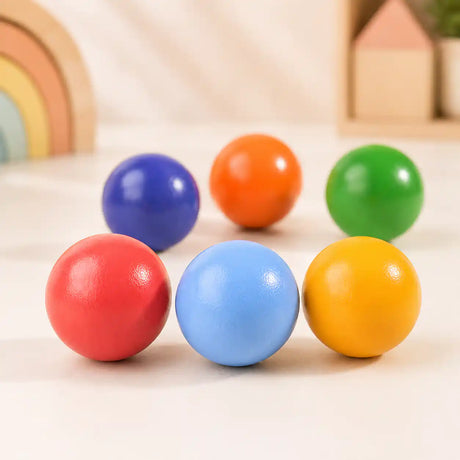
Balls and rolling toys. A ball a baby can push, chase, and watch roll is early cause-and-effect and a gentle nudge toward crawling.
Cause-and-effect toys. Anything that responds — a rattle, a wobble toy, a simple pop-up — rewards a baby's growing understanding that they made it happen.
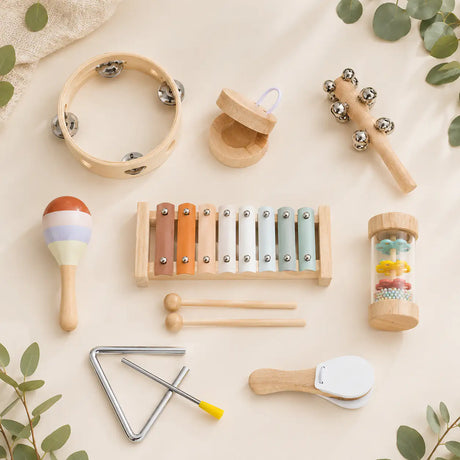
Sensory and music toys. Gentle sounds and interesting textures feed a baby's drive to explore. Our music & sensory toys are a lovely starting point.
 Wooden Musical Instrument Set
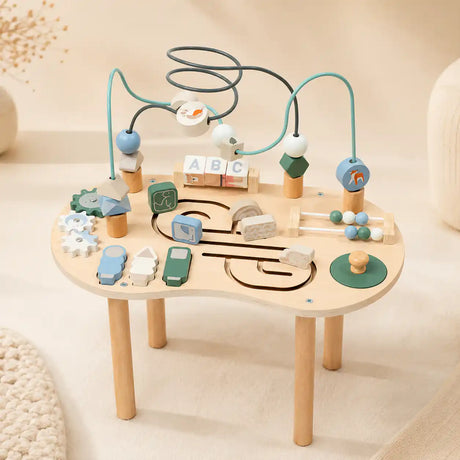
 Wooden Activity Table
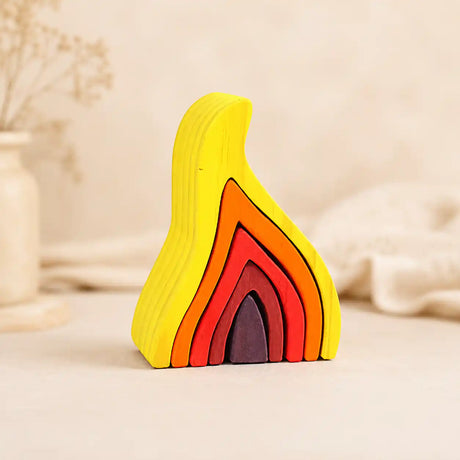
 Wooden Flame Stacking Puzzle
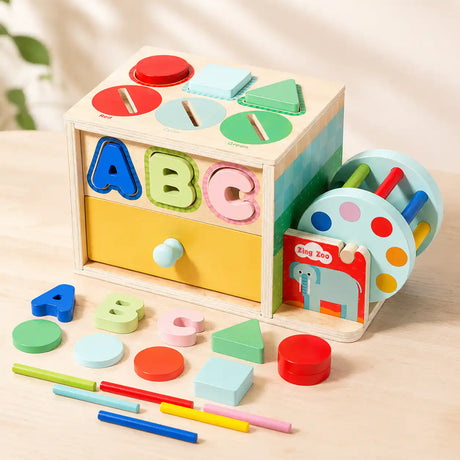
 Wooden 6-in-1 Activity Cube
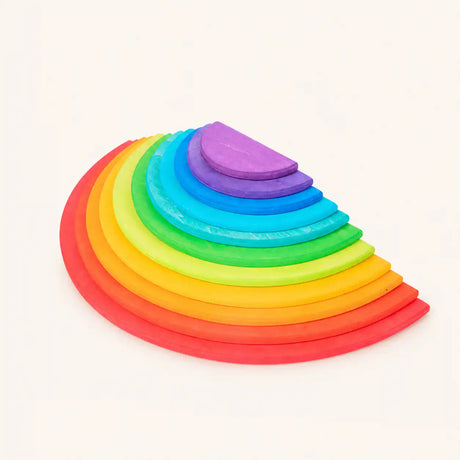
 Wooden Rainbow Semicircles
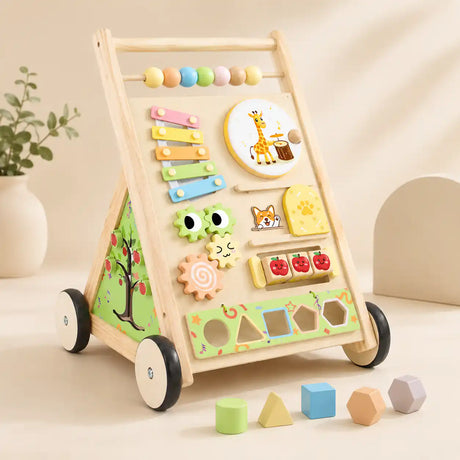
 Wooden 10-in-1 Activity Walker
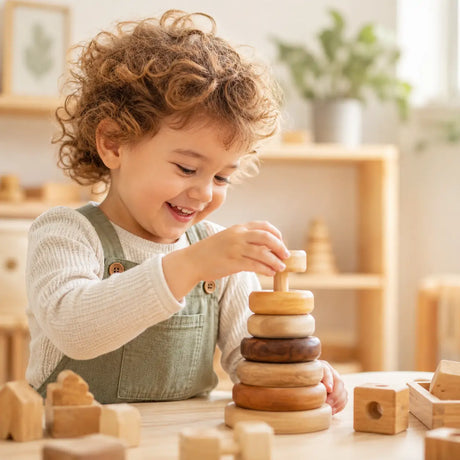
Stacking cups and simple nesting. Near the end of the first year, babies begin to enjoy putting things in and taking them out — the very first stacking and sorting.
Board books. Sturdy, high-contrast board books support early language and become a cozy daily ritual.

For toys that build those first hand skills, our fine motor toys and natural wooden toys collections are good places to look for age-appropriate options.
What about mouthing — is it safe?
Mouthing is completely normal and how babies learn about the world in the first year. The job for parents is to make sure everything within reach is safe to explore that way. Choose toys made for babies, with smooth, child-safe finishes and absolutely no small parts that could be a choking hazard. Give wooden toys a quick check for chips before play, and keep older siblings' small toys well out of reach. When in doubt, size it up against a household choke-tube guide and, if it fits, keep it away.
How do I set up a play space for a 6-12 month old?
Once a baby is on the move, a small, safe floor space beats a container every time. A clear area on a soft rug, a low mirror to spark self-discovery, and a couple of sturdy things to pull up on give a baby room to practice their newest skills. Keep just a few toys within reach and rotate them — even at this age, a baby focuses better on two or three things than on a basketful. A low, open basket they can reach into themselves supports the independence that's just beginning to bloom.
What should I look for in a safe baby toy?
Safety is the first filter at this age. Look for solid, one-piece or securely built toys with no small or detachable parts, non-toxic and child-safe finishes, and a size that can't pose a choking hazard. Always check the recommended age, and treat active adult supervision as non-negotiable during play. Our toy safety guide explains age grading and small-parts warnings in plain language.
Do I need to buy lots of baby toys?
Not at all. Babies this age are delighted by a few simple things — and often by everyday objects, too. A classic Montessori idea is the "treasure basket": a low basket of safe, varied household and natural objects (a wooden spoon, a fabric scrap, a metal cup) for a baby to explore under supervision. It costs almost nothing and offers rich sensory variety. You can read more about this gentle, low-toy approach in Montessori at home.
Rotating a small set also makes clean-up quick and keeps the space calm — better for a baby who's easily overstimulated, and easier on you at the end of a long day.
Frequently asked questions
-
What are the best toys for a 6 month old?
Simple grasping toys, rattles, soft balls, and gently sensory toys that are safe to mouth. At six months, babies are learning to reach, hold, and explore by mouth. -
What toys help babies 6 to 12 months develop?
Grasping toys, cause-and-effect toys, balls, stacking cups, and board books support the grasping, cause-and-effect, and early language skills of this stage. -
Why do babies put everything in their mouth?
Mouthing is a normal, important way babies explore texture and shape in the first year. Just make sure everything within reach is safe and free of small parts. -
Are wooden toys safe for babies?
Yes, when they're made for babies — smooth, child-safe finishes, no small parts, and sturdy construction. Check for chips before play and supervise closely. -
How many toys does a 6-12 month old need?
Very few. Babies are happy with a handful of simple toys and everyday objects. A supervised treasure basket is a lovely, inexpensive option. -
What toys support crawling and pulling up?
Balls and rolling toys encourage crawling, and sturdy, stable furniture-height toys give babies something safe to pull up on under supervision. -
When can a baby start stacking?
Many babies begin putting objects in and out of containers and attempting simple stacking near the end of the first year, around 10 to 12 months.
A note on development: the milestones described here are typical patterns, not targets. Babies develop at their own pace, and this guide is not a substitute for medical advice. If you have any concerns about your baby's development, please speak with your pediatrician.
Last reviewed: July 2026.
Sources & further reading
- CDC — Developmental Milestones (Learn the Signs. Act Early.)
- American Academy of Pediatrics — Selecting Appropriate Toys for Young Children in the Digital Era
- ZERO TO THREE — Babies and Their Senses