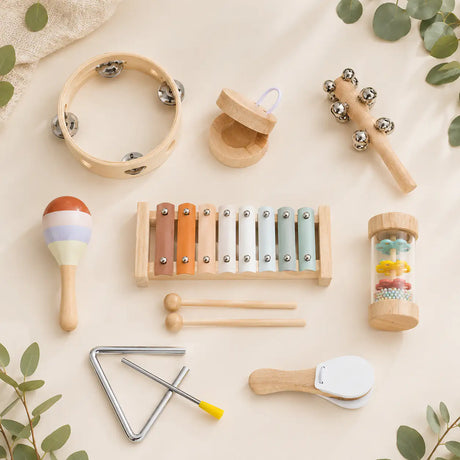
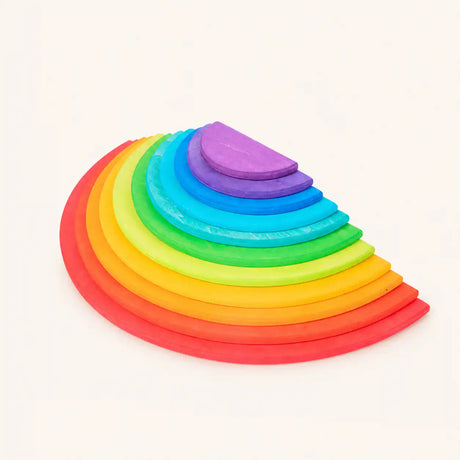
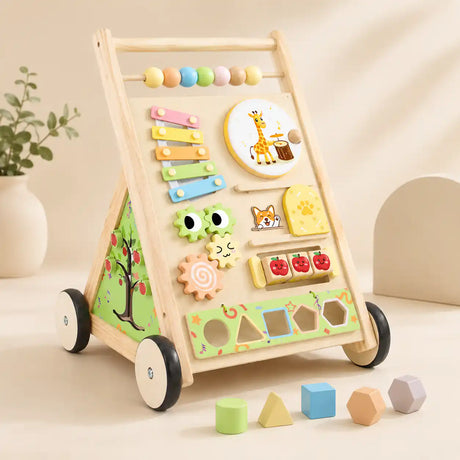
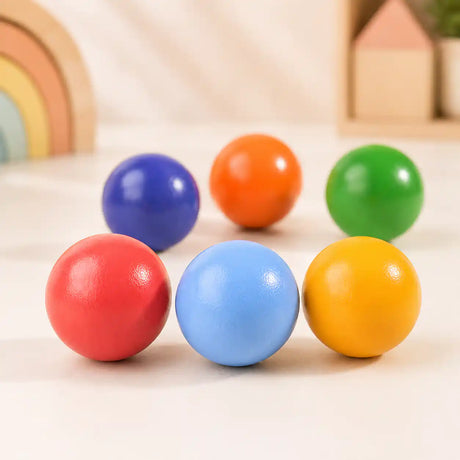
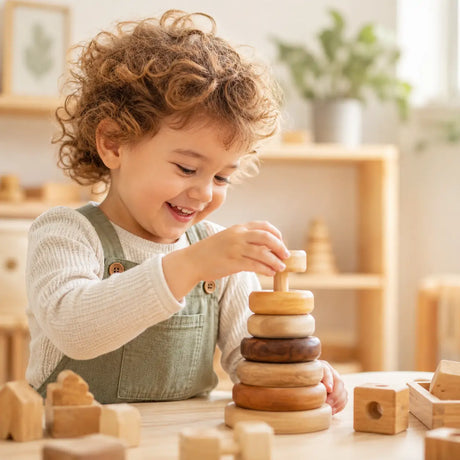
Neither material is automatically safer — safety comes down to the specific toy, not wood versus plastic in the abstract. A well-made wooden toy and a well-made plastic toy can both be safe; a poorly made version of either can be risky. That said, well-made wooden toys carry a few practical advantages many parents value: no plastic softeners to worry about, sturdy one-piece designs, and a lower environmental footprint. This guide is part of our Toy Safety & Materials hub.
Below we compare the two honestly — where wood tends to have an edge, where good plastic holds its own, and what actually determines whether a toy is safe.

Key takeaways
- Safety depends on the individual toy — construction, finish, and age grade — not the material alone.
- Well-made wooden toys avoid plastic softeners and are often sturdy and one-piece.
- Good plastic toys can be safe too, and are often lighter, waterproof, and easy to clean.
- Small-parts and choking rules apply equally to both materials.
- Wood generally has a lower environmental footprint when responsibly sourced.
Are wooden toys actually safer?
The honest answer is: it depends on the toy. Wood has some inherent advantages — it doesn't need the chemical softeners (plasticizers) sometimes found in flexible plastics, and toddler wooden toys are often designed as solid, chunky, one-piece shapes that sidestep small-parts hazards. But wood is not a free pass. A wooden toy can still have small detachable pieces, a finish you'd want to check, or splinters if it's poorly made. The material tilts the odds; it doesn't decide the outcome on its own.
Where good plastic toys still hold up
It's worth being fair to plastic. Reputable plastic toys made to modern standards can be perfectly safe, and they bring their own strengths: they're lightweight, often waterproof, easy to wipe clean, and hard to splinter. The concerns parents raise usually come down to certain additives and to cheap, poorly made products — not to all plastic everywhere. As with wood, the key is buying from makers who follow the applicable safety standards.
What really determines whether a toy is safe?
Regardless of material, the same few things matter most. Piece size — anything small enough to swallow is a choking risk (see our guide on small parts and choking hazards). The finish and materials — paints, coatings, and any additives. Build quality — no loose parts, sharp edges, or splinters. And the age grade, which bundles safety and suitability together. A toy that gets these right is a good toy whether it's wood or plastic.

The sustainability side
Beyond the child, there's the planet. Responsibly sourced wood is a renewable material and, at the end of a long life, biodegradable — whereas most plastic toys are made from fossil fuels and can linger for a very long time. Well-made wooden toys also tend to be durable enough to pass down, which reduces waste over the years. If lower-footprint materials matter to your family, that's a real point in wood's favor; you can read more in our sustainability approach.
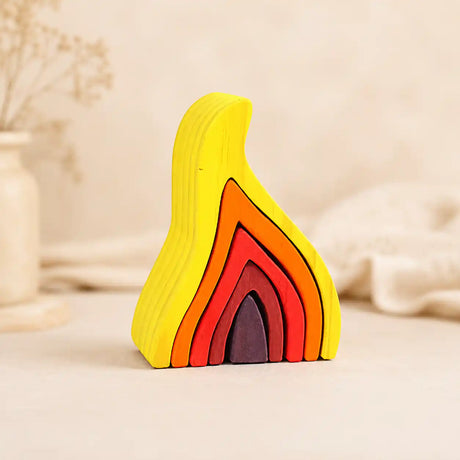
 Wooden Flame Stacking Puzzle
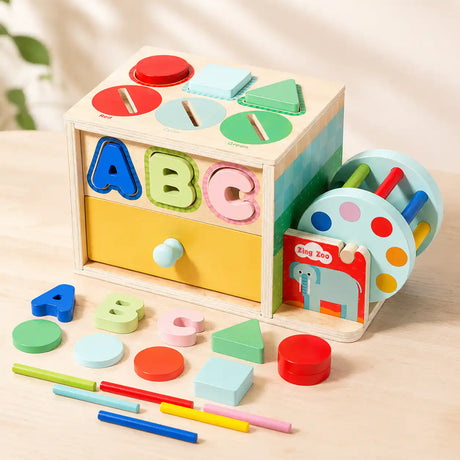
 Wooden 6-in-1 Activity Cube
 Wooden Snail Pull-Along Rainbow Stacker
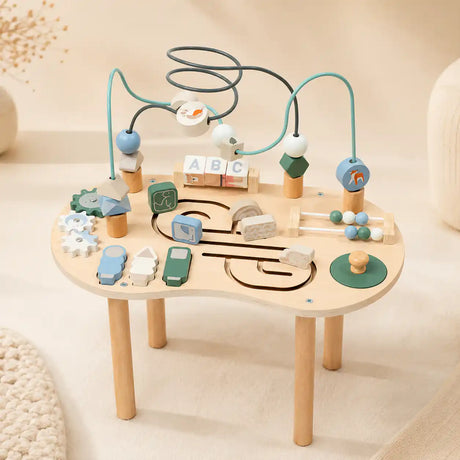
 Wooden Activity Table
 Wooden 10-in-1 Activity Walker
Wood vs plastic at a glance
| Consideration | Wood (well made) | Plastic (well made) |
|---|---|---|
| Softeners/plasticizers | None needed | Possible in flexible types |
| Durability | Very high; often heirloom | Good; can crack over time |
| Cleaning | Wipe only; don't soak | Easy; often washable |
| Small-parts risk | Depends on design | Depends on design |
| Environmental footprint | Lower when responsibly sourced | Higher; fossil-based |
Frequently asked questions
-
Are wooden toys safer than plastic ones?
Not automatically. A well-made toy of either material can be safe. Wood avoids plastic softeners and is often sturdy and one-piece, but the individual toy's design, finish, piece size, and age grade decide safety. -
Do wooden toys contain harmful chemicals?
They can if poorly finished, so buy from reputable makers and check the listing. The advantage of wood is that it doesn't require the softeners used in some flexible plastics — but finishes still matter. -
Is plastic always bad for kids?
No. Reputable plastic toys made to modern safety standards can be perfectly safe, lightweight, and easy to clean. Concerns usually center on certain additives and cheap, poorly made products. -
Which is better for the environment?
Responsibly sourced wood generally has a lower footprint: it's renewable, biodegradable, and durable enough to pass down. Most plastic toys are fossil-based and slow to break down. -
Do choking rules differ by material?
No. Small-parts and choking-hazard rules apply equally to wood and plastic. Always check the age grade and any small-parts warning regardless of material.
A note on safety: this article is general educational information, not a substitute for the manufacturer's instructions or official guidance. Always check the age grading, finish details, and any small-parts warnings on each toy, supervise young children during play, and consult the U.S. Consumer Product Safety Commission (cpsc.gov) for current requirements and recalls.
Sources & further reading
- U.S. CPSC (eCFR) — 16 CFR Part 1303: Ban of Lead-Containing Paint and Certain Consumer Products Bearing Lead-Containing Paint
- U.S. CPSC (eCFR) — 16 CFR Part 1501: Small Parts Regulation for Toys and Articles for Children Under 3
- American Academy of Pediatrics — Selecting Appropriate Toys for Young Children in the Digital Era
Last reviewed: July 2026.