Some toys can only be played with one way; others can be almost anything. That difference — between open-ended and single-purpose toys — quietly shapes how long a toy holds a child's interest and how much thinking it invites. This guide is part of our Skills & Development hub on what children learn through play.
Here's what the two types are, why open-ended toys tend to earn their keep, and how to build a shelf with a healthy mix.

Key takeaways
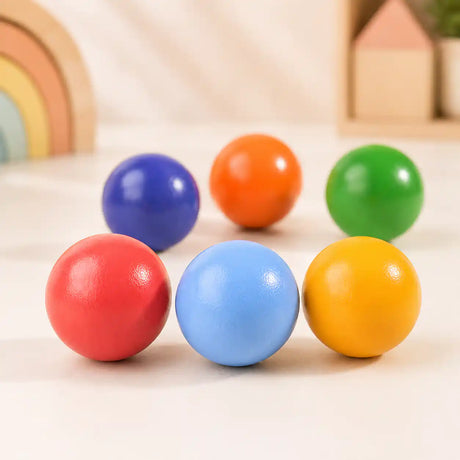
- Open-ended toys can be used in many ways and have no single "right" outcome — blocks, balls, figures, cloths.
- Single-purpose toys do one defined thing, which can be great for a specific skill but is quicker to outgrow.
- Open-ended toys grow with a child across several ages, so they cost less per year of play.
- They also invite more imagination, problem-solving, and language, because the child supplies the ideas.
- A good shelf has mostly open-ended toys with a few well-chosen single-purpose ones.
What's the difference between open-ended and single-purpose toys?
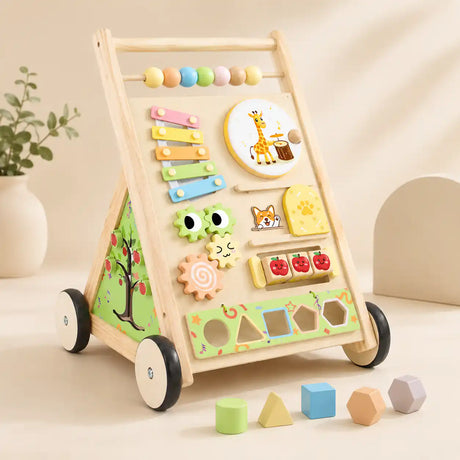
An open-ended toy has no fixed way to be played with. A set of wooden blocks is a tower, a road, a zoo fence, and a birthday cake on four different afternoons. A single-purpose toy is designed to do one thing — a specific puzzle you complete, a pop-up that pops when you press it. Single-purpose toys aren't bad; they can be brilliant at building one skill. But because there's a defined "done," a child tends to master them and move on, while an open-ended toy keeps offering new possibilities.
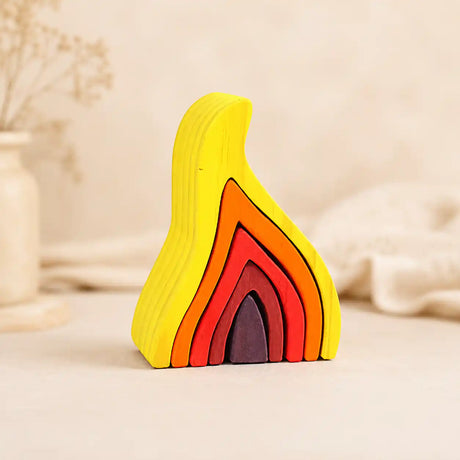
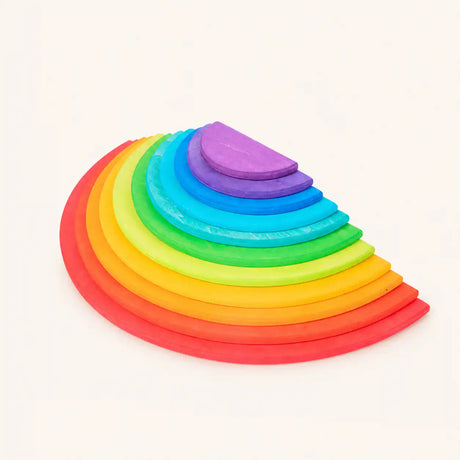
Classic open-ended toys are often the simplest ones. A wooden rainbow stacker is a stacker at one, a sorting set at two, and small-world scenery at three — the same pieces, endlessly re-imagined.

 Wooden Rainbow Semicircles
 Wooden Snail Pull-Along Rainbow Stacker
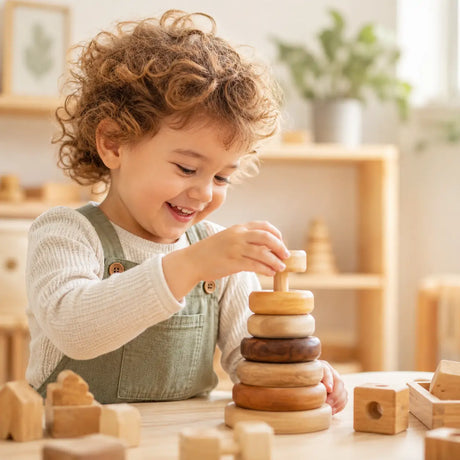
 Wooden Rainbow Stacking Discs Set
 Wooden Rainbow Stacking Tablets
Why do open-ended toys grow with a child?
Because the child, not the toy, decides what to do, an open-ended toy meets them wherever they are. The same arch stacker that a one-year-old grabs and topples becomes a balance puzzle at three and a bridge for cars at four. That range is why open-ended toys have the longest shelf life of anything in the playroom — and why they're often the most economical choice per year of use.

Open-ended vs single-purpose: a quick comparison
| Open-ended toys | Single-purpose toys | |
|---|---|---|
| Ways to play | Many; child decides | One defined way |
| Shelf life | Years, across ages | Until mastered |
| Builds | Imagination, problem-solving, language | One targeted skill well |
| Best for | The core of a shelf | A specific skill or interest |

Are single-purpose toys bad?
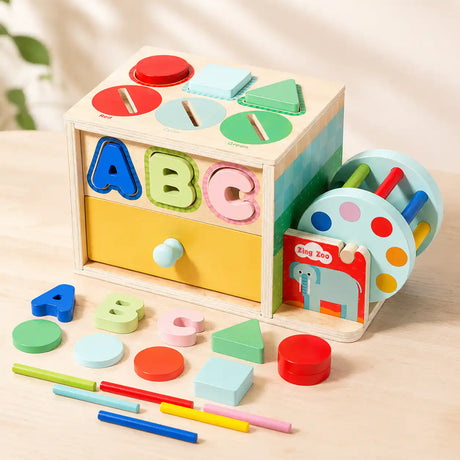
Not at all — they just play a supporting role. A well-made single-purpose toy can be the perfect tool for a specific skill a child is working on, like a shape sorter for posting or a lacing toy for threading. The trick is balance: let open-ended toys form the core of the shelf, and add single-purpose ones deliberately, where they earn their place. Pretend-play props sit somewhere in between — realistic enough to suggest a story, open enough to become anything — which is why our pretend play range is so versatile.
 Wooden Play Food Set
 Wooden Birthday Cake Pretend Play Set
 Wooden Animal Puzzle Stacker
 Montessori Busy Book Set
 Wooden Rainbow Car & Peg Doll Set
How do I build a shelf with the right mix?
Aim for mostly open-ended toys — blocks, stackers, balls, figures, cloths — with a few single-purpose favourites alongside. Keep the selection small and rotate it, so nothing gets lost in a pile; our guide to helping a toddler build focus explains why fewer toys out leads to deeper play. And when you're buying a gift, open-ended toys are the safest bet because they suit a wide range of ages — a point we cover in buying ahead for the stage that's coming.

Frequently asked questions
-
What is an open-ended toy?
An open-ended toy can be played with in many ways, with no single right outcome — blocks, balls, stackers, figures, and cloths. The child decides what it becomes, so it grows with them across several ages. -
What is a single-purpose toy?
A single-purpose toy is designed to do one defined thing, like a specific puzzle or a press-and-pop toy. It can build one skill really well, but children tend to master it and move on. -
Are open-ended toys better than single-purpose toys?
Open-ended toys usually offer more play value and last longer, but single-purpose toys are great for targeting a specific skill. The best shelf is mostly open-ended with a few well-chosen single-purpose toys. -
Why do open-ended toys last longer?
Because the child decides how to play, an open-ended toy meets them at every stage — a stacker at one, a sorting set at two, small-world scenery at three — so it stays useful for years. -
What are examples of open-ended toys?
Wooden blocks and rainbows, stacking and nesting sets, balls, peg dolls and animals, and play silks. Simple, realistic pretend-play props are open-ended too. -
How many toys should a toddler have out?
Just a few at a time. A small, rotated selection of mostly open-ended toys invites deeper, calmer play than a crowded shelf, and makes clean-up easier.
A note on development: the skills and milestones described here are typical patterns, not targets. Children develop at their own pace, and this guide is not a substitute for medical advice. If you have any concerns about your child's development, please speak with your pediatrician.
Last reviewed: July 2026.
Sources & further reading
- American Academy of Pediatrics — Selecting Appropriate Toys for Young Children in the Digital Era (Healey & Mendelsohn, 2019)
- American Academy of Pediatrics — The Power of Play (Yogman et al., 2018)