Sensory play is any play that engages a child's senses — touch, sound, sight, movement, and more. It sounds simple, but it's some of the most important work a young child does, and for many children it's genuinely calming. This guide is part of our Skills & Development hub on what toddlers learn through play.
Below: what sensory play actually is, why it can settle an overstimulated child, and the gentle toys and activities that support it.

Key takeaways
- Sensory play engages the senses — touch, sound, sight, and movement — and helps children learn about the world.
- It supports language, fine motor skills, focus, and the early processing of sensory information.
- For many children, gentle sensory play is regulating — it helps them settle, focus, and calm down.
- It doesn't need to be messy; texture, sound, and quiet manipulation all count.
- Follow your child's cues — some seek out sensory input, others need it dialled down.
What is sensory play?
Sensory play is any activity that stimulates a child's senses. That includes the obvious ones — touching different textures, listening to sounds, looking at colours and contrast — and the less obvious, like the sense of movement and body position that comes from rocking, spinning, or carrying something heavy. When a toddler squishes dough, shakes a rattle, or runs their fingers over a bumpy surface, they're gathering information and building the brain pathways that make sense of it.
Because it's open-ended and low-pressure, sensory play suits a huge range of ages and temperaments. There's no wrong way to do it, which is part of why it's so absorbing.

Why does sensory play calm some children?
For many children, repetitive, predictable sensory input is regulating — it helps the nervous system settle. Think of how an adult might fidget with a pen or knead bread to unwind; young children get the same relief from squishing, pouring, or rhythmic sound. Gentle, contained sensory play can be a wonderful reset for a child who's wound up, overtired, or overstimulated. It's not a cure-all, and every child is different, but offering a calm sensory activity is often more effective than asking a dysregulated toddler to simply "calm down."
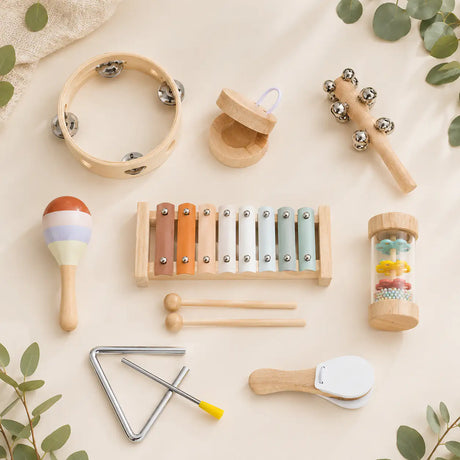
Sound is one of the easiest sensory channels to explore. A wooden musical instrument set invites shaking, tapping, and listening — early rhythm and cause-and-effect wrapped in sensory play.

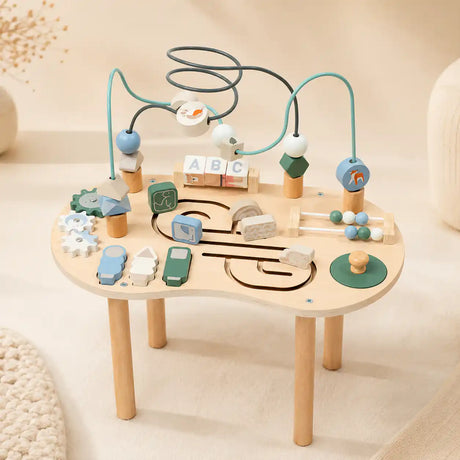
 Wooden Activity Table
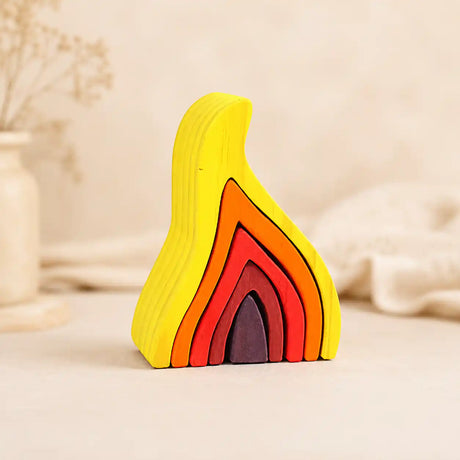
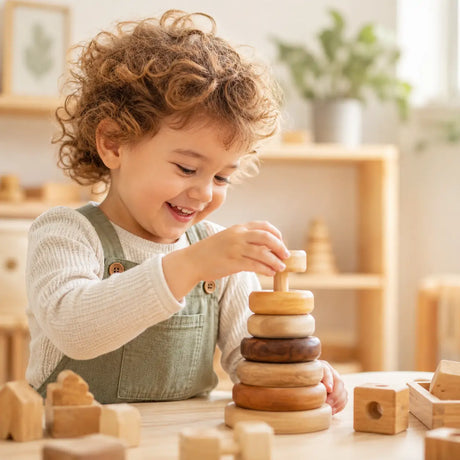
 Wooden Flame Stacking Puzzle
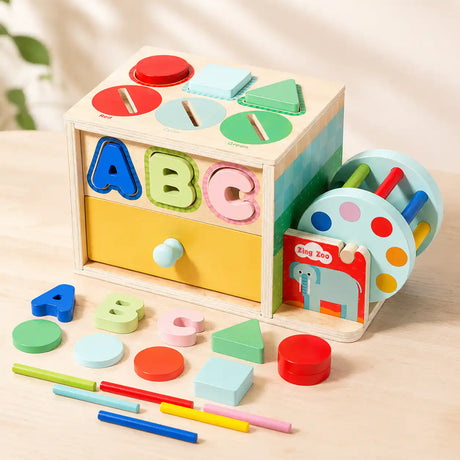
 Wooden 6-in-1 Activity Cube
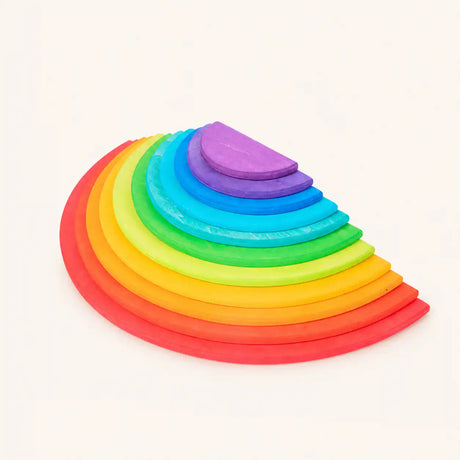
 Wooden Rainbow Semicircles
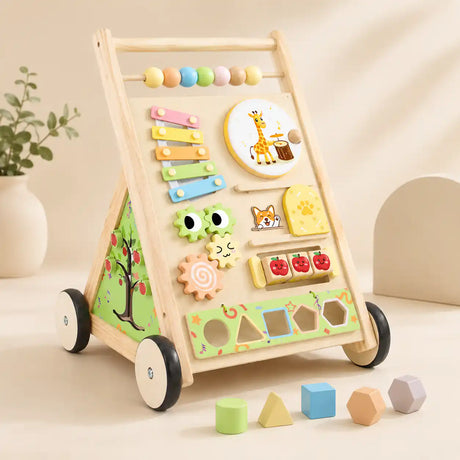
 Wooden 10-in-1 Activity Walker
What skills does sensory play build?
| Sensory activity | What the child does | What it supports |
|---|---|---|
| Exploring textures | Touches smooth, bumpy, soft, hard | Sensory processing, vocabulary |
| Making sounds | Shakes, taps, listens | Rhythm, cause and effect, listening |
| Pouring and scooping | Moves water, rice, or beans | Fine motor, focus, early volume sense |
| Quiet manipulation | Turns a textured book or board | Calm, concentration, hand control |
Do I need messy play?
Not at all. Messy play — sand, water, dough — is one lovely form of sensory play, but it's far from the only one, and it's fine to skip if it's not for your household. Texture boards, sound toys, quiet manipulatives, and even a walk to feel different surfaces all deliver rich sensory input with no clean-up. A Montessori busy book set, for instance, packs textures, flaps, and fasteners into a tidy, portable format. Our busy boards offer more contained, tactile options.

 Wooden Montessori Busy Board
 Wooden 8-in-1 Activity Cube
How do I read my child's sensory cues?
Children vary a lot in how much sensory input they want. Some are sensory seekers who crave movement, sound, and touch; others are more easily overwhelmed and need input gently dialled down. Watch what settles your child and what tips them over, and adjust. If sensory sensitivities seem to significantly affect daily life, your pediatrician is the right person to talk to. For related ideas on helping a child settle into deeper play, see our guide on helping a toddler build focus.

Frequently asked questions
-
What is sensory play?
Sensory play is any activity that engages a child's senses — touch, sound, sight, and movement. Squishing dough, shaking a rattle, exploring textures, and pouring water are all sensory play, and they help children learn about the world. -
Why is sensory play calming?
For many children, repetitive, predictable sensory input helps the nervous system settle — much like an adult fidgeting or kneading dough to unwind. A gentle sensory activity is often a good reset for an overstimulated toddler. -
What are the benefits of sensory play?
It supports sensory processing, language, fine motor skills, focus, and self-regulation. It also tends to be open-ended and low-pressure, which makes it deeply absorbing for a wide range of ages. -
Does sensory play have to be messy?
No. Messy play like sand and water is one form, but texture boards, sound toys, busy books, and quiet manipulatives deliver rich sensory input with no clean-up. -
What are good sensory toys for toddlers?
Musical instrument sets, textured busy boards and busy books, and quiet manipulatives all work well. Choose age-appropriate pieces with no choking hazards for younger toddlers, and supervise play. -
My child avoids certain textures — is that normal?
Sensory preferences vary widely and are usually normal. Follow your child's cues and don't force it. If sensitivities significantly affect everyday life, it's worth discussing with your pediatrician.
A note on development: the skills and milestones described here are typical patterns, not targets. Children develop at their own pace, and this guide is not a substitute for medical advice. If you have any concerns about your child's development, please speak with your pediatrician.
Last reviewed: July 2026.
Sources & further reading
- ZERO TO THREE — Sensory Experience and Development in Babies
- ZERO TO THREE — Your Child's Sensory Threshold