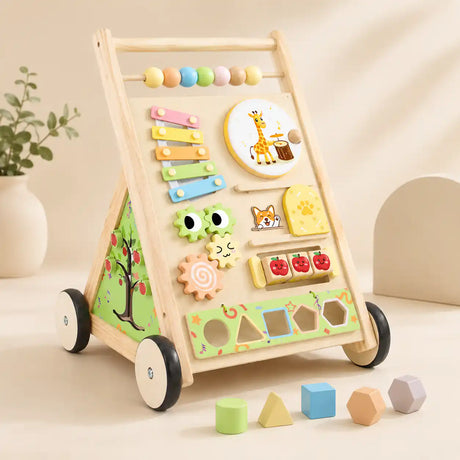
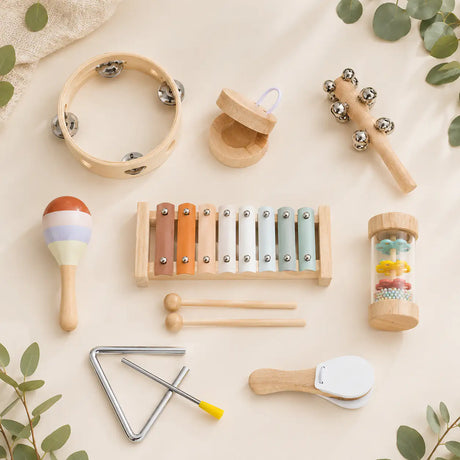
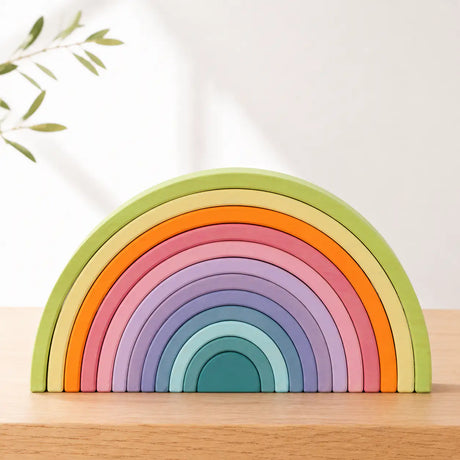
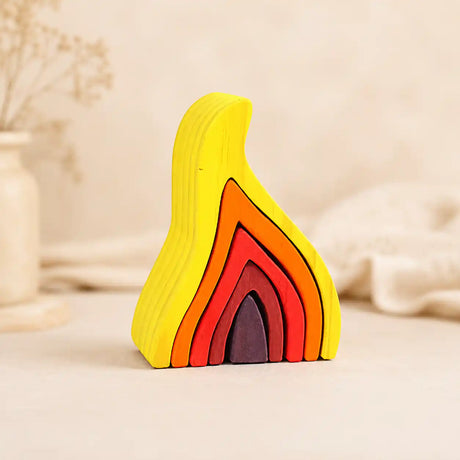
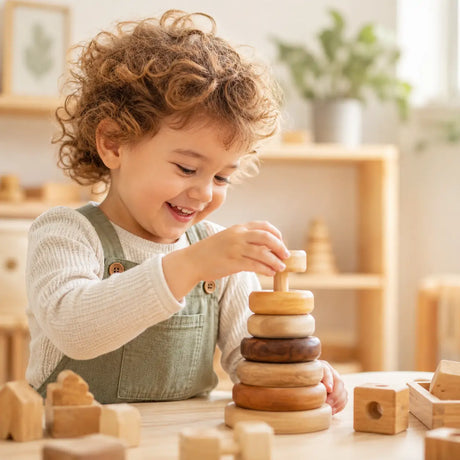
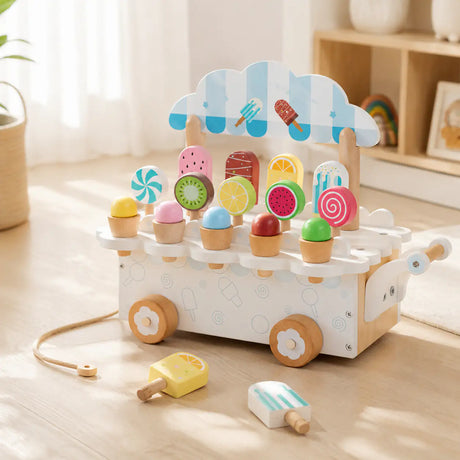
Pretend play toys that turn everyday moments into imaginative adventures. From ice cream carts and tool boxes to harvest carts and cutting food sets, this collection is built around the things curious toddlers can't wait to copy from the grown-ups around them.

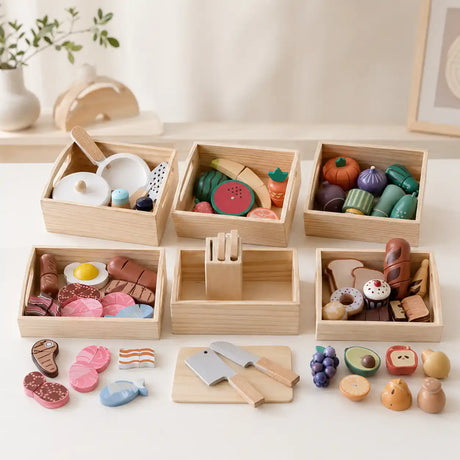
![Wooden Knife Set variant with pot, pan, utensils, and cutting board for pretend kitchen play]()
![Wooden Fruit Set variant with watermelon, banana, strawberry, kiwi, orange, and avocado]()
![Wooden Vegetable Set variant with eggplant, mushrooms, corn, cucumber, and pumpkin]()
![Wooden Meat Set variant with steak, salmon, ham, bacon, egg, and sausage pieces]()
![Wooden Bread and Bakery Set variant with croissant, baguette, donuts, cupcake, and macaron]() 3-4+ yearUp to 30% off
3-4+ yearUp to 30% off-
2-3 year30% off
-
3-4+ year30% off
-
2-3 year29% off
-
2-3 year30% off
-
1-2 year30% off
-
2-3 year29% off
-
2-3 year31% off
-
2-3 year31% off
-
2-3 year29% off
-
2-3 year31% off
-
2-3 year29% off
-
1-2 year29% off
-
1-2 year30% off
-
3-4+ year31% off
-
1-2 year30% off
-
1 year30% off
-
2-3 year30% off
-
2-3 year31% off
-
2-3 year30% off




















Why Pretend Play Matters
When a child serves you a wooden cake, they're doing more than playing. They're rehearsing social scripts, practicing language, and — crucially — holding an idea in mind that isn't physically present. That capacity for symbolic thought underpins reading, mathematics, and planning.
- Language — pretend play generates more talk than almost any other activity
- Social skills — turn-taking, negotiating roles, and reading another person's intent
- Symbolic thinking — a block becomes a phone, which is the same leap as a letter becoming a sound
- Emotional processing — children replay doctor visits and new siblings to make sense of them
What's in This Collection
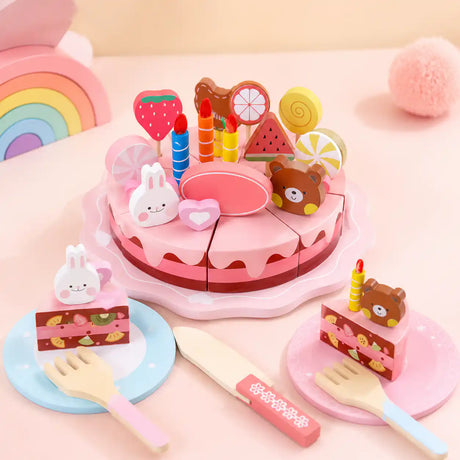
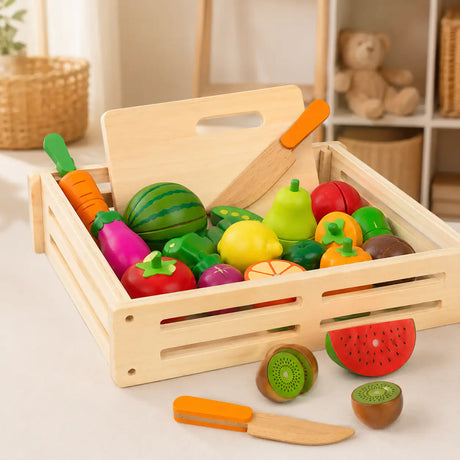
Play food and cutting sets, market and harvest carts, tool boxes, tea party sets, and role-play props — Montessori pretend play toys made from natural wood, with enough realism to be recognizable and enough simplicity to leave room for invention.
Pretend Play Questions
At what age does pretend play start?
First signs appear around eighteen months — holding a block to the ear as a phone, or feeding a toy. It becomes richer through two and three, and by four most children sustain elaborate scenarios with plots, roles, and rules they've negotiated themselves.
What are the benefits of pretend play?
Language growth, social negotiation, emotional regulation, and symbolic reasoning. Research consistently links rich pretend play to later literacy, largely because both depend on representing something that isn't physically present.
Should I join in or let them play alone?
Both, at different moments. Joining in models new vocabulary and extends the story. Staying out lets the child direct entirely, which is where the real work happens. A good rule is to follow rather than lead — take the role you're assigned, and don't redirect the plot.
Are wooden pretend play toys better than plastic sets?
Wooden sets tend to be simpler, which leaves more to the imagination — a wooden cake can be any flavor. They also last longer and look better left out. Plastic sets often offer more detail, which some children enjoy but which does more of the imagining for them.
My child plays the same scenario over and over. Is that normal?
Very. Repetition is how young children consolidate understanding, and a scenario replayed for weeks is usually one they're actively working through. It typically resolves on its own once the idea has been absorbed.
Adult supervision is recommended. Age guidance and full details are on each product page.
Read more about Pretend Play Show less
You May Also Like
View all-
1 year30% off
-
1 year31% off
-
1 year29% off
-
1 year31% off
-
1 year30% off
-
2-3 year31% off
-
1 year30% off
-
3-4+ year31% off
-
2-3 year31% off
-
1-2 year30% off