The first birthday is a turning point. Almost overnight, your baby becomes a busy little explorer — pulling up to stand, dropping things just to watch them fall, and reaching for anything that rattles, rolls, or stacks. Choosing the best toys for 1 year olds isn't about buying the most, or the flashiest. It's about offering a few well-made things that match what your child is naturally trying to do right now.
This guide walks through what one-year-olds are typically working on, the kinds of play that support each stage, and specific Montessori-inspired wooden toys worth considering. It's part of our larger Play by Age series, where we look at development stage by stage.
Key takeaways
- Around age one, most children are focused on gross motor movement (pulling up, cruising, walking) and early fine motor skills (grasping, releasing, poking).
- The best toys for this age are simple, open-ended, and let a child repeat an action many times — stacking, posting, pushing, pulling.
- Cause-and-effect toys are a favorite at this stage because one-year-olds are learning that their actions make things happen.
- Fewer, better toys usually lead to deeper, calmer play than a large, rotating pile.
- Age labels are a safety and suitability starting point, not a rule — always supervise play and keep small parts away from children who still mouth objects.
What are 1 year olds working on developmentally?
At around 12 months, most children are pouring their energy into movement and into their hands. This is the stage where a baby becomes a toddler. Many are cruising along furniture, taking first steps, and learning to lower themselves back down with control. At the same time, their hands are getting more precise — moving from a whole-hand grab toward a pincer grasp that can pick up a single small object between thumb and finger.
Three themes tend to define play at this age. First is cause and effect: a one-year-old drops a ball down a ramp, bangs two blocks together, or pushes a toy and watches it move, delighted that they made it happen. Second is object permanence — the growing understanding that things still exist when they're out of sight, which is why posting toys and peekaboo are so satisfying. Third is early language, as children begin to connect words with the objects and actions in front of them.

Every child moves through these shifts on their own timeline. Some walk at ten months and some at fifteen, and both are perfectly typical. Toys can gently support what a child is practicing, but they don't set the pace — your child does. If you ever have questions about your child's development, your pediatrician is the right person to ask.
What kinds of toys are best for a 1 year old?
The most useful toys at this age share a few traits: they respond to a child's action, they can be used the same way over and over, and they don't do the "playing" for the child. A good one-year-old toy is quiet enough that your child provides the energy and the story. Here are the categories worth having.
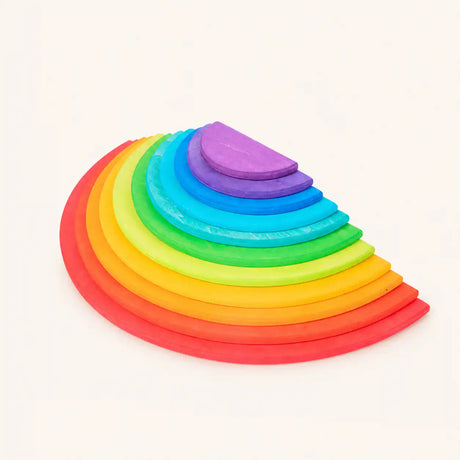
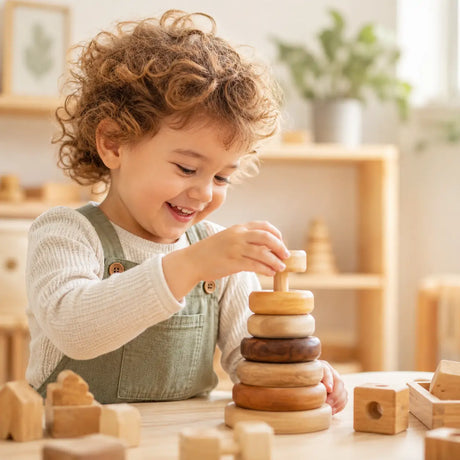
Stacking and nesting toys. Placing a ring on a peg or a cup inside a cup builds hand-eye coordination and an early sense of size and order. A classic wooden rainbow stacker grows with your child for years, from simple grabbing at twelve months to deliberate sorting later on. Browse more in our stacking toys collection.

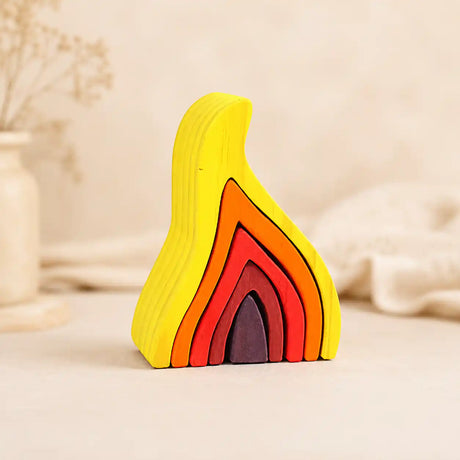
 Wooden Flame Stacking Puzzle
 Wooden Rainbow Semicircles
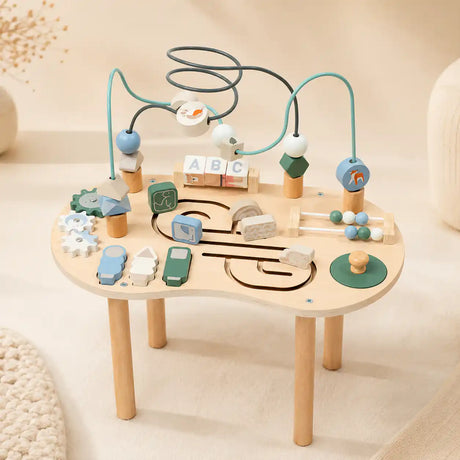
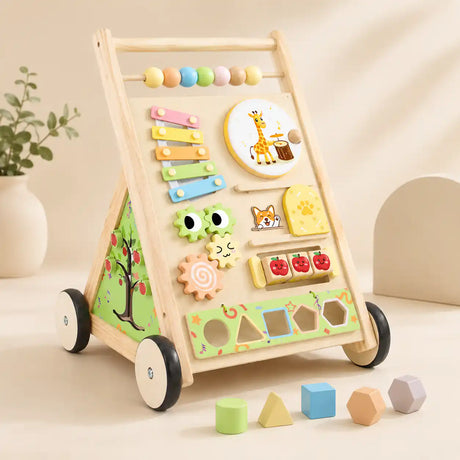
 Wooden Activity Table
 Wooden Rainbow Stacking Discs Set
 Wooden Animal Puzzle Stacker
Push and pull toys. As new walkers find their feet, something to push or pull adds purpose to those wobbly laps of the living room. A wooden snail pull-along stacker combines a pull toy with stackable pieces, so it stays interesting once your child is steady on their feet.

Shape and color sorters. Posting a shape through the right hole is deeply absorbing for a one-year-old, and it builds problem-solving and fine motor skills. A friendly wooden lion color sorter keeps the challenge gentle. You'll find more in sorting toys and fine motor toys.

Activity toys. A multi-sided wooden activity cube puts several cause-and-effect activities in one place — beads to slide, gears to turn, doors to open — which suits a child who wants to touch everything.

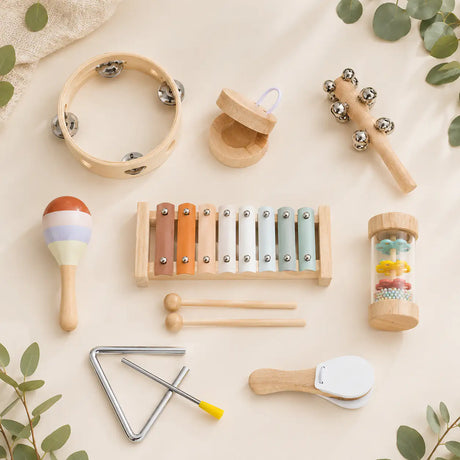
First sensory and music play. Simple instruments and textured toys feed a one-year-old's drive to explore with every sense. Our music & sensory toys are a gentle place to start.

Which toy supports which skill?
If you're matching a gift to what your child is practicing, this quick table lines up common toy types with the skills they tend to support.
| Toy type | What the child does | Skills it supports |
|---|---|---|
| Stacking & nesting | Places rings or cups in order | Hand-eye coordination, size and order |
| Push & pull | Moves a toy while walking | Gross motor, balance, confidence |
| Shape & color sorter | Posts a shape into a hole | Problem-solving, fine motor, matching |
| Activity cube | Slides, turns, and opens parts | Cause and effect, curiosity, focus |
| Sensory & music | Shakes, taps, and explores texture | Sensory processing, early rhythm |
How many toys does a 1 year old really need?
Fewer than most of us expect. One-year-olds tend to play more deeply when only a handful of toys are within reach at a time. A cluttered shelf is overwhelming; a small, well-chosen set invites focus. Many families keep most toys stored away and rotate a few out every week or two, which makes familiar toys feel new again without a single purchase. This "less is more" approach is a core idea in Montessori at home, and it's kinder on both your budget and your living room.
What should I look for in a safe toy for a 1 year old?
Safety comes first at an age when nearly everything ends up in the mouth. Choose toys with no small parts that could pose a choking hazard, check that painted finishes are made for young children, and give wooden toys a quick once-over for splinters or loose pieces before each play session. Age grading on a toy is often about hazards rather than ability, so take the recommended-age label seriously even when your child seems ready. For a fuller explanation, see our toy safety guide. Whatever you choose, active adult supervision is essential during play at this age.
What are the best first birthday gift ideas?
For a first birthday, the toys that get the most love are the ones a child can grow into: a stacker, a pull-along, or a sorter that stays useful well past the party. Natural wooden toys also photograph beautifully and hold up to years of handling, which makes them a thoughtful keepsake as much as a plaything. We've gathered our favorites in the First Birthday Gifts collection, and you can shop the full range of age-appropriate options in Montessori Toys for 1 Year Olds. A wooden animal balancing stacker is a lovely, giftable place to start.

 Wooden 10-in-1 Activity Walker
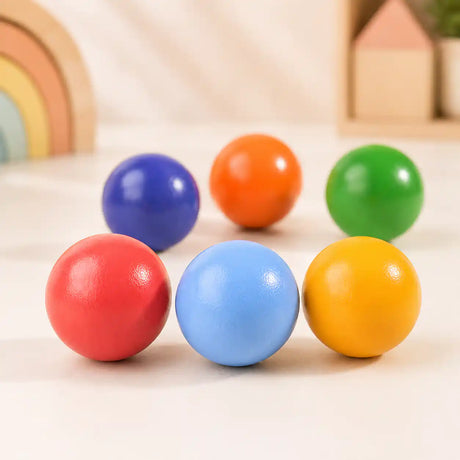
 Wooden Rainbow Sorting Cylinder
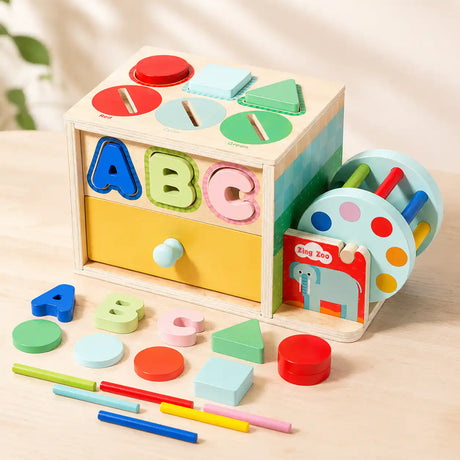
 Wooden Shape Sorter Box
Frequently asked questions
-
What are the best toys for a 1 year old?
The best toys for a one-year-old are simple, open-ended ones that respond to a child's actions — stacking rings, push-and-pull toys, shape sorters, and activity cubes. These support the gross motor, fine motor, and cause-and-effect skills most children are working on around age one. -
What developmental skills do 1 year olds work on?
Around age one, many children focus on walking and balance, developing a pincer grasp, understanding cause and effect, and beginning to connect words with objects. Every child follows their own timeline. -
Are wooden toys good for 1 year olds?
Yes. Well-made wooden toys are sturdy, easy to grip, and free of batteries and screens, which lets a child provide the play. Always check that finishes are child-safe and that there are no small parts. -
How many toys should a 1 year old have out at once?
Just a few. One-year-olds concentrate better with a small selection within reach. Rotating a handful of toys every week or two keeps play fresh without buying more. -
What is a good first birthday gift for a 1 year old?
Toys a child can grow into make the best first birthday gifts — a wooden stacker, a pull-along, or a shape sorter. Our First Birthday Gifts collection is a good starting point. -
Are these toys safe for a 1 year old who still mouths everything?
Choose toys with no small parts, check for a snug, child-safe finish, and inspect wooden pieces for splinters before play. Supervise closely, and put smaller pieces away when play isn't supervised. -
Do 1 year olds need electronic or light-up toys?
No. Simple, screen-free toys that require the child to act tend to hold attention longer and encourage more imaginative, hands-on play than toys that light up or make sounds on their own. -
When should I move up to toys for 2 year olds?
When your child masters current toys and looks for more of a challenge — usually sometime in the second year. You can shop ahead in our Montessori Toys for 2 Year Olds collection when the time comes.
A note on development: the milestones described here are typical patterns, not targets. Children develop at their own pace, and this guide is not a substitute for medical advice. If you have any concerns about your child's development, please speak with your pediatrician.
Last reviewed: July 2026.
Sources & further reading
- CDC — Developmental Milestones (Learn the Signs. Act Early.)
- American Academy of Pediatrics — Selecting Appropriate Toys for Young Children in the Digital Era