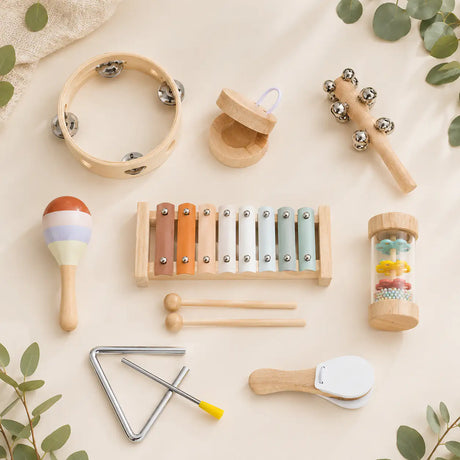
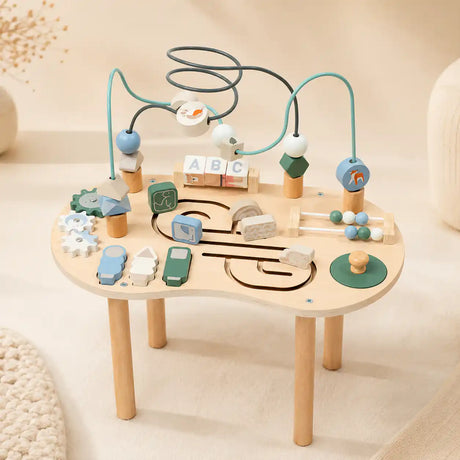
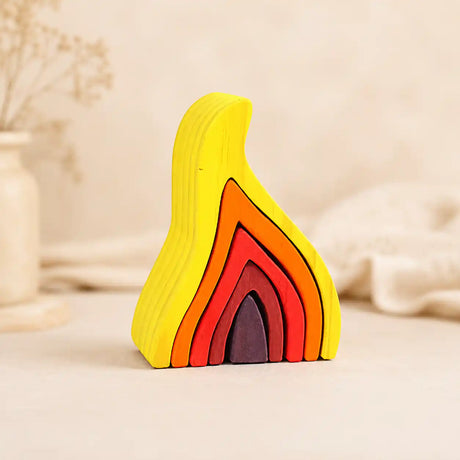
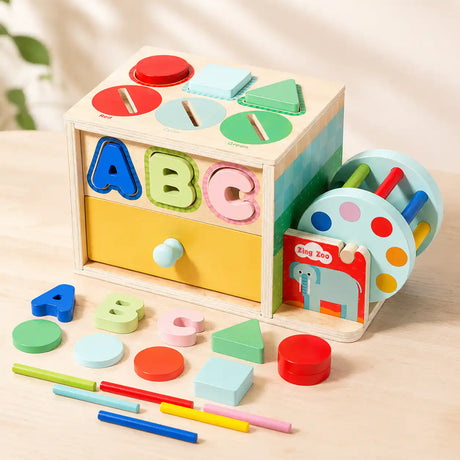
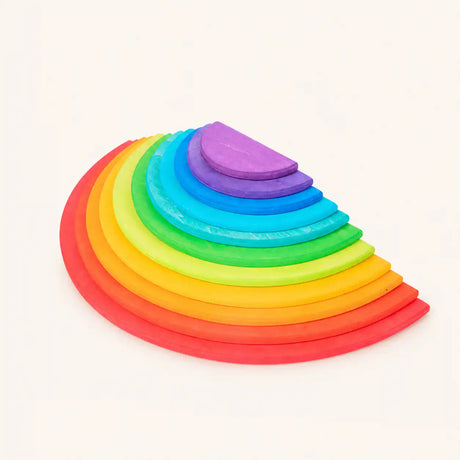
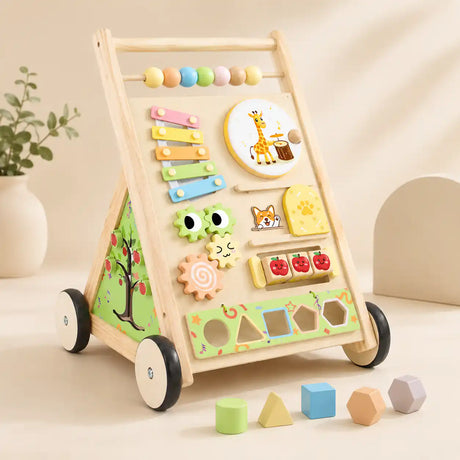
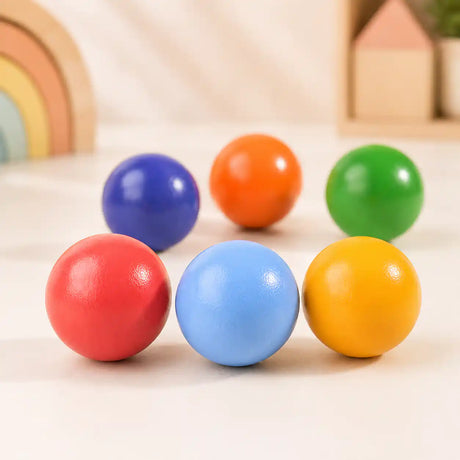
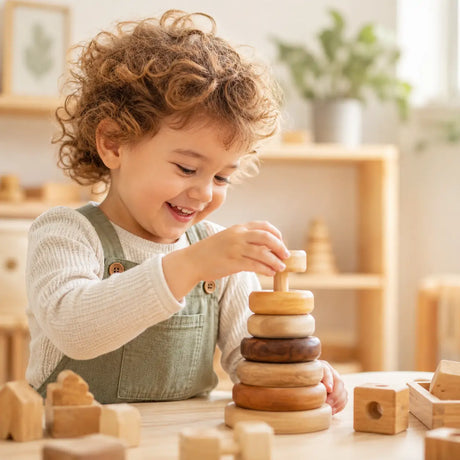
You bring home an exciting new toy, and your toddler plays with the box. Sound familiar? It's one of the most common — and quietly frustrating — parenting experiences. The good news: a toddler ignoring a new toy is usually a sign of how they learn, not a problem with your child or the toy. Here's what's going on, and what to do about it.
This is a Parenting Tip from our Play by Age series.
Key takeaways
- Toddlers often ignore new toys because too many choices are overwhelming, or the toy is too advanced or too simple.
- Novelty isn't the same as interest — children bond with toys through repetition, not surprise.
- Toy rotation — keeping most toys away and offering a few at a time — brings toys back to life.
- Open-ended toys tend to hold attention longer than single-purpose or electronic ones.
- Sometimes the "boring" box really is the better toy — and that's fine.
Why does my toddler ignore new toys?
There are a few usual culprits. The most common is simply too much choice: when a shelf or toy box is overflowing, a toddler can't settle on anything, so nothing gets deep play. A new toy just adds to the noise. Another is fit — a toy that's too advanced is frustrating, and one that's too easy is boring; either gets abandoned. And sometimes the toy asks the child to be passive (press a button, watch it perform) when toddlers are wired to do. The humble cardboard box wins because it's open-ended: it can be a car, a boat, a hat, a house.

It's also worth remembering that children bond with toys through repetition. What looks like boredom with an old toy is often mastery, and what looks like disinterest in a new one is often that it hasn't become familiar yet. Novelty grabs attention for a moment; familiarity is what sustains play.
What is toy rotation, and how does it help?
Toy rotation is the simple practice of keeping most of your toddler's toys stored out of sight and offering only a small selection at a time — then swapping them every week or two. With fewer toys out, each one gets noticed and played with more deeply, and a toy that reappears after a break feels excitingly new without costing a cent. Many families are amazed at how a "boring" toy comes back to life after two weeks in the closet. Rotation is a core idea in Montessori at home, and it's one of the highest-impact changes you can make.
Setting it up is simple: sort toys into a few bins, keep one bin out, and store the rest somewhere out of sight. Every week or two, swap a bin. Watch which toys your child gravitates to and which get ignored, and use that to refine what comes out next. Over a few weeks you'll learn a surprising amount about what genuinely engages your child.

How do I get a toddler interested in a toy?
A few gentle nudges help without forcing it. Put the toy out on its own, at your child's eye level, so it isn't lost in a pile. Play with it yourself nearby — toddlers are drawn to what a trusted adult finds interesting — then step back and let them take over. Connect it to something they already love (bring the new animal to the existing farm). And give it time; a toy often needs a few low-key encounters before it clicks. If it still doesn't land, put it away and try again in a month, when your child may be exactly ready for it.
And sometimes the kindest move is to let it go. Not every toy suits every child, and that's fine — a toy your toddler never warms to can be passed on to a friend or saved for a younger sibling without any guilt.
What if my toddler only wants one toy?
A toddler who plays with the same toy over and over isn't stuck — they're deep in the work of mastery. Repetition is how young children learn, and a favorite toy is a sign they've found something matched perfectly to their stage. There's no need to push variety for its own sake. You can gently extend the play by adding a related element — a ramp for the cars, a basket for the balls — rather than swapping in something new. When they're truly ready for more, they'll show you.
Should I stop buying new toys?
Not entirely — but you can buy fewer, better ones. Open-ended toys that a child can use in many ways hold attention far longer than single-purpose or electronic toys. Before buying, it's worth asking whether a toy invites your child to do something, or just to watch. Our age guides can help you choose toys matched to your child's stage, like the best toys for 2 year olds, so new purchases are more likely to stick.
Frequently asked questions
-
Why does my toddler ignore new toys?
Usually because there are too many toys out, the toy is too hard or too easy, or it asks them to be passive. Toddlers prefer open-ended toys they can act on. -
Why does my toddler play with the box instead of the toy?
Because a box is open-ended — it can be anything. That flexibility is exactly what toddlers crave, and it's a sign they enjoy imaginative, active play. -
What is toy rotation?
Keeping most toys stored away and offering just a few at a time, swapping them every week or two. It leads to deeper play and makes old toys feel new. -
How many toys should a toddler have out at once?
Just a handful. A small, rotated selection helps a toddler focus and play more deeply than a full toy box. -
How do I get my toddler interested in a toy?
Put it out on its own, play with it yourself nearby, connect it to a favorite, and give it time. If it doesn't land, try again in a few weeks. -
Is it bad that my toddler gets bored of toys quickly?
Not at all. Quick "boredom" is often mastery. Rotating toys and choosing open-ended ones keeps play fresh.
A note on development: the patterns here are typical, not universal. Children differ, and this guide is not a substitute for medical advice. If you have concerns about your child's development or play, please speak with your pediatrician.
Last reviewed: July 2026.
Sources & further reading
- University of Toledo — Fewer Toys Lead to Richer Play Experiences, UT Researchers Find
- American Academy of Pediatrics — The Power of Play: A Pediatric Role in Enhancing Development in Young Children