When you're buying for someone else's child — a niece, a friend's baby, a birthday party months away — there's a smart little trick: buy for the stage that's coming, not the one they're in. A toy chosen just ahead gets unwrapped, set aside for a bit, and then becomes a favorite exactly when the child grows into it. This guide is about buying ahead with confidence.
It's part of our Play by Age series, which maps what children are working on stage by stage.
Key takeaways
- Buying slightly ahead means a toy stays useful longer and lands right as the child is ready.
- Open-ended toys — stackers, blocks, sorters — span several stages, so they're forgiving to buy ahead.
- Check the recommended age for safety, and hold small-part toys until the child is old enough.
- A gift receipt and simple packaging make it easy for parents to store a toy until it fits.
- When unsure, aim about six months ahead — close enough to feel timely, far enough to grow into.
Why buy a toy for a stage the child hasn't reached?
Children grow fast, and the toy that dazzles this month can bore them by the next. Choosing a little ahead sidesteps that. It also helps at gift-heavy moments — a birthday or the holidays — when a child receives more than they can play with at once. A slightly advanced toy can be tucked away and brought out later, feeling brand new right when the child is ready for it. The key is picking toys that reward a stage the child is approaching, not one so far off it gathers dust.

Which toys are safest to buy ahead?
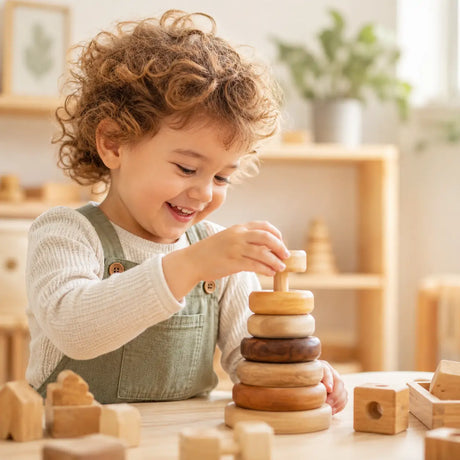
Open-ended toys are the most forgiving, because they're used differently at each age. A set of blocks is a toppling game for a one-year-old, a building project for a three-year-old, and a small-world city for a four-year-old. Stackers, sorters, and simple wooden figures work the same way. Because there's no single "right" way to play, the child grows into new uses rather than outgrowing the toy. Our wooden toys collection is full of these grow-with-me pieces.
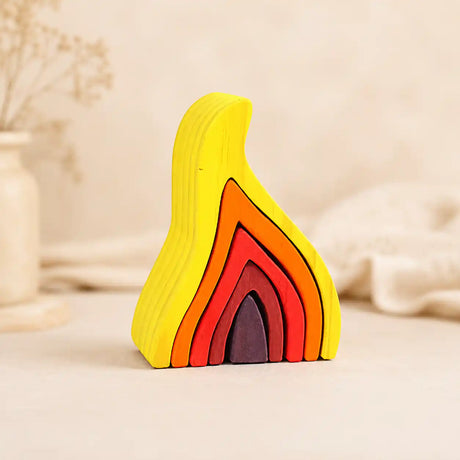
 Wooden Flame Stacking Puzzle
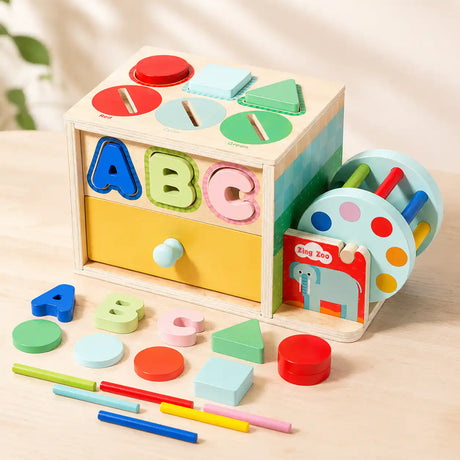
 Wooden 6-in-1 Activity Cube
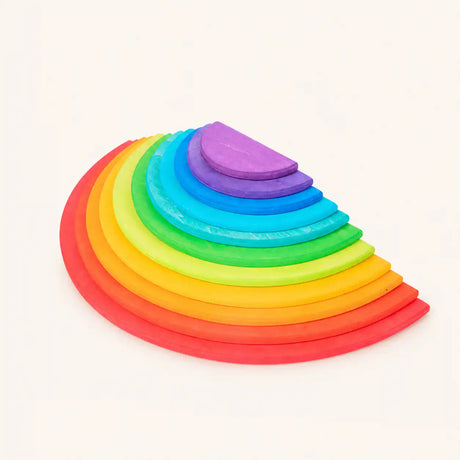
 Wooden Rainbow Semicircles
 Wooden Snail Pull-Along Rainbow Stacker
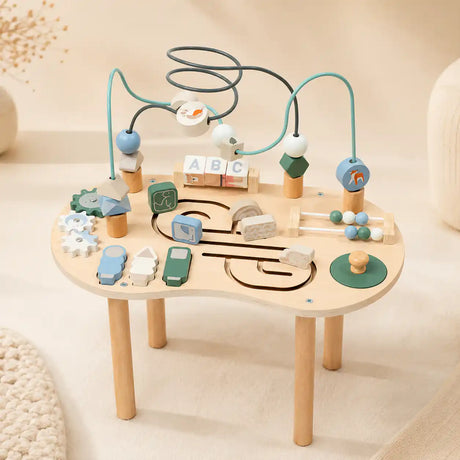
 Wooden Activity Table
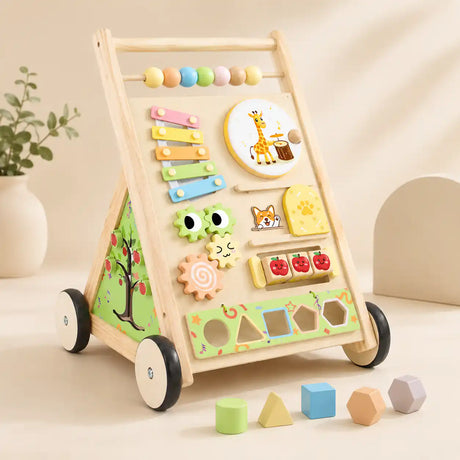
 Wooden 10-in-1 Activity Walker
How far ahead should I buy?
About six months is a sweet spot. Far enough that the toy still feels fresh when it comes out, close enough that the child can enjoy at least part of it soon. Buying years ahead is riskier — interests and safety needs change a lot — so if you're choosing for a baby and want it used sooner, lean toward open-ended toys they can grow with rather than grow into. Our age guides make this easy: match the child's coming stage in 1 year olds, 2 year olds, 3 year olds, or 4 year olds.
Season matters, too. A toy bought in spring for a winter birthday has months to wait, so lean toward something the child can use the moment it's unwrapped or grow into within a season — not a milestone a year away.

What about safety when buying ahead?
Buying ahead and safety go hand in hand: a toy meant for an older child may have small parts that aren't safe for the little one yet. That's fine — just flag it for the parents so it's stored until the child is old enough, and always check the recommended age. Our toy safety guide explains what age labels and small-parts warnings mean. A quick note on the gift tag ("great for around age three") helps parents store it safely and bring it out at the right time.
A quick note for grandparents and gift-givers
If you're a grandparent or relative buying ahead regularly, a little coordination goes a long way. A quick check with the parents avoids duplicates and tells you which stage is coming next. Keeping a running list of what you've given also helps you build a collection over time — a few blocks now, matching figures later — rather than a drawer of unrelated toys. Thoughtful, connected gifts get played with; random ones get stored.
Buying ahead on a budget
Buying ahead doesn't mean spending more. A single well-made, open-ended toy will outlast a bundle of trend-driven plastic. Our Gifts Under $25 collection has plenty of grow-with-me options — a wooden animal balancing stacker or a wooden lion color sorter are lovely examples that a child will use across several stages.


 Wooden Montessori Shape Sorter & Magnetic Fishing Board
 Dinosaur Sorting Drum
 Wooden Chunky Puzzle Set
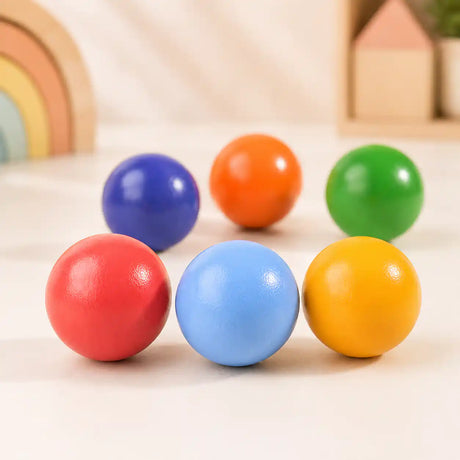
 Wooden Rainbow Balls
 Montessori Busy Book Set
Frequently asked questions
-
Is it a good idea to buy toys a child will grow into?
Yes, within reason. Choosing about six months ahead means the toy lands right as the child is ready, and open-ended toys grow with them across several stages. -
How far ahead should I buy a toy?
Around six months is ideal. Buying years ahead is riskier, since interests and safety needs change — lean toward open-ended toys in that case. -
What toys are best for buying ahead?
Open-ended toys like blocks, stackers, sorters, and wooden figures, because they're played with differently at every age. -
Is it safe to give a toy meant for an older child?
Only if it's stored until the child is old enough. Older-age toys can have small parts, so check the recommended age and let the parents know. -
What if the child already has a similar toy?
Include a gift receipt, keep packaging simple, and choose open-ended toys that complement rather than duplicate — more blocks or figures are rarely unwelcome. -
Do grow-with-me toys cost more?
Not necessarily. A single durable, open-ended toy often costs less over time than several short-lived ones. See our Gifts Under $25 range.
A note on development: the ages here are typical patterns, not targets. Children develop at their own pace, and this guide is not a substitute for medical advice. If you have any concerns about your child's development, please speak with your pediatrician.
Last reviewed: July 2026.
Sources & further reading
- CDC — Developmental Milestones
- American Academy of Pediatrics — The Power of Play: A Pediatric Role in Enhancing Development in Young Children