Montessori has a reputation for being pricey, but it doesn't have to be. You can build a genuinely lovely, functional Montessori shelf for under $100 — and a lot of the best Montessori "materials" are free things already in your kitchen. The secret is a few well-chosen, open-ended toys plus everyday practical-life activities, not a cupboard full of expensive sets. This guide is part of our Montessori Basics hub.
Here's how to put together a starter shelf on a budget, what to spend on, and where to save.

Key takeaways
- A complete starter Montessori shelf can cost under $100 with a few well-chosen toys.
- Much of Montessori is free — practical-life tasks use things you already own.
- Fewer, better toys beat a big pile, so a small budget is an advantage, not a limit.
- Spend on durable, open-ended core pieces; save with rotation, secondhand, and DIY.
- Add gradually — a Montessori shelf is meant to grow slowly, not arrive all at once.
Does Montessori have to be expensive?
No. The eye-watering price tags you sometimes see come from big branded sets and subscription boxes, not from the philosophy itself. Montessori actually leans away from having a lot of stuff: a small, carefully chosen selection is the whole idea. That makes it one of the more budget-friendly approaches once you stop trying to buy it all at once.
The under-$100 shelf: a sample setup
Here's one way to cover the main play areas — sorting, stacking, puzzles, fine motor, and a little pretend — for well under $100. Mix and match to suit your child; these are affordable picks from our gifts under $25 collection.


 Wooden Shape Sorter & Fishing Board
 Dinosaur Sorting Drum
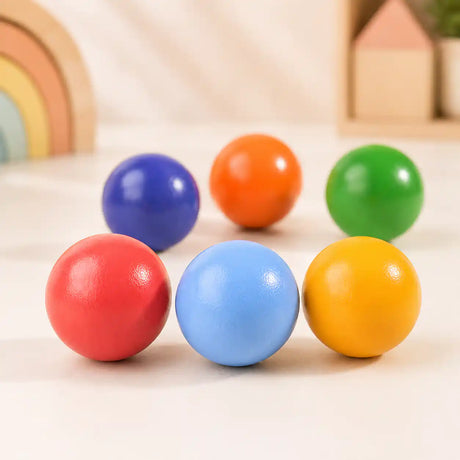
 Wooden Rainbow Balls
 Montessori Busy Book Set
Free Montessori: what you already own
Some of the most valuable Montessori work costs nothing. Everyday practical-life activities — pouring water, spooning beans, wiping a table, matching socks, sorting cutlery (the safe kind) — build focus and fine motor control with things from your own kitchen. Natural objects like pinecones, shells, and smooth stones make free sorting and sensory baskets. A low basket of board books and a securely fixed mirror round out a shelf beautifully, often from what you have on hand.

Where to spend and where to save
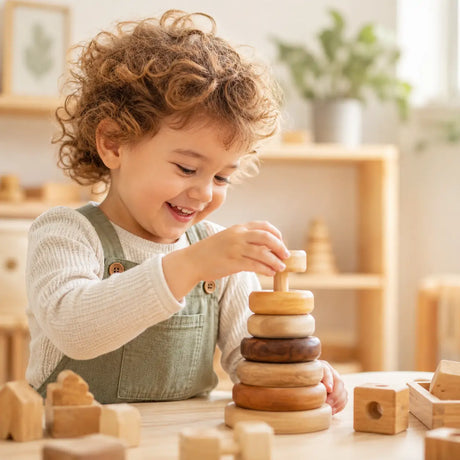
Spend on a few durable, open-ended core toys you'll use for years — a good stacker, a solid puzzle, a set of blocks. These earn their keep across many stages and hand down well. Our wooden toys collection is a good place to pick one or two anchors. Save everywhere else: rotate what you have so it feels new, buy quality secondhand, make simple activities from household items, and steer gift-givers toward one lovely piece rather than many cheap ones.
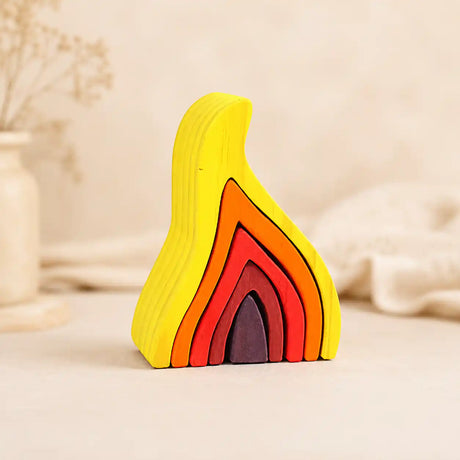
 Wooden Flame Stacking Puzzle
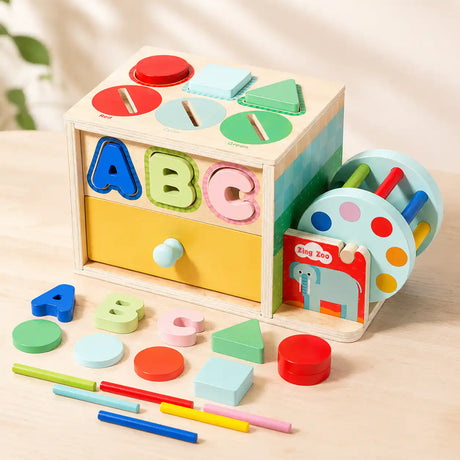
 Wooden 6-in-1 Activity Cube
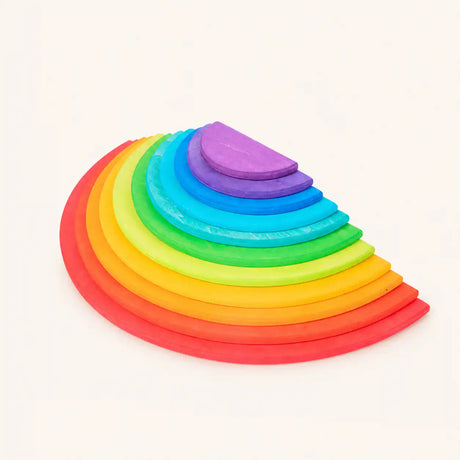
 Wooden Rainbow Semicircles
 Wooden Snail Pull-Along Rainbow Stacker
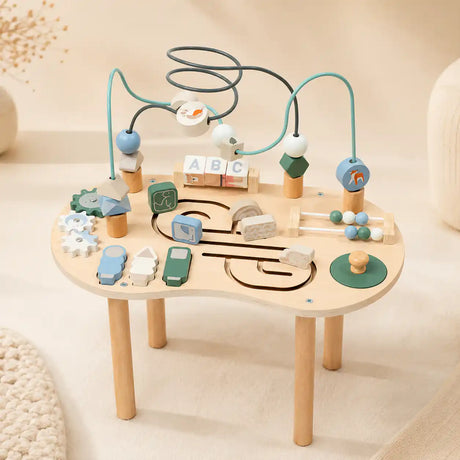
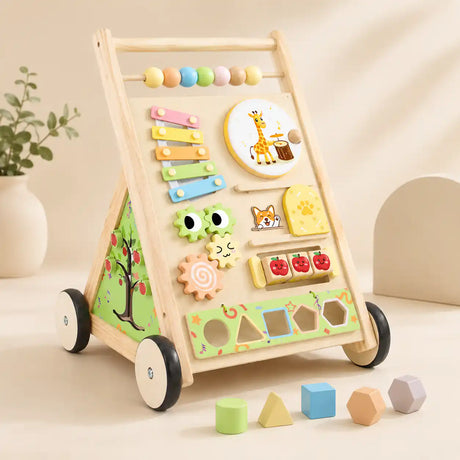
 Wooden Activity Table
 Wooden Animal Puzzle Stacker
Four money-saving habits
Rotate. Showing a few toys at a time and swapping them keeps play fresh without buying more — our guide to toy rotation shows how. Buy secondhand. Solid wooden toys clean up beautifully and last for years. DIY the simple stuff. Posting slots, transfer trays, and sensory baskets take minutes to make. Guide gifts. When family asks what your child needs, suggest one quality open-ended toy instead of a stack of novelties.
A sample under-$100 shelf
| Item | Covers | Price |
|---|---|---|
| Wooden Shape Sorter & Fishing Board | Sorting, fine motor | $5.99 |
| Dinosaur Sorting Drum | Sorting, colour | $7.99 |
| Wooden Animal Balancing Stacker | Balance, coordination | $8.99 |
| Wooden Chunky Puzzle Set | Puzzling, problem-solving | $9.99 |
| Wooden Rainbow Balls | Open-ended, sensory | $9.99 |
| Montessori Busy Book Set | Quiet fine motor | $9.99 |
| Wooden Snail Pull-Along Stacker | Movement, stacking | $19.99 |
| Practical-life items from home | Independence, focus | Free |
| Total | ~$72.93 |
That leaves room in a $100 budget for a basket, a small mirror, or a favourite book.
Frequently asked questions
-
Are Montessori toys expensive?
They don't have to be. High prices usually come from big branded sets and subscriptions, not the philosophy, which favours a few well-chosen toys. A functional starter shelf can cost under $100. -
How do I do Montessori on a budget?
Buy a few durable, open-ended toys, lean on free practical-life activities from around the house, rotate what you have, and add pieces gradually rather than all at once. -
What are the cheapest Montessori activities?
The free ones: pouring, spooning, sorting household objects, matching socks, and exploring baskets of natural items like pinecones and shells. They cost nothing and build real skills. -
Which Montessori toys are worth buying first?
Start with a versatile stacker or set of blocks, a simple puzzle, and one sorting toy. Open-ended pieces that work across stages give you the most value over time. -
Can I use household items instead of Montessori toys?
Absolutely. Cups, spoons, tongs, baskets, and safe kitchen items make excellent practical-life and fine-motor activities. Real objects are very much in the spirit of Montessori. -
How do I keep costs down over time?
Rotate toys so fewer feel like enough, buy quality secondhand, make simple DIY activities, and guide gift-givers toward one thoughtful open-ended toy rather than many cheap ones.
A note on safety and value: prices are examples and may change over time — check each listing for current details. Follow the age guidance and supervision notes on every product, and keep small parts away from children who still put things in their mouths. Adult supervision is recommended during play.
Last reviewed: July 2026.
Sources & further reading
- American Montessori Society — What Is Montessori
- University of Toledo — Fewer Toys Lead to Richer Play Experiences, UT Researchers Find
- American Academy of Pediatrics — Selecting Appropriate Toys for Young Children in the Digital Era