The finish is the coating on a wooden toy's surface — what gives it that smooth feel and protects the wood. For toddler toys the ones you'll see most are natural oils, beeswax, and water-based paints and lacquers. What matters for a young child is that the finish is intended for children's products and applied by a maker who follows the applicable safety standards. This guide is part of our Toy Safety & Materials hub.
Below is a plain-language tour of the common finishes, what each is like in daily use, and the questions worth asking before you buy.

Key takeaways
- A finish is the surface coating that protects wood and gives it a smooth feel.
- Common toddler-toy finishes: natural oils, beeswax, and water-based paints/lacquers.
- Oil and wax feel natural and are easy to refresh; painted/lacquered finishes are durable and colorful.
- What matters most is that the finish is intended for children's toys and made to the applicable standards.
- Whatever the finish, still check the age grade, piece size, and overall condition.
What is a wood finish, and why does it matter?
Bare wood is porous and can feel rough, absorb moisture, and stain. A finish seals and protects the surface, makes it smoother and easier to clean, and can add color. For a toy a young child may mouth, the finish is also the layer they're in contact with — so it's the part parents most want to feel confident about. The reassuring news is that reputable children's toys use finishes chosen for exactly this purpose.
Natural oils and beeswax
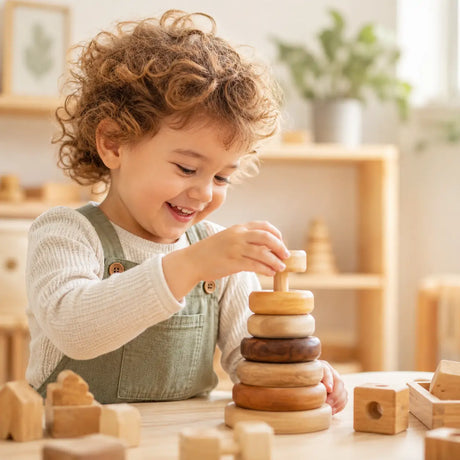
Oil-and-wax finishes are popular on natural-look wooden toys. They soak into the wood rather than forming a hard shell, which leaves the grain visible and the surface feeling warm and tactile. Practical upsides: they're easy to refresh at home with a food-safe oil or wax when the wood looks dry, as covered in our guide to cleaning and caring for wooden toys. The trade-off is that they offer less moisture protection than a hard coating, so the wipe-don't-soak rule matters even more.

Water-based paints and lacquers
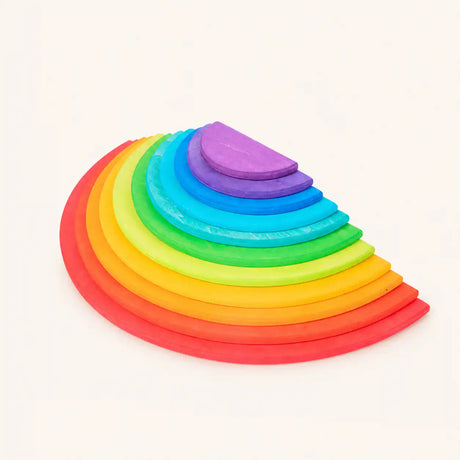
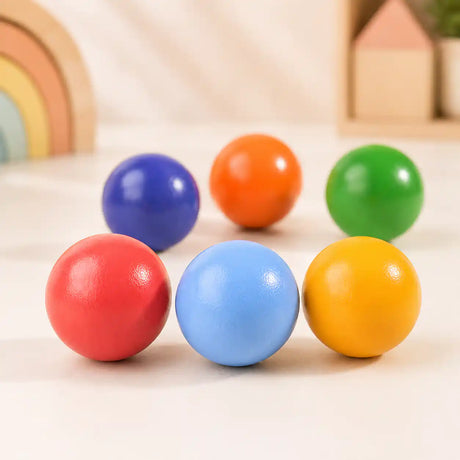
When a toy is brightly colored, it's usually finished with paint and often sealed with a lacquer. Modern children's toys commonly use water-based paints and coatings designed for this use. These finishes are durable, wipe clean easily, and hold color well, which is why you see them on many rainbow stackers and sorters. As always, the important thing isn't the label on the tin but that the maker follows the relevant toy-safety requirements for surface coatings.
What should parents actually look for?
You don't need to be a chemist. A few sensible checks go a long way: buy from reputable makers who describe their materials; look for finishes intended for children's products; check the age grade and any small-parts note (finish aside, size still matters — see our choking hazards guide); and inspect the toy for chips or flaking over time, retiring anything that's damaged. If you ever want specifics on a coating, the manufacturer is the right source.
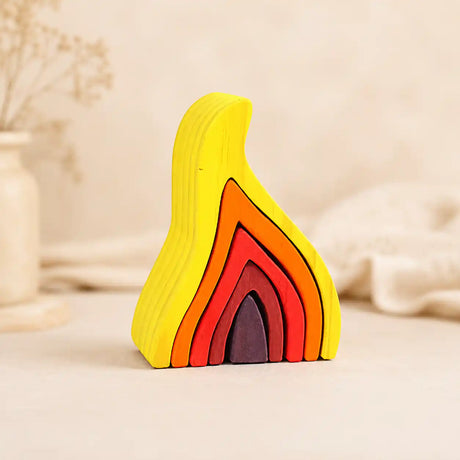
 Wooden Flame Stacking Puzzle
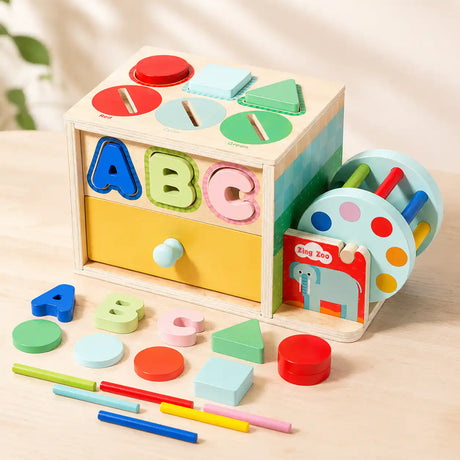
 Wooden 6-in-1 Activity Cube
 Wooden Rainbow Semicircles
 Wooden Snail Pull-Along Rainbow Stacker
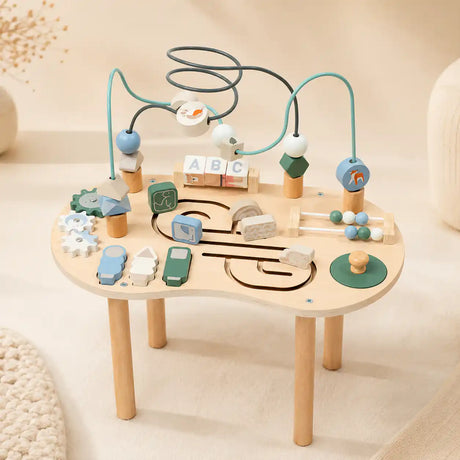
 Wooden Activity Table
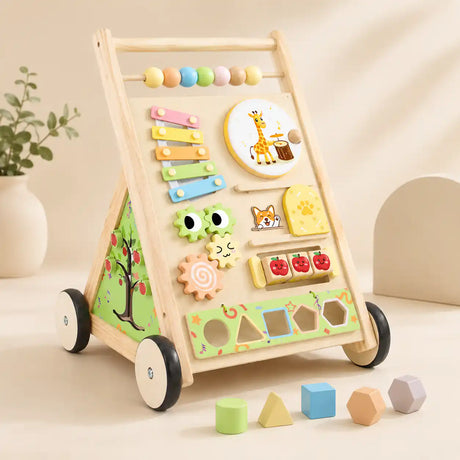
 Wooden 10-in-1 Activity Walker
Common wooden toy finishes at a glance
| Finish | Feel & look | Good to know |
|---|---|---|
| Natural oil | Matte, grain visible, warm | Easy to refresh; less moisture protection |
| Beeswax | Soft sheen, tactile | Natural feel; re-apply as needed |
| Water-based paint | Colorful, smooth | Durable; wipes clean; check for chips |
| Water-based lacquer | Glossy, sealed | Hard-wearing; easy to clean |
Frequently asked questions
-
What finishes are used on wooden toys?
Most toddler toys use natural oils, beeswax, or water-based paints and lacquers. Oil and wax leave a natural, matte look; paints and lacquers add durable color. The key is that the finish is intended for children's products. -
Are painted wooden toys safe for babies?
They can be when made by reputable brands to the applicable toy-safety requirements for coatings. Check the age grade and any small-parts note, and retire any toy with chipping or flaking paint. -
What does a "food-safe" finish mean?
Broadly, a finish considered safe for surfaces that may contact the mouth. Many natural oils and waxes are described this way. For specifics on a particular toy, rely on the manufacturer's information. -
Can I re-finish a wooden toy at home?
You can refresh oil- or wax-finished toys with a food-safe oil or wax once they're clean and dry. Check the maker's guidance first, since some sealed or painted finishes are best left as they are. -
Does the finish affect how I clean the toy?
Yes a little. All wooden toys should be wiped, not soaked. Oiled and waxed toys especially benefit from prompt drying and the occasional refresh, while sealed painted finishes wipe clean easily.
A note on materials: finish types and their care vary by product, so always follow the manufacturer's specific information. This article does not assert any particular certification for any product; check each listing and the manufacturer's details, supervise young children during play, and consult the U.S. Consumer Product Safety Commission (cpsc.gov) for current requirements and recalls.
Sources & further reading
- U.S. CPSC (eCFR) — 16 CFR Part 1303: Ban of Lead-Containing Paint and Certain Consumer Products Bearing Lead-Containing Paint
- U.S. CPSC (eCFR) — 16 CFR Part 1501: Small Parts Regulation for Toys and Articles for Children Under 3
- American Academy of Pediatrics (HealthyChildren.org) — Lead Poisoning
Last reviewed: July 2026.