A choking hazard is any object small enough to block a young child's airway. For toys, the practical rule is the small-parts test: if a piece fits entirely inside a small cylinder roughly the size of a young child's throat, it's treated as a choking risk for children under three. Knowing that one idea — and a few objects to watch for — covers most of what parents need. This guide is part of our Toy Safety & Materials hub, and for official rules and recalls the U.S. Consumer Product Safety Commission (CPSC) is the authority — its small-parts regulation (16 CFR Part 1501) defines the choke-test cylinder used to identify pieces unsafe for children under three.
Below is a plain-language walk through what counts as a small part, which toys and everyday objects deserve the most caution, and how to check a toy at home.

Key takeaways
- A choking hazard is anything small enough to block a young child's airway.
- The small-parts test: if a piece fits inside a small choke-test cylinder, treat it as a risk under three.
- Watch small balls, detachable pieces, coins, button batteries, magnets, and deflated balloons especially.
- Button batteries and high-powered magnets are dangerous if swallowed even beyond the toddler years.
- Supervise young children, and take a certified infant/child first-aid and CPR course.
What is a choking hazard?
Young children explore with their mouths, and their airways are small, so objects that seem harmless to an adult can be dangerous. A choking hazard is any item — a toy piece, a food, a household object — that can lodge in the throat and block breathing. The risk is highest for children under three, which is why toy safety rules focus on that age and why "3+" labels exist (more on that in our guide to what 3+ means).
The small-parts test, in plain terms
Toy safety uses a standardized small-parts cylinder — a small tube sized to approximate the throat of a child under three. If a toy or a detached piece fits entirely inside that cylinder, it's considered a small part and a choking risk for that age group. You don't need lab equipment to use the idea at home: an empty toilet-paper tube is a rough, cautious stand-in. If a piece disappears inside it, treat that toy as unsafe for a child who still mouths objects. When in doubt, keep it out of reach.
Which toys and objects to watch most
Some hazards deserve extra caution because they're common or especially dangerous:
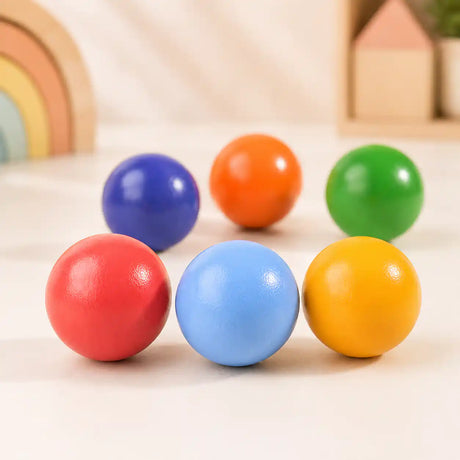
- Small balls and round pieces. Round objects can seal an airway; small balls are a well-known risk.
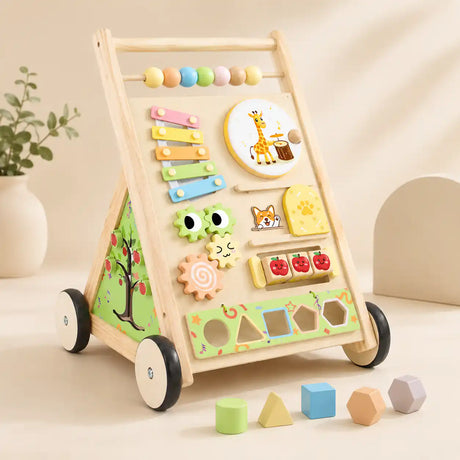
- Detachable parts. Eyes, wheels, knobs, and pom-poms that can be pulled or chewed off.
- Coins and small household items. Often the real culprits, not toys at all.
- Button batteries. Beyond choking, a swallowed button battery can cause severe internal injury quickly — keep devices that use them secured and out of reach, and seek emergency care immediately if one is swallowed.
- High-powered magnets. If more than one is swallowed they can attract through tissue and cause serious harm; see our guide to magnet safety.
- Deflated or broken balloons. A leading cause of choking deaths in children; keep latex balloons away from young kids.

How to check a toy at home
A quick routine catches most problems. Do the tube test on any small or detachable piece. Pull-test attached parts — eyes, wheels, buttons — with a firm tug to see if they come loose. Inspect regularly for cracks, splinters, or pieces that have worked loose over time, and retire anything damaged. And store by age — keep an older sibling's small-parts toys well out of a younger child's reach.
If a child is choking
Act immediately. Call your local emergency number right away, and if you are trained, give the back blows and chest or abdominal thrusts appropriate to the child's age. Because doing this correctly matters so much, we strongly encourage every parent and caregiver to complete a certified infant and child first-aid and CPR course — for example through the American Red Cross, the American Heart Association, or your pediatrician. This article is not a substitute for that training or for emergency medical care.
Safer choices for under-threes
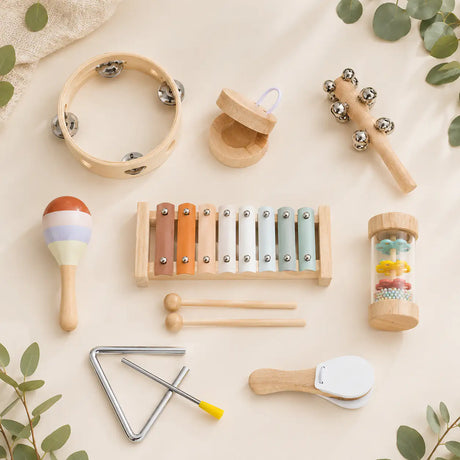
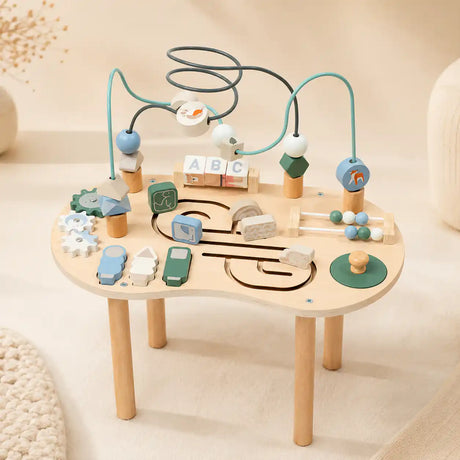
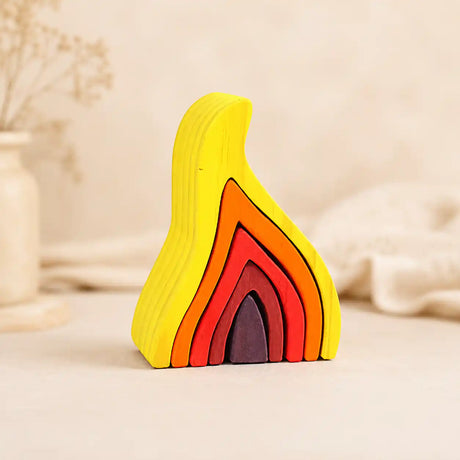
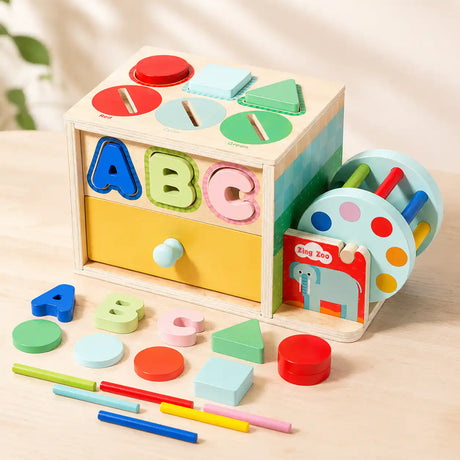
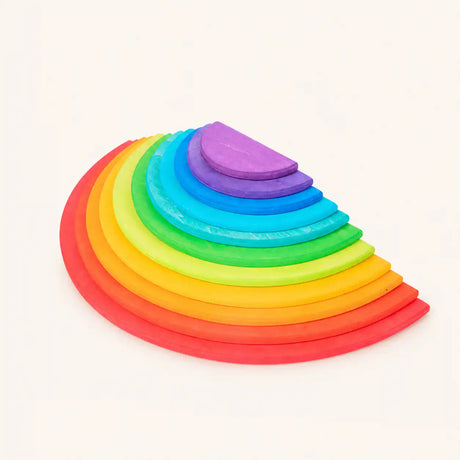
For the youngest children, the simplest safeguard is choosing toys with no small parts: chunky, one-piece designs sized so nothing can be swallowed. Many solid wooden toddler toys are made exactly this way, which is one reason they suit under-threes — you'll find age guidance on every listing in our wooden toys collection. Whatever you choose, the age rating and supervision still matter.
Common choking hazards at a glance
| Hazard | Why it's risky |
|---|---|
| Small balls & round pieces | Can fully seal a small airway |
| Detachable parts | Come loose and become small parts |
| Button batteries | Choking plus severe internal injury if swallowed |
| High-powered magnets | Serious internal injury if more than one is swallowed |
| Deflated/broken balloons | A leading cause of child choking incidents |
Frequently asked questions
-
What is a choking hazard for a toddler?
Any object small enough to block the airway — small toy parts, coins, small balls, button batteries, and deflated balloons. Children under three are most at risk because they explore with their mouths. -
How do I test if a toy part is a choking hazard?
Use the small-parts idea: if a piece fits entirely inside a small choke-test cylinder (an empty toilet-paper tube is a rough, cautious home stand-in), treat it as a choking risk for a child under three. -
Why are button batteries and magnets so dangerous?
Beyond choking, a swallowed button battery can burn internal tissue quickly, and swallowing more than one high-powered magnet can cause them to attract through the gut. Both are medical emergencies — seek care immediately. -
At what age is choking risk lower?
Risk decreases as children stop mouthing objects and their airways grow, generally after age three, but supervision still matters. Follow each toy's age guidance regardless. -
Are wooden toys safer for choking?
Chunky, one-piece wooden toys reduce small-parts risk, but wood alone isn't a guarantee — small wooden pieces can still be a hazard. Always check the size of the pieces and the age rating. -
Should I take a first-aid course?
Yes. A certified infant and child first-aid and CPR course teaches you how to respond to choking correctly. It's one of the most valuable things a caregiver can do, and worth refreshing periodically.
A note on safety: this is general educational information and is not medical advice or a substitute for certified first-aid training. In an emergency, call your local emergency number immediately. Supervise young children during play, keep small parts, button batteries, magnets, and balloons away from them, and consult the U.S. Consumer Product Safety Commission (cpsc.gov) and your pediatrician for current guidance and recalls.
Last reviewed: July 2026.
Sources & further reading
- U.S. CPSC — 16 CFR Part 1501: Small Parts Regulation for Toys and Children's Products
- American Academy of Pediatrics (HealthyChildren.org) — Choking Prevention