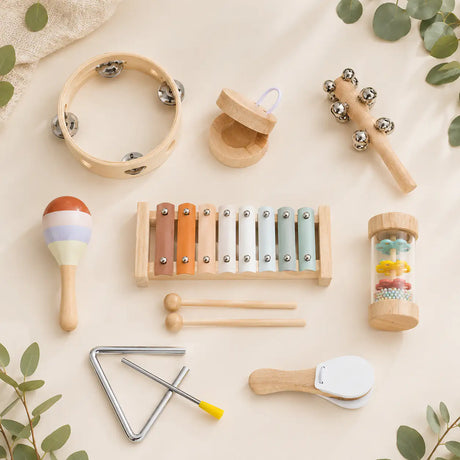
No — Montessori toys don't have to be wooden. Wood is everywhere in Montessori spaces because it's natural, durable, and gives a child honest sensory feedback, but the approach is really about how a toy works, not what it's made of. Cotton, metal, glass, and other natural materials can all be beautifully Montessori. This guide is part of our Montessori Basics hub.
Here's why wood dominates the look, which non-wooden materials also fit the philosophy, and where wood genuinely earns its place.

Key takeaways
- Montessori is a philosophy of play, not a materials rule — wood isn't required.
- Wood is popular because it's natural, durable, and honest to the touch.
- Cotton, wool, metal, and glass can all be genuinely Montessori.
- What matters most is that a material is real and gives true sensory feedback.
- Wood still wins for durability, mouthing safety, and value — which is why it's the go-to.
So why is almost everything wooden?
If Montessori isn't a wood rule, why does the aesthetic look like a forest? Because wood happens to tick a lot of Montessori boxes at once. It's a natural material with real weight and grain, it's quiet, it's durable enough to survive years of toddler enthusiasm, and it's pleasant to look at, which supports a calm space. In other words, wood is popular for practical reasons — not because the philosophy demands it.
What actually makes a toy Montessori
The material is only one ingredient. A toy is Montessori-aligned when it has a clear purpose, reflects the real world, invites the child to do the work, and often lets them correct their own mistakes. A cotton ball-drop or a metal bell can do all of that. If you want the full checklist, see our guide to what makes a toy Montessori.
Great non-wooden Montessori materials
Plenty of classic Montessori materials aren't wood at all. Cotton and wool appear in grasping toys, balls, and soft baskets. Metal shows up in bells, small bowls, and practical-life tools. Glass — used with supervision — teaches care and real consequences at the snack table. Natural fibers like seagrass make lovely baskets and mats. And some of the best "materials" are simply real objects: a small pitcher, a sponge, a dustpan. The common thread is that they're real and give honest feedback.

Where wood still wins
None of this means wood isn't wonderful — it often is the most practical choice. Wooden toys are durable enough to hand down, generally safe for mouthing when well finished, easy to clean, and good value over years of use. For a toddler who tests everything with hands and mouth, a solid wooden toy is hard to beat. Our wooden toys collection is chosen with exactly that longevity in mind — a piece like the wooden pull-along rainbow stacker takes years of play in stride.

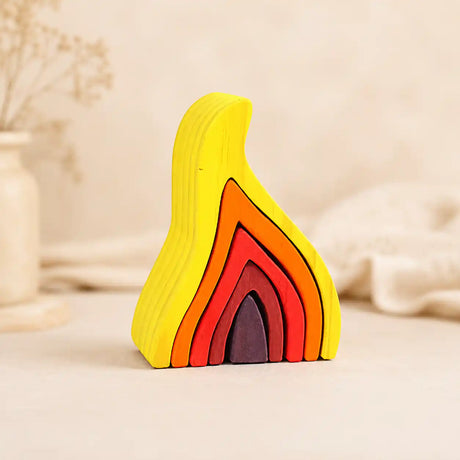
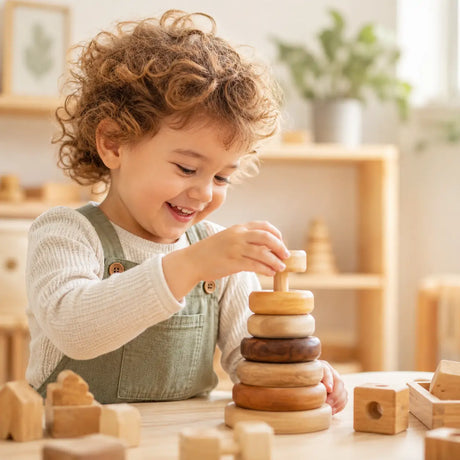
 Wooden Flame Stacking Puzzle
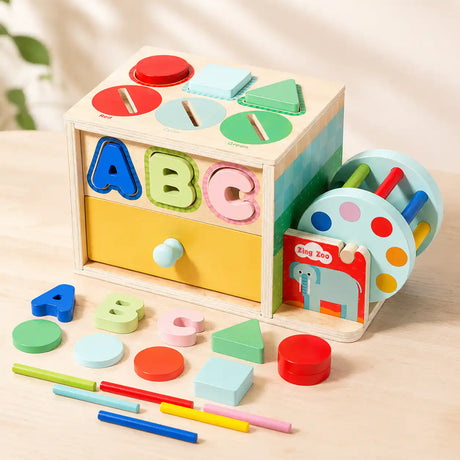
 Wooden 6-in-1 Activity Cube
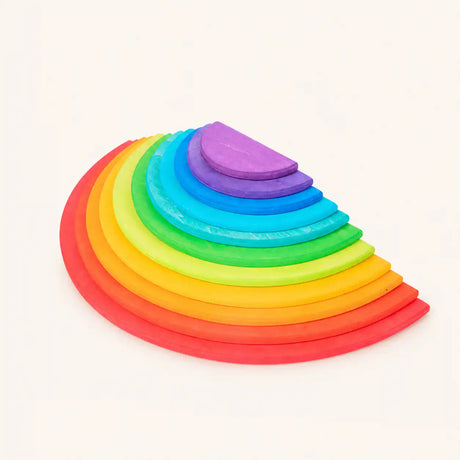
 Wooden Rainbow Semicircles
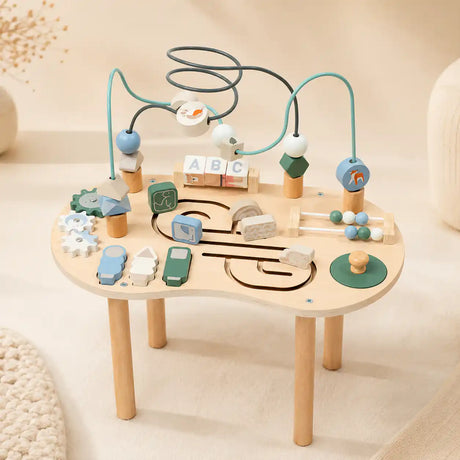
 Wooden Activity Table
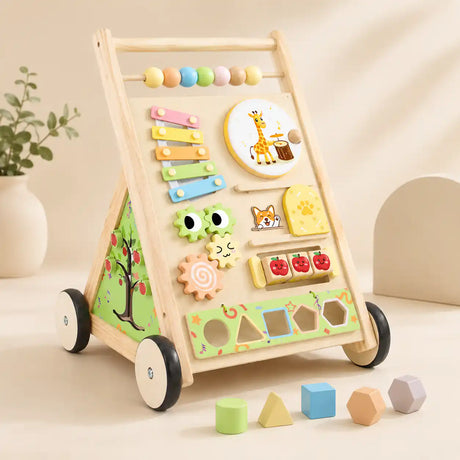
 Wooden 10-in-1 Activity Walker
A simple rule of thumb
Instead of asking "is it wooden?", ask "is it real, and does it give my child honest feedback?" Natural materials of all kinds — wood, cotton, wool, metal, glass — do that. Plastic usually doesn't, which is why it's less favoured. Judge the material by its senses and its purpose, and you'll rarely go wrong.
| Material | What it offers a child |
|---|---|
| Wood | Weight, grain, durability, warmth |
| Cotton & wool | Softness, texture, comfort for grasping |
| Metal | Real weight, sound, cool touch, practical tools |
| Glass (supervised) | Care, real consequences, clarity |
| Natural fiber | Texture and order for baskets and mats |
Frequently asked questions
-
Are Montessori toys always wooden?
No. Wood is common because it's natural, durable, and pleasant to handle, but Montessori is about how a toy works, not its material. Cotton, wool, metal, and glass can all be genuinely Montessori. -
Why are so many Montessori toys made of wood?
Wood ticks several Montessori boxes at once — it's a natural material with real weight and texture, it's quiet, durable, and easy on the eye, which supports a calm space. It's a practical favourite, not a requirement. -
Can a plastic toy be Montessori?
It's less common. The concern isn't the label so much as the sensory experience — plastic tends to give little honest feedback. A simple, purposeful plastic item can still support play, but natural materials are generally preferred. -
What non-wooden materials are used in Montessori?
Cotton and wool for soft toys, metal for bells and practical tools, glass (with supervision) for real tableware, and natural fibers for baskets — plus everyday real objects like pitchers and sponges. -
Is wood safer than other toy materials?
Well-made, properly finished wooden toys are durable and generally safe for mouthing, which makes them a popular choice for young toddlers. As always, check finishes and follow the age and supervision guidance on each listing.
A note on safety: whatever the material, follow the age guidance and supervision notes on each product listing, use glass only with close supervision, and keep small parts away from children who still put things in their mouths. Adult supervision is recommended during play.
Sources & further reading
- American Montessori Society — What Is Montessori
- American Academy of Pediatrics — Selecting Appropriate Toys for Young Children in the Digital Era
Last reviewed: July 2026.