Toy rotation means keeping only a small number of toys out where your child can see them, storing the rest, and swapping the selection every week or two. It sounds almost too simple, but the effect is real: with fewer choices in front of them, toddlers tend to play longer, more calmly, and more creatively — and a stored toy feels brand new when it reappears. This guide is part of our Montessori Basics hub.
Here's why fewer toys out leads to better play, and a simple system for rotating them at home.

Key takeaways
- Toy rotation = a few toys on display, the rest stored, swapped every week or two.
- Fewer choices reduce overwhelm, so play becomes longer and more focused.
- Stored toys feel new again when they return, without spending a penny.
- Open-ended, natural toys rotate best because they're used many different ways.
- Follow your child: rotate when interest dips, keep out what they're deeply into.
What is toy rotation?
Toy rotation is the practice of displaying only part of a child's toys at a time and keeping the rest out of sight. Every week or two, you swap some out and bring others back. It's a core idea in Montessori homes, where the shelf is deliberately sparse, but it works in any home and with any toys. The aim isn't to own fewer toys — it's to show fewer at once.
Why fewer toys out means more focused play
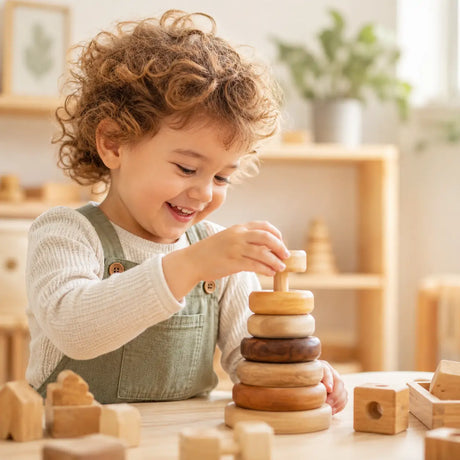
When a toddler faces a bin overflowing with options, the sheer number of choices can scatter their attention — they tip everything out, touch a lot, and settle into nothing. A short, tidy selection does the opposite. With only a few activities visible, each one gets noticed, chosen, and actually used, which is where deep, absorbed play (and all the good stuff that comes with it) happens. Less to choose from, more to concentrate on.
How to set up a simple rotation system
You don't need labels or a spreadsheet. Four steps are enough.
1. Gather and sort
Collect all the toys into one place and loosely group them — say, fine motor, stacking and sorting, pretend play, books, and a couple of gross-motor items. This alone usually reveals just how much was in circulation.
2. Display a few
Put out four to eight activities on a low shelf, ideally a mix across the groups so there's variety. Space them apart, each facing outward, so every one is easy to see and choose.
3. Store the rest
Box up everything else and tuck it into a closet or under the bed. Out of sight is what keeps the rotation feeling fresh.

4. Observe and swap
Watch what your child gravitates to and what gets ignored. When interest in the current set dips, swap two or three items for stored ones. Keep out anything they're deeply into — rotation follows the child, not the calendar.
How often should you rotate?
There's no perfect schedule. Every one to two weeks suits many families, but the real signal is your child's attention. If the shelf has gone stale and everything is being ignored, it's time. If your toddler is obsessed with the stacking tower this week, leave it out — even for a month. Rotation is a response to interest, not a rule to obey. It also pairs naturally with a compact setup and a small budget — see our guides to a Montessori play space in a small home and Montessori on a budget.
Which toys are worth rotating?
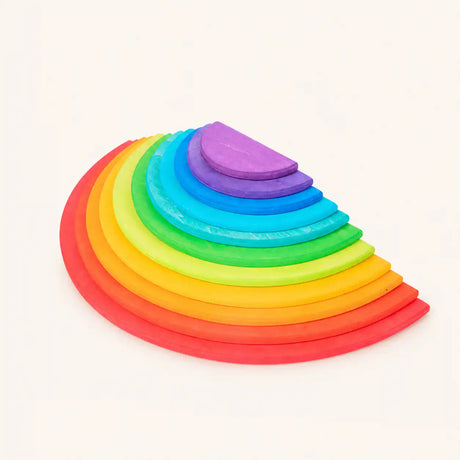
The best toys to rotate are open-ended, natural ones that can be used many different ways, because they reward repeat visits. A set of wooden rainbow semicircles can be a fence one week and a set of tunnels the next. Our wooden toys collection is a good place to build a small, rotate-friendly core.


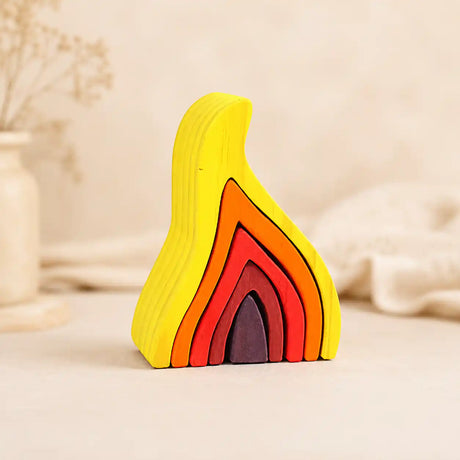
 Wooden Flame Stacking Puzzle
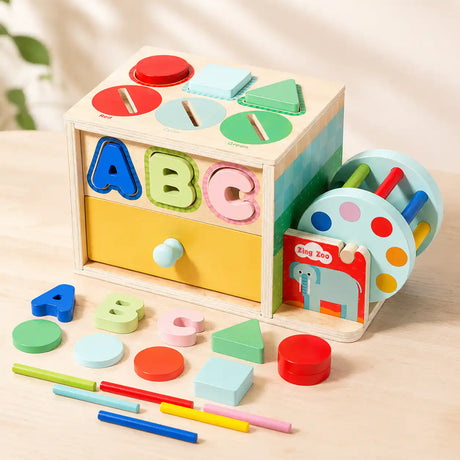
 Wooden 6-in-1 Activity Cube
 Wooden Snail Pull-Along Rainbow Stacker
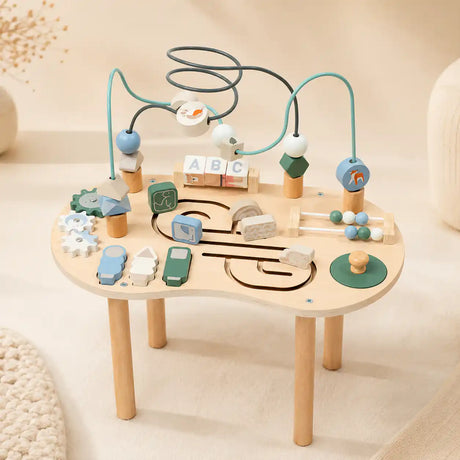
 Wooden Activity Table
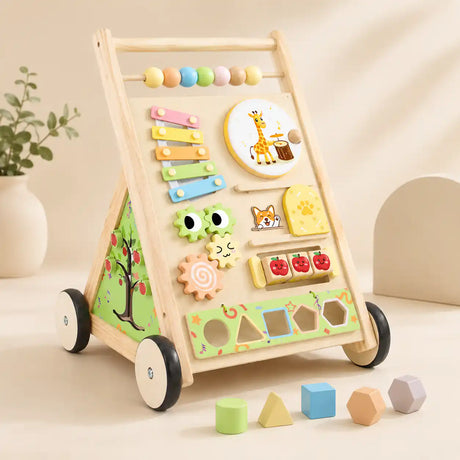
 Wooden 10-in-1 Activity Walker
What to keep out vs. store
A rough guide when you're deciding what makes the shelf.
| Keep out | Store and rotate in later |
|---|---|
| A current favourite, used daily | Toys ignored for a couple of weeks |
| One activity per skill area | Duplicates and near-duplicates |
| Something slightly challenging | Toys that are now too easy |
| A calm, open-ended piece | Noisy or single-use novelties |
Frequently asked questions
-
What is Montessori toy rotation?
It's the practice of displaying only a few toys at a time and storing the rest, then swapping the selection every week or two. Fewer toys on show tends to lead to longer, more focused play. -
How many toys should be out at once?
Usually about four to eight, spaced apart on a low shelf. The right number is however many your child can see, choose from, and actually use without feeling overwhelmed. -
How often should I rotate toys?
Every one to two weeks works for many families, but follow your child's interest rather than the calendar. Rotate when the current set is being ignored, and leave out anything they're deeply engaged with. -
Does toy rotation really help toddlers focus?
Many parents find it does. With fewer options competing for attention, children tend to settle into deeper, calmer play. It also cuts down on tipped-out bins and cleanup. -
What toys work best for rotation?
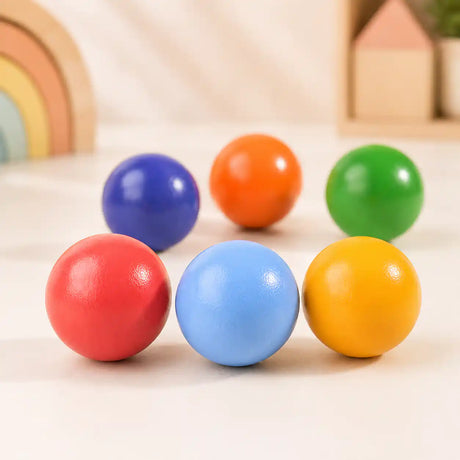
Open-ended, natural toys — blocks, rainbows, stackers, simple puzzles — because they can be used many ways and stay interesting across rotations. Highly specific, single-use toys rotate less well. -
Won't my child miss the stored toys?
Usually not — out of sight, out of mind. And when a stored toy returns, it often gets a burst of fresh, enthusiastic play, almost like a new arrival.
A note on development and safety: play supports growth, but every child develops at their own pace, and no single approach guarantees a particular outcome. Store toys safely out of reach where needed, and follow the age guidance and supervision notes on each product listing. Keep small parts away from children who still put things in their mouths. Adult supervision is recommended during play.
Last reviewed: July 2026.
Sources & further reading
- University of Toledo — Fewer Toys Lead to Richer Play Experiences
- American Academy of Pediatrics — The Power of Play