Montessori sensitive periods are windows in early childhood when a child is especially drawn to learning one particular kind of skill — such as movement, language, order, or handling small objects. During a sensitive period, that learning tends to happen easily and joyfully, almost as if the child can't help but practise it. The same skill can take more effort to pick up once the window has passed. This guide is part of our Montessori Basics hub.
Below we explain what sensitive periods are, the main ones to watch for, and how to gently support your child through each — with the important reminder that every child moves through them on their own timeline.

Key takeaways
- Sensitive periods are windows when a child is naturally driven to master a specific skill.
- The idea comes from Dr. Maria Montessori, who noticed children returning to certain activities with intense focus.
- Common windows include order, movement, language, small objects, sensory refinement, and social behavior.
- You'll often spot one by repetition and deep concentration on the same activity.
- Ages are approximate and overlap — every child follows their own timeline, so follow the child, not a chart.
What are sensitive periods?
Sensitive periods are a concept Dr. Maria Montessori developed from watching young children closely. She observed that at certain stages, a child becomes powerfully interested in one type of activity — lining objects up, climbing, naming everything, picking up crumbs — and will repeat it with a focus that seems almost driven. Her insight was that these windows are when the brain is primed to build that particular skill, so the learning feels effortless. Offer the right activity at the right moment and a child soaks it up; the same offer at the wrong moment may fall flat.
The main Montessori sensitive periods
These windows overlap and the ages are broad approximations, not milestones to hit. Think of them as a guide to what your child may be reaching for.
Order (roughly 1–3 years)
A love of routine, sameness, and everything in its place. A toddler in this window may insist on the same cup or melt down if a book is shelved differently. Consistent routines and a tidy, predictable space help enormously.
Movement (roughly birth–4 years)
An urge to move, climb, carry, and refine coordination. Offer safe space to move, things to carry, and toys that invite pushing, pulling, and balancing.
Language (roughly birth–6 years)
An appetite for words, names, songs, and stories. Talk, read, name real objects, and resist baby-talk — this is when vocabulary grows fastest.
Small objects (roughly 1–2 years)
A fascination with tiny things — crumbs, buttons, beads — and the fine finger movements to handle them. Offer safe, supervised small-object work like threading and transferring (never anything that poses a choking hazard).

Refinement of the senses (roughly 2–4 years)
Noticing differences in size, colour, texture, sound, and weight. Sorting, matching, and grading activities feed this beautifully.
Social behavior (roughly 2.5–5 years)
A growing interest in manners, turn-taking, and being part of the group. Model courtesy, give real ways to help, and let them practise being part of family life.
How to spot a sensitive period
You'll usually know one by the intensity. Look for repetition (doing the same thing over and over), deep concentration (tuning out everything else), and sometimes insistence (strong feelings when a routine is broken). These aren't misbehaviour — they're signs your child is hard at work on something important to them right now.
How to support a sensitive period
The Montessori answer is simple: follow the child. When you notice a window opening, offer more of that kind of activity, give unhurried time, and try not to interrupt deep concentration. During a small-object or fine-motor window, threading and transferring toys are a natural fit — a wooden food lacing set gives little fingers plenty to practise on. You'll find more in our fine motor toys collection.

 Wooden Snail Pull-Along Rainbow Stacker
 Wooden Animal Puzzle Stacker
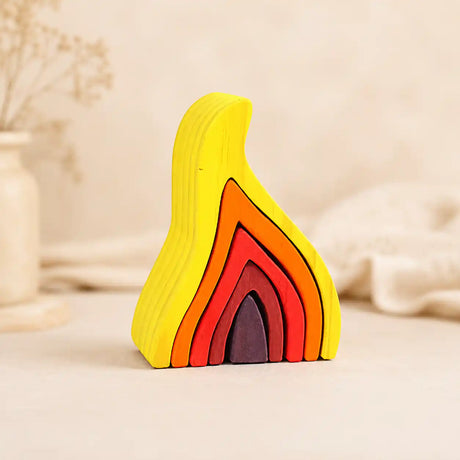
 Wooden Flame Stacking Puzzle
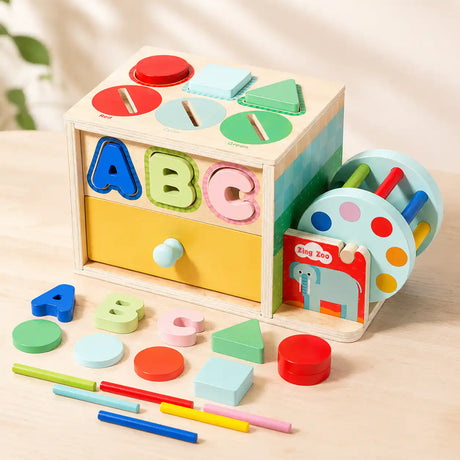
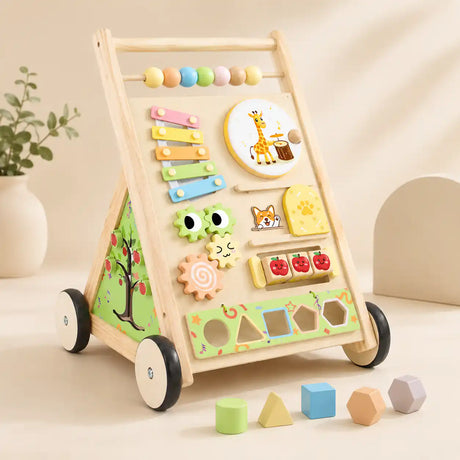
 Wooden 6-in-1 Activity Cube
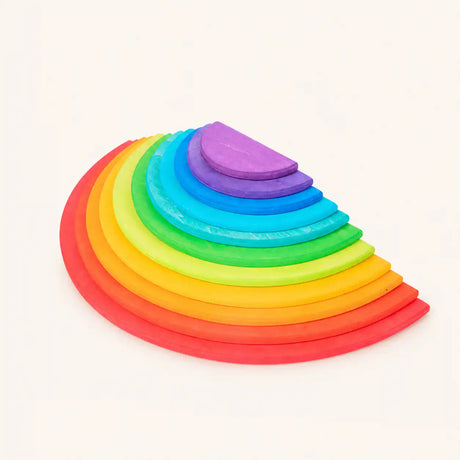
 Wooden Rainbow Semicircles
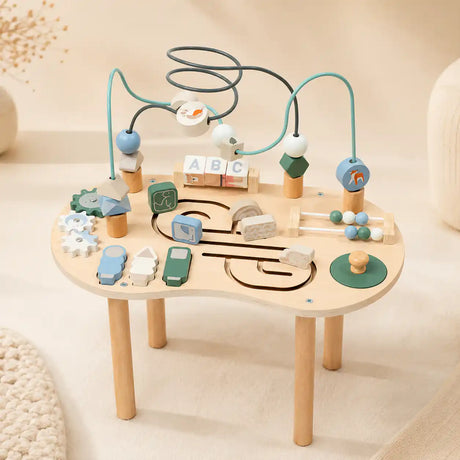
 Wooden Activity Table
Sensitive periods and choosing toys
Sensitive periods are one reason age ranges on toys are a starting point rather than a rule — a toy lands best when it meets the window your child is in. If you'd like help matching toys to your child's current stage, our Play by Age guide breaks it down band by band, and our guide to what makes a toy Montessori helps you read a toy at a glance.
At a glance: windows and what to offer
| Sensitive period | What you might see | What to offer |
|---|---|---|
| Order | Wants routine and things "just so" | Predictable routines, a tidy space |
| Movement | Climbs, carries, rarely still | Space to move, push/pull toys |
| Language | Soaks up words and names | Talking, reading, naming real things |
| Small objects | Notices and picks up tiny things | Supervised threading and transferring |
| Sensory refinement | Sorts and compares by size or colour | Sorting, matching, grading activities |
Frequently asked questions
-
What are Montessori sensitive periods?
They are windows in early childhood when a child is especially drawn to mastering one kind of skill, such as language or movement. During the window, that learning tends to come easily; afterward, the same skill can take more effort. -
At what ages do sensitive periods happen?
They span roughly birth to age six and overlap, with broad approximate ranges — for example, order around one to three and language from birth to six. Ages vary widely from child to child, so treat them as a guide, not a schedule. -
How do I know if my child is in a sensitive period?
Watch for repetition, intense concentration, and sometimes strong feelings when a routine is interrupted. A child will return to the same activity again and again when a window is open. -
What should I do during a sensitive period?
Follow the child: offer more of that kind of activity, give unhurried time, and avoid interrupting deep focus. Prepare the space so the activity is easy to reach and repeat. -
What happens if I miss a sensitive period?
Children still learn these skills later — a missed window is not a lost chance. It simply may take more conscious effort and practice than it would have during the peak of interest. -
Are sensitive periods scientifically proven?
They are an observational concept from Montessori that overlaps with the idea of developmental windows in child development. Use them as a helpful lens, and raise any specific developmental questions with your pediatrician.
A note on development: the windows and ages described here are broad, typical patterns, not targets or guarantees. Every child develops at their own pace, and this guide is not a substitute for medical advice. If you have any concerns about your child's development, please speak with your pediatrician. Always supervise small-object play and keep small parts away from children who still mouth objects.
Last reviewed: July 2026.
Sources & further reading
- American Montessori Society — What Is Montessori
- Harvard Center on the Developing Child — Brain Architecture