AI-powered "companion" toys — plush animals, robots, and tablets-in-disguise that talk back, answer questions, and remember what your child told them yesterday — are the fastest-growing category at toy fairs in 2026. For families who've built their playroom around screen-free, open-ended play, that raises a real question: is an AI toy actually different from a screen, and what should you check before one ends up under the tree?
Short answer: many "smart" toys function like a screen even without a display, and the two biggest things worth understanding before you buy one are how the toy handles your child's voice and data, and what it actually replaces in a day of play.
This guide walks through what these toys are, why they've multiplied so quickly, what pediatric and child-development voices are flagging, what privacy law actually requires, and a simple checklist if you're weighing one for your own home.
What Are AI Companion Toys, Exactly?

An AI companion toy is any plush, robot, or handheld device that uses a connected AI model — usually the same large language model technology behind chatbots — to hold a conversation with a child, answer their questions, tell stories on demand, or "remember" details across play sessions. Some are built to look and feel like a traditional stuffed animal, with no screen at all, which is part of why they can be easy to mistake for a screen-free toy.
Under the hood, most of these toys work the same way: a microphone captures what your child says, that audio (or a transcription of it) is sent to a cloud server for processing, and a generated response is sent back and played through a speaker. That round trip to a server — not the presence or absence of a screen — is the detail worth paying attention to.
Why They're Suddenly Everywhere
Two forces are driving the boom. First, the underlying AI voice and language technology has gotten dramatically cheaper and more capable in the last two years, making it feasible to put a conversational assistant into a $40–$80 toy instead of a $400 gadget. Second, toy companies are chasing the same "personalization" promise that's reshaped apps and streaming — a toy that adapts its stories and responses to an individual child is an easy pitch at a toy fair, even if the developmental case for it is still being worked out.
For gift buyers, that means AI companion toys are showing up earlier in search results and store shelves than most parents expected, often marketed with the same "learning" and "educational" language as genuinely screen-free, open-ended toys — which makes it harder to tell them apart at a glance.
There's also a simple supply-chain story behind the boom: voice-recognition chips and cloud AI processing have both dropped sharply in cost, so a feature that once required a dedicated app and a subscription can now be built directly into a plush toy at a mainstream price point. That's made "talks back" a checkbox feature on toy packaging the same way "battery-operated" or "glow-in-the-dark" used to be — which means the presence of AI in a toy no longer signals anything in particular about its quality or developmental value. It has to be evaluated toy by toy.
What Child-Development Voices Are Watching For
Pediatric and early-childhood voices aren't uniformly opposed to AI toys, but a few concerns come up consistently in public commentary from child-development researchers and organizations that track children's media:
- Displacement of caregiver and peer interaction. Toddlers build language and social skills through back-and-forth exchanges with real people who read their tone, pause, and body language — something scripted AI responses don't do.
- Attachment to a device that can't actually reciprocate. A toy that always has an answer, never gets tired, and never says "not right now" is a different relationship than the ones that teach turn-taking and patience.
- Reduced open-ended, self-directed play. When a toy is doing the talking, storytelling, and problem-solving, there's less room for a child to direct the play themselves — the exact skill that open-ended, Montessori-inspired materials are designed to build.
None of this means every connected toy is harmful. It means the burden is on the toy to prove it adds something a caregiver, a book, or open-ended materials don't already provide — not the other way around.
The Privacy Question: What COPPA Actually Requires
Any toy that collects a child's voice, likeness, or personal information in the United States falls under the Children's Online Privacy Protection Act (COPPA), enforced by the Federal Trade Commission. In plain terms, COPPA requires companies that knowingly collect data from children under 13 to get verifiable parental consent, clearly disclose what's collected and why, and give parents the ability to review or delete that data.
In practice, that means before buying a connected toy, it's reasonable to expect the company to answer: What exactly gets recorded — audio, transcripts, or both? Is it stored, and for how long? Can a parent request deletion? Is anything shared with third parties for advertising or model training? If a product listing or manual doesn't answer these clearly, that's worth treating as a yellow flag rather than assuming the best.
"Screen-Free" and "Smart" Aren't the Same Thing
A genuinely screen-free toy has no display and doesn't route your child's voice or activity to a server — it's mechanically or visually interactive, and the "processing" happens entirely in your child's imagination. A connected AI toy can look identical on the outside (a soft plush with no screen) while still functioning like an always-listening device on the inside.
For families specifically trying to reduce screen exposure, the more useful distinction isn't "does it have a screen" but "does it talk to a server, and does it do the imaginative work for my child, or leave that work to them."
| Feature | AI Companion Toy | Traditional Open-Ended Toy |
|---|---|---|
| Connects to the internet | Usually yes, via Wi-Fi or Bluetooth | No |
| Collects voice or usage data | Often, for personalization | No |
| Who directs the play | Partly the toy's script or model | Entirely the child |
| Requires a privacy policy review | Yes | No |
What to Look For If You're Considering One
- Clear, plain-language privacy disclosures — not just a link to a long terms-of-service document.
- A stated data retention and deletion policy you can actually act on.
- An offline or "no microphone" mode, if you want the toy without the always-listening feature.
- An honest look at what the toy replaces: is it filling a gap, or replacing conversation, reading, or open-ended play that was already happening?
- Age-appropriate design — a toy built and marketed for toddlers should not require the same scrutiny you'd give a teen's device, but often does.
- A physical or clearly marked way to power off connectivity entirely, rather than relying only on a phone app to disable it.
None of these are hard to ask for. If a product page, box, or manual can't answer them plainly, that's useful information on its own — a company confident in its privacy practices usually says so clearly, not vaguely.
The Case for Open-Ended, Screen-Free Play

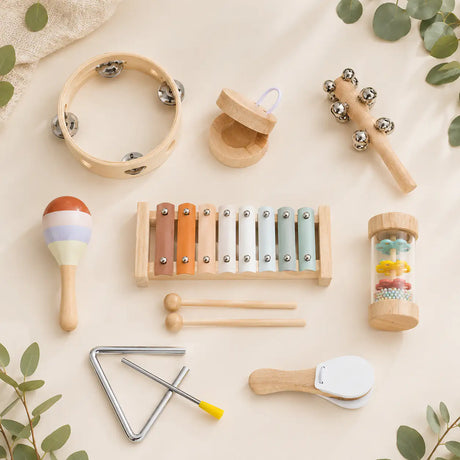
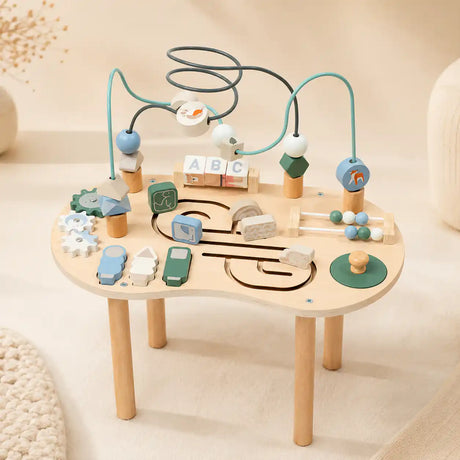
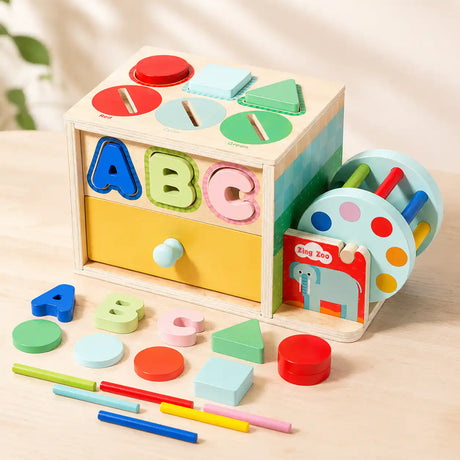
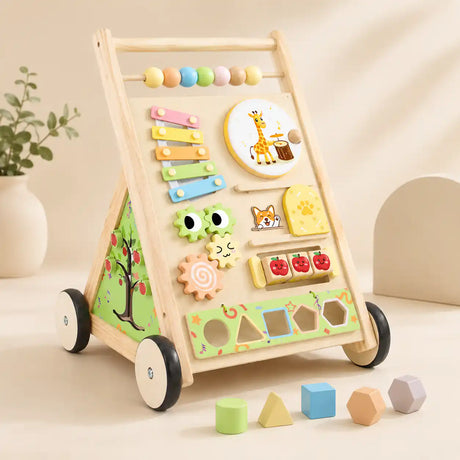
None of this is an argument that toddlers need less imagination or fewer conversations — it's the opposite. Open-ended wooden toys designed to support pretend play, sorting, and hands-on problem-solving ask a toddler to supply the story, the rules, and the voices themselves — which is exactly the kind of self-directed thinking that connected toys can end up doing for them. If screen time and connected devices are already a consideration in your house, it's worth reading how daily exposure adds up in our look at toddler screen-time trends.
FAQ
Is an AI stuffed animal the same as a screen for my toddler?
Not visually, but functionally it can be similar: many AI companion toys send your child's voice to a cloud server and generate a response, which is a different kind of interaction than a traditional plush or wooden toy that has no connection at all. Adult supervision and awareness of what data is collected are recommended before use.
What does COPPA actually protect?
COPPA requires companies to get verifiable parental consent before collecting personal information — including voice recordings — from children under 13, and to disclose what's collected, how it's used, and how a parent can request it be deleted.
Are all connected or "smart" toys bad for toddlers?
Not inherently — but for very young children, most of the skills these toys claim to build (language, patience, imagination) are already well served by conversation with caregivers and open-ended, hands-on play, so the burden is on a connected toy to add real value rather than simply feel novel.
How can I tell if a toy is genuinely screen-free?
Check the packaging and manual for any mention of an app, Bluetooth or Wi-Fi connection, microphone, or account setup. A toy with none of those is mechanically screen-free by design, not just by appearance.
What should I ask before buying a connected toy as a gift?
Ask what data it collects, whether that data is stored or shared, whether there's a way to turn off the microphone or connectivity, and whether the company publishes a clear children's privacy policy — not just general terms of service.
References
- Children's Online Privacy Protection Act (COPPA) — Federal Trade Commission
- Media and Children — HealthyChildren.org, American Academy of Pediatrics
- Toy Safety — U.S. Consumer Product Safety Commission
Smart Play for Little Growing Minds means letting a toddler's own imagination do the heavy lifting — no server required.