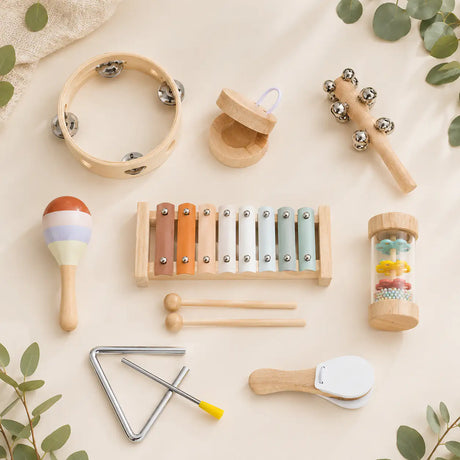
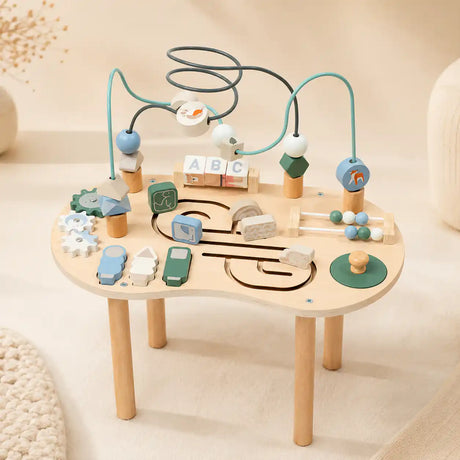
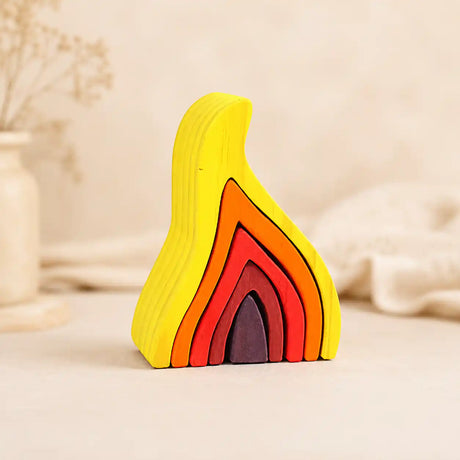
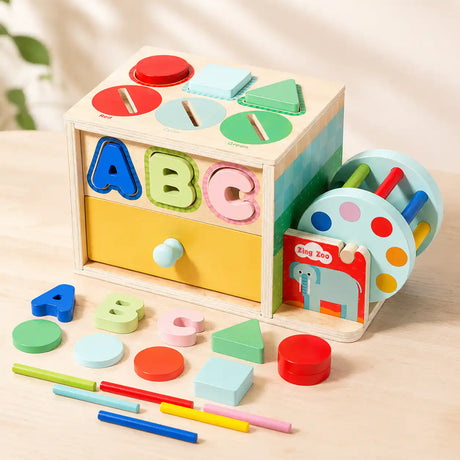
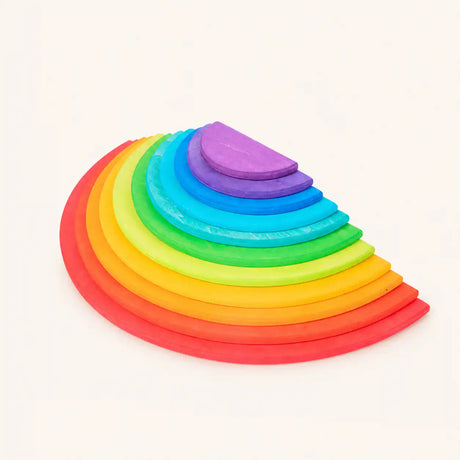
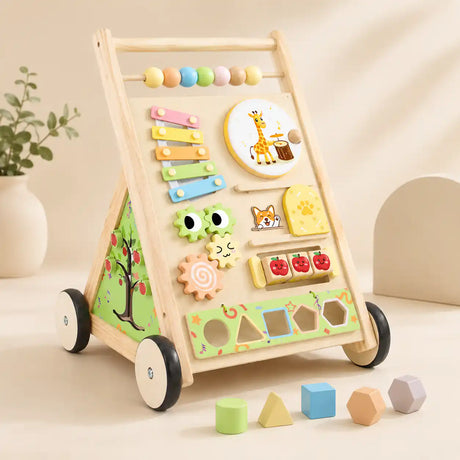
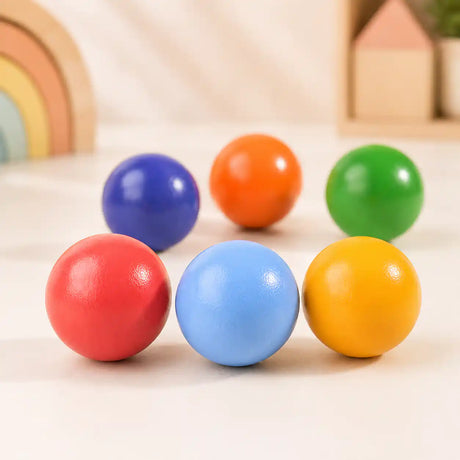
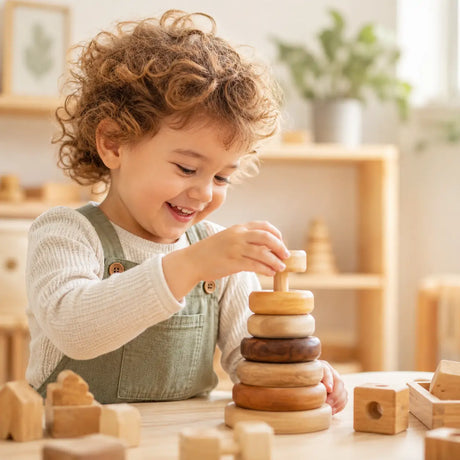
The 2026 toy trends point in one clear direction for families with little ones: warm, tactile, screen-free play is having a genuine moment. In February 2026, The Toy Association unveiled its official 2026 Toy & Play Trends at Toy Fair, and one of the headline themes—"Cozy Culture"—describes exactly what Montessori-minded parents have valued all along: low-tech, sensory, natural-material toys that help children slow down, focus, and connect. For toddlers and preschoolers, this shift lines up beautifully with what researchers keep finding about how young children learn best.
In other words, the industry is catching up to the playroom. Simple wooden toys, open-ended building sets, and calm, uncluttered play spaces are no longer a niche preference—they are one of the defining stories of the year. Below, we break down the 2026 toy trends that matter most for ages 1–5, what the research actually says, and how to bring the best of it home without buying more stuff.
What are the 2026 toy trends?
Each year, The Toy Association—the industry group behind Toy Fair—publishes a forward-looking list of play trends based on consumer research and what toymakers are bringing to market. The 2026 list, released on February 14, 2026, named several themes, and a few speak directly to families with young children.
The trend most relevant to toddlers is Cozy Culture: as The Toy Association puts it, "as digital life speeds up, families are choosing tech-free toys that help them power down and reset." Think tactile materials, gentle interactivity, botanical themes, and natural, calming aesthetics. A second theme, Inspiring Inventors, reflects growing demand for building and customization toys that support creativity and problem-solving—the group notes that 78% of parents want more toys that help their kids develop skills like these.
Other 2026 trends—such as "Forever Young" (adults buying toys for themselves) and "Throwback Toys" (nostalgic revivals)—are more about the broader market than the toddler years. But taken together, the report signals a meaningful move toward intentional, feel-good, screen-light play. For parents of one- to five-year-olds, Cozy Culture and Inspiring Inventors are the two to watch.
What is "Cozy Culture," and why does it matter for toddlers?

Cozy Culture is shorthand for a return to slow, sensory, screen-free play. Instead of flashing lights and sounds, the emphasis is on natural textures, soft colors, and toys a child can hold, stack, sort, and imagine with. Adrienne Appell, an executive at The Toy Association, framed the shift this way: "Play is no longer defined by age. It's about how people want to feel."
For toddlers, "how they feel" during play is not a small thing. Calm, unhurried, hands-on play is where a lot of early development happens—fine motor control, focus, language, and early problem-solving all grow through unstructured exploration. A simple wooden stacker or a basket of blocks invites a child to set the pace, make choices, and try again, which is exactly the kind of self-directed play early-childhood educators encourage.
This is also why Cozy Culture overlaps so naturally with Montessori-inspired principles: real materials, purposeful simplicity, and toys that put the child—not a battery—in charge of the play. If you have ever noticed your toddler happily absorbed in a set of nesting cups while an expensive electronic toy sits ignored, you have already seen Cozy Culture in action.
Why are parents choosing screen-free, open-ended toys in 2026?
The trend is showing up in the numbers, not just the marketing. The global wooden toy market was valued at roughly USD 33.9 billion in 2026 and is projected to reach USD 57.1 billion by 2035—about 6% annual growth, according to a May 2026 industry analysis. The report credits three main drivers: environmental consciousness (wood as a sustainable alternative to plastic), educational value (parents recognizing hands-on learning and fine motor benefits), and a preference for durable, heirloom-quality toys.
The same analysis points to rising interest in alternative learning philosophies—Montessori, Waldorf, and Reggio Emilia—as a growth driver, along with straightforward demand for screen-free alternatives to electronic entertainment. In short, families are voting with their carts for fewer, better, longer-lasting toys.
A few forces seem to be behind the shift:
- Screen fatigue. After years of screens creeping into every corner of daily life, many parents want play that helps everyone slow down.
- A "buy fewer, buy better" mindset. Open-ended toys—blocks, stackers, shape sorters, pretend-play sets—grow with a child and get used in dozens of ways instead of one.
- Sustainability. Natural materials and toys built to last appeal to families thinking about waste and longevity.
- Design that fits the home. Warm woods and muted colors look at home on a shelf, which makes tidy, calm play spaces easier to maintain.
If you want a starting point, a curated selection of Montessori-inspired wooden toys is an easy way to lean into the Cozy Culture trend without overhauling the whole playroom.
What does the research say about play and toddler development?

Trends come and go, but the case for hands-on, child-led play is backed by a deep and growing body of research. Here is what stands out—especially for the toddler and preschool years.
Play builds the brain
The American Academy of Pediatrics (AAP), in its clinical report The Power of Play, describes play as foundational to healthy development. According to the AAP, play helps build the brain and executive-function skills, buffers stress, supports social-emotional resilience, and strengthens the parent–child bond. The report highlights how powerful play can be: in one cited study, preschoolers anxious about starting school felt about twice as much relief after 15 minutes of play compared with listening to a story. The AAP's advice to parents is refreshingly simple—prioritize unstructured, child-led play and, when your child asks you to play, say yes.
Pretend play in the early years is linked to later well-being
A 2026 longitudinal study published in the Early Childhood Education Journal followed more than 1,400 Australian children and found that stronger pretend-play abilities at ages 2–3 were associated with fewer emotional and behavioral difficulties years later, at ages 4–7. Notably, the link held even after accounting for factors like language ability, attachment, and family circumstances. The researchers suggest that supporting pretend play in early settings may help promote children's later mental health—one more reason those tea-party sets and little wooden play scenes earn their place on the shelf.
Fewer toys can mean deeper play
One of the most quoted findings for parents drowning in toys comes from a 2018 University of Toledo study in Infant Behavior and Development. Researchers observed toddlers (18–30 months) playing in two setups: one with 4 toys and one with 16. In the smaller collection, children played longer and more imaginatively with each toy—roughly twice as long—while the larger pile tended to distract, prompting kids to flit from one thing to the next. The takeaway isn't that toys are bad; it's that a calmer, more curated selection can actually invite richer, more focused play. That finding sits at the heart of the 2026 Cozy Culture idea.
A quick caveat worth keeping in mind: research describes patterns across groups of children, not guarantees for any one child. Every toddler develops at their own pace, and play should stay joyful and pressure-free. As always, choose age-appropriate toys and keep an eye on small parts—adult supervision is recommended, especially for children under three.
How can you bring the 2026 trends home?

You don't need a shopping spree to ride the year's biggest play trend. The spirit of Cozy Culture is intentional simplicity, so a few thoughtful changes go a long way.
- Try a toy rotation. Keep a small, appealing selection out and store the rest. Swap every week or two. This mirrors the "fewer toys, deeper play" finding and keeps favorites feeling fresh.
- Favor open-ended toys. Blocks, stackers, nesting cups, shape sorters, and simple pretend-play props can be used dozens of ways and grow with your child. A basket of wooden building blocks is a classic "Inspiring Inventors" pick that supports creativity and early problem-solving.
- Make room for calm. A tidy, low shelf with a handful of toys is easier for a toddler to engage with than an overflowing bin. Natural light, soft textures, and a cozy rug all support the "power down and reset" feeling at the heart of the trend.
- Protect unstructured time. Following the AAP's guidance, leave space for child-led play with no agenda. Let your toddler lead; join in when invited.
- Lean into pretend play. Simple props—wooden food, a doll, a few animals—invite the kind of imaginative play the 2026 research connects to later well-being.
If your toddler is deep in a phase of dumping, stacking, or repeating the same action over and over, that's a normal and valuable part of open-ended play. Our guide to toddler play schemas explains what's happening and how to support it.
Frequently asked questions
What are the top 2026 toy trends for toddlers?
The two most relevant themes from The Toy Association's 2026 Toy & Play Trends are "Cozy Culture" (tech-free, tactile, natural-material play designed to help families slow down) and "Inspiring Inventors" (building and customization toys that support creativity and problem-solving). Both favor open-ended, screen-free toys that suit the toddler and preschool years.
Are wooden toys really becoming more popular?
Yes. A May 2026 industry analysis valued the global wooden toy market at about USD 33.9 billion in 2026, with roughly 6% annual growth projected through 2035. Sustainability, educational value, durability, and interest in Montessori-style learning are cited as key drivers.
Is screen-free play better for my toddler?
Research consistently supports plenty of hands-on, child-led play in early childhood. The AAP encourages prioritizing unstructured play and limiting screen time, since real-world play supports brain development, focus, and social-emotional skills. Screen-free toys make that easy, though balance and your family's routine matter most.
How many toys should a toddler have out at once?
There's no magic number, but a 2018 University of Toledo study found toddlers played longer and more creatively with 4 toys than with 16. A small, rotating selection tends to encourage deeper, more focused play than a large pile.
What makes a toy "open-ended"?
Open-ended toys can be used in many different ways rather than one fixed outcome—think blocks, stackers, nesting cups, shape sorters, and simple pretend-play sets. They grow with a child and invite creativity, which is why they align so well with the 2026 trends.
References
- Toy Fair Brings the Love — and Top Toy Trends — for 2026 — The Toy Association / PR Newswire (2026)
- 2026 Toy & Play Trends — The Toy Association (2026)
- Wooden Toy Market Size & Share, 2026–2035 — Global Market Insights (2026)
- Let Them Play: The Power of Play — American Academy of Pediatrics / HealthyChildren.org (2018)
- Vasilopoulos et al., Longitudinal Evidence of the Relationship Between Pretend Play and Mental Health in the Early Years — Early Childhood Education Journal (2026)
- Are Fewer Toys Better for Your Toddler? (on Dauch et al., 2018, Infant Behavior and Development) — Psychology Today
Smart play doesn't have to be complicated. Sometimes the best thing on the shelf is a simple wooden toy, a little open space, and time to explore—Smart Play for Little Growing Minds.