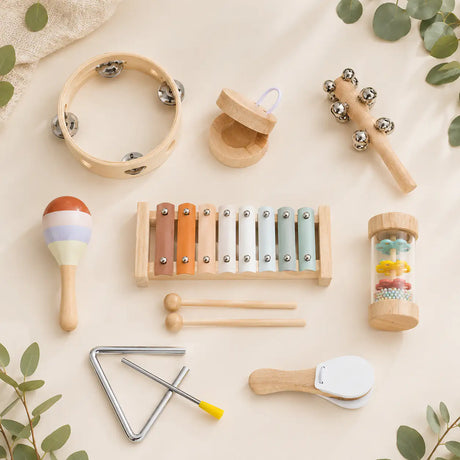
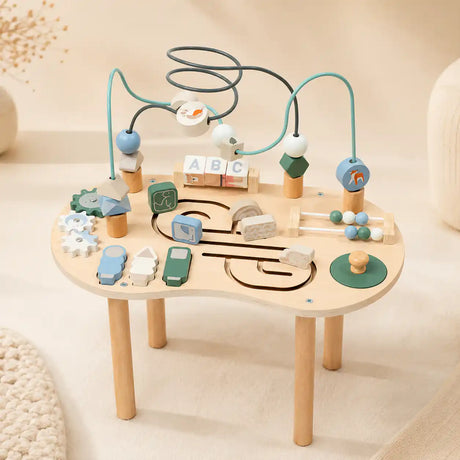
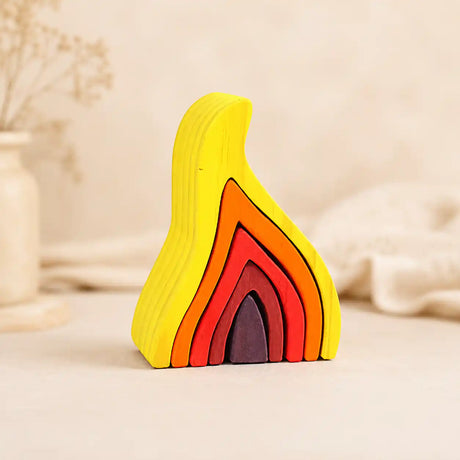
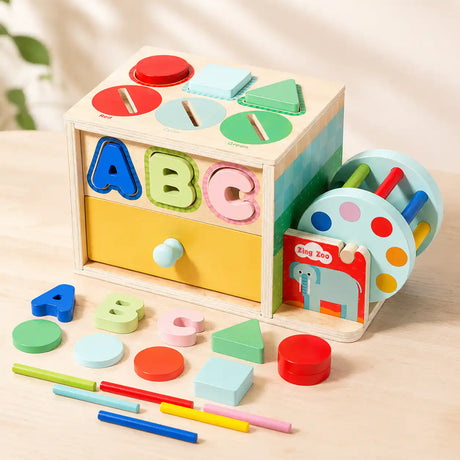
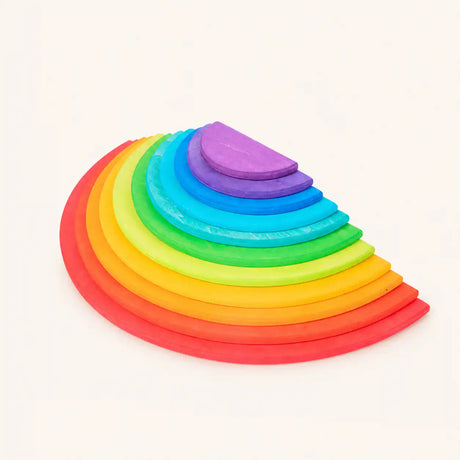
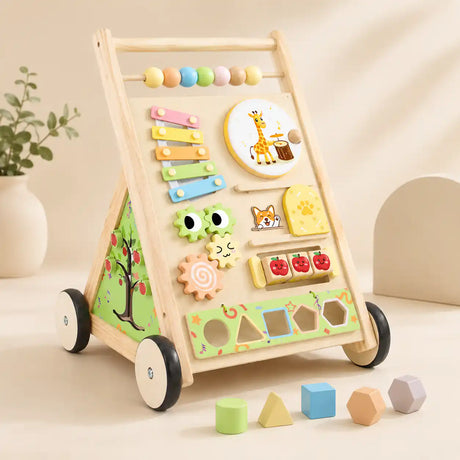
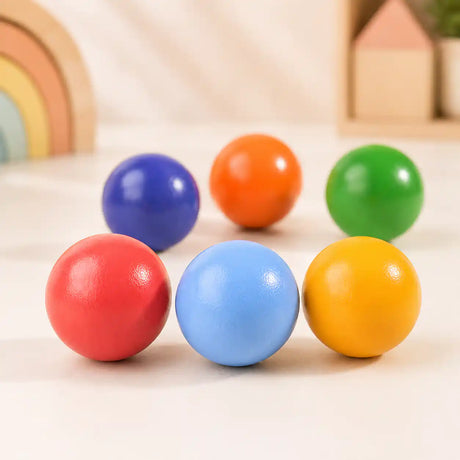
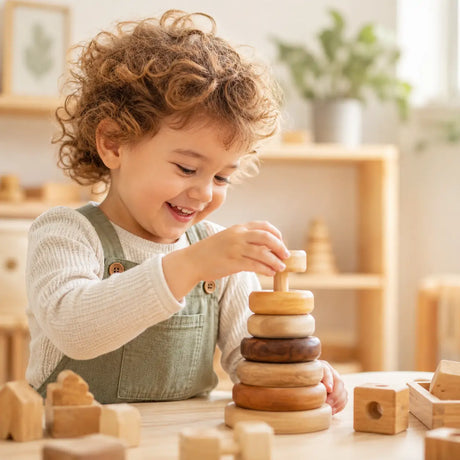
If you want to give your grandchild a gift that still gets played with next year — not forgotten by New Year's Day — Montessori-inspired toys are one of the smartest choices you can make. They're simple, beautifully made, and built around what a child is genuinely working on at each stage. This guide walks you through how to pick one with confidence, even if "Montessori" is a brand-new word to you.
Grandparents are in a wonderful position to give well. A June 2025 survey found U.S. grandparents collectively spend an estimated $238 billion a year on their grandchildren, and roughly 8 in 10 give gifts for special occasions. That generosity goes furthest when it's pointed at toys a child returns to again and again — the kind that quietly support focus, coordination, and imagination while feeling like play.
What makes a toy "Montessori"?
There's no official Montessori seal, but toys in this style tend to share a handful of traits. Once you know them, you can spot a good one in seconds — in a shop or online.
- Simple and open-ended. One toy, many ways to play. A set of stacking rings can be a tower, a sorting game, or a counting lesson.
- Made from natural materials. Wood, cotton, and other real materials feel good in little hands and hold up to years of use.
- One clear challenge. The best toys invite a child to master something specific — fitting a shape, balancing a block, threading a bead.
- Realistic, not overstimulating. Gentle colors and quiet play beat flashing lights and noise, which is exactly why they hold attention longer.
- Child-powered, not battery-powered. The child makes the action happen, which builds problem-solving and confidence.
This lines up with what pediatricians recommend, too. The American Academy of Pediatrics notes that the best toys are simply those that "match your child's developmental skills and abilities and encourage the development of new skills" — and cautions that digital toys "should never take the place of real, face-to-face play." A thoughtfully chosen wooden toy checks both boxes.

Matching the toy to your grandchild's age
The single most useful thing you can do is buy for the stage your grandchild is in right now (or the one just ahead). Here's a quick map of what children are working on and the kinds of toys that fit.
| Age | What they're working on | Toys that fit |
|---|---|---|
| 6–12 months | Grasping, mouthing, cause-and-effect | Simple grasping toys, soft balls, a first stacker |
| 1 year | Pincer grip, dropping and filling, first steps | Stacking rings, shape sorters, push/pull toys |
| 2 years | Sorting, matching, early problem-solving | Color sorters, chunky puzzles, threading sets |
| 3 years | Pretend play, storytelling, fine motor control | Play kitchens, animal figures, balance games |
| 4–5 years | Early logic, building, counting | Building sets, counting and math toys, ramp racers |
If you're not sure of the exact stage — or you're shopping ahead for a birthday that's months away — it's perfectly fine to buy for the age just above. A well-made wooden toy tends to grow with a child, offering a simple version of play early on and a more complex one later. For more on this, our guide to choosing a gift for the stage that's coming is a helpful companion read.
Why fewer, better toys win
It's tempting to arrive with a big bag of gifts — the joy on a small face is hard to resist. But children actually play more deeply when there's less in front of them. A cluttered toy bin overwhelms; a few carefully chosen toys invite real concentration.
This is where a grandparent's gift can shine. Instead of five plastic toys that light up and get set aside, one beautiful wooden toy becomes the thing your grandchild reaches for on their own. Pediatric research on play echoes this: open-ended, hands-on toys that require a child's imagination tend to support richer development than electronic ones that do the "playing" for them.
If you love the idea of giving more than one thing, consider a small, coordinated set rather than a pile of unrelated toys — or pair a keepsake toy with a favorite picture book. Thoughtful beats plentiful every time. For budget-friendly single toys that still feel special, our gifts under $25 are an easy place to start.

A two-minute safety check before you buy
For babies and toddlers, the most important safety consideration is choking. In the U.S., toys made for children under three must not contain small parts that fit entirely inside a "small-parts cylinder" — roughly the size of a young child's throat — and toys with small parts intended for older children carry a choking-hazard warning for ages 3 and under.
A few simple habits keep gifting safe:
- Check the age grading. A "3+" label usually signals small parts, not difficulty. Take it seriously for younger children.
- Do the toilet-paper-tube test. If a piece fits through a cardboard tube, it's a choking risk for a child who still mouths toys.
- Choose sturdy, well-finished wood. Look for smooth edges and secure pieces with no loose small components.
- Supervise new play. Especially the first few times with any new toy.
When in doubt, ask the parents what stage the child is in — it's a small question that makes your gift both safer and more welcome.
Thoughtful gift ideas beyond a single toy
A wonderful Montessori gift doesn't always have to be one wrapped toy. Some of the most treasured presents grandparents give are the ones that keep giving — a small ritual, a shared experience, or the start of a lasting collection. Here are a few directions worth considering.
- A "grow-with-me" starter set. Pick two or three coordinated pieces — say, a stacker, a simple puzzle, and a set of wooden animals — that work together and stay interesting as your grandchild develops.
- A keepsake toy plus a book. Pair a beautiful wooden toy with a favorite picture book on the same theme. Reading together and playing together reinforce each other, and both invite the face-to-face interaction children need most.
- The beginning of a shelf. Rather than one big gift now, offer to help the family build a small, calm play shelf over time. It's a lovely tradition and it keeps the playroom from overflowing.
- An experience to share. A standing "toy afternoon" with you, where you sit on the floor and play together, is a gift a child will remember long after the toy itself.
Whatever you choose, the through-line is the same: a little intention turns a nice present into one that becomes part of your grandchild's everyday play — and part of your relationship with them.
How to give so it actually gets played with
The secret to a gift that sticks isn't just the toy — it's a little coordination and a light touch.
- Loop in the parents. A quick text — "I'm thinking of a wooden shape sorter, does she have one?" — avoids duplicates and shows you're paying attention.
- Suggest a slow reveal. Giving one toy at a time, rather than all at once, helps a child settle into real play instead of tearing through a stack.
- Play alongside them. Your attention is the best part of any gift. Sit on the floor, follow their lead, and let them show you how it works.
- Think about rotation. If the playroom is already full, gently suggest tucking a few toys away so yours gets a fresh, uncrowded welcome.
Give this way and your gift becomes more than an object — it becomes time together, which is the thing children remember most.

Grandparent questions, answered
What if I don't know exactly how old the toy should be for?
When unsure, buy for the age just above your grandchild's current stage. Well-made open-ended toys grow with a child, so a slightly advanced toy simply gets richer over time rather than being outgrown.
Are wooden Montessori toys worth the higher price?
Often, yes. A single sturdy wooden toy that lasts through years of play — and can be passed to a sibling — tends to offer more value than several inexpensive toys that break or lose their appeal quickly.
My grandchild already has so many toys. What should I do?
Lean into fewer, better. One beautifully made toy, a keepsake book, or a coordinated small set will stand out far more than another armful of plastic — and it's easier for parents to make room for.
Is it okay to ask the parents what to buy?
Absolutely. Most parents are relieved to be asked. A quick check-in prevents duplicates, avoids safety mismatches, and helps you land on something the whole family is glad to have.
References
- 2025 Grandparent Spending Report — The Senior List (2025)
- Toy Buying Tips for Babies & Young Children — HealthyChildren.org, American Academy of Pediatrics
- Selecting Appropriate Toys for Young Children in the Digital Era — Pediatrics, AAP (2019)
- Small Parts and Choking Hazard Labeling FAQs — U.S. Consumer Product Safety Commission