A shape sorter looks like a simple box with holes in it, but it's doing real developmental work: every push, twist, and re-try is building the fine motor control, spatial reasoning, and patience your toddler will lean on for years. Most children start exploring shapes around 12–18 months and begin reliably matching them by 18–24 months, though the exact timeline varies a lot from child to child.
Below is what a shape sorter is actually teaching, when to introduce one, how to keep the first few tries from ending in tears, and how to know when your toddler has outgrown the easy version.
What a Shape Sorter Actually Is
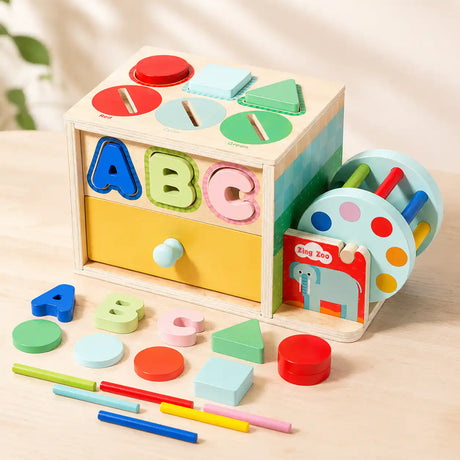
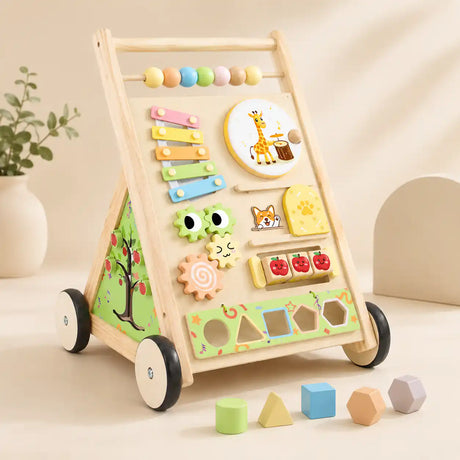
At its core, a shape sorter is a container — a box, a ball, a barn, a bucket — with cut-out openings that only let a matching piece through. The toddler's job is to look at a piece, figure out which hole it belongs to, orient it correctly, and push it in. It sounds small. It's actually a full problem-solving loop: observe, guess, test, adjust, and try again.
That loop is why shape sorters have stayed a staple of Montessori-inspired and early-learning shelves for generations, long after flashier toys have come and gone. A well-made wooden shape sorter gives a toddler the same core challenge with fewer distractions — no lights, no sounds, nothing to do but think and try.

What Shape Sorters Are Really Teaching
It's easy to see a shape sorter as "just" a matching toy, but there's a lot happening underneath:
- Fine motor control and grip strength. Picking up, rotating, and pushing a piece through an opening works the same small hand muscles a toddler will later use for feeding, dressing, and eventually writing.
- Spatial reasoning. Matching a 3D piece to its 2D outline is an early lesson in mental rotation — the same skill that later supports geometry, map-reading, and puzzles.
- Problem-solving and flexible thinking. When a piece doesn't fit, a toddler has to try a different angle, a different hole, or a different piece altogether. That trial-and-error loop supports attention and working memory.
- Language. Naming shapes, colors, and sizes out loud while playing together gives a toddler new words to attach to what they're already doing with their hands.
- Persistence. A shape sorter is one of the first toys where "it didn't work the first time" is the whole point. Sticking with it — especially with a calm adult nearby — builds real tolerance for frustration.
When Is a Toddler Ready for a Shape Sorter?
There's no single magic age, but here's the general arc most toddlers follow:
- 12–18 months: Mostly exploratory play — mouthing pieces, banging them, dumping them out. This is normal and useful; it's how they're learning the pieces exist before they learn what to do with them.
- 18–24 months: Matching starts to click. The CDC's developmental milestones note that by around 18 months, many toddlers can sort shapes and colors and place large shapes into a sorter, often through visible trial and error.
- 2–3 years: More shapes, smaller openings, and multi-step sorters (like ones with a lid to open or a lever to press) become appropriate as fine motor skill and patience grow.
Readiness is more about skill than birthday. A toddler who can already stack a few blocks and drop objects into a container with some accuracy is usually ready to give a simple two- or three-shape sorter a try.
How to Introduce One Without a Meltdown
Shape sorters have a reputation for triggering toddler frustration — and for good reason, since a full set of six or eight shapes can be overwhelming for a first try. A few things help:
- Start with fewer shapes. Offer just a circle and a square at first, and add more shapes in as your toddler gets comfortable rather than presenting the whole set at once.
- Give a physical assist. If pushing a piece all the way through is the sticking point, line it up and push it about halfway in, then let your toddler finish the job. That small win keeps the activity feeling doable.
- Let them lead. Filling the sorter up and then dumping everything back out is genuinely valuable play, even if no shape ever meets its matching hole. Sorting will come.
- Narrate instead of correcting. "That's a circle — let's find the round hole" teaches more, and causes less friction, than taking over to do it "the right way."
- Keep sessions short. A few focused minutes with an adult nearby beats a long, unsupervised stretch that ends in a thrown piece.

Signs It's Time for a Harder Sorter
Toddlers tend to age out of a shape sorter's challenge well before they age out of the toy itself. Watch for these signs that it's time to add complexity — more shapes, smaller openings, or a sorter with an extra step like a lid or lever:
- Your toddler places every piece correctly on the first try, without pausing to check.
- They've started using the sorter in unrelated ways (stacking the pieces, lining them up, using it as a drum) — often a sign the original challenge is solved.
- They ask for or gravitate toward toys with more pieces or finer distinctions, like puzzles or sorting sets with subtle color or size differences.
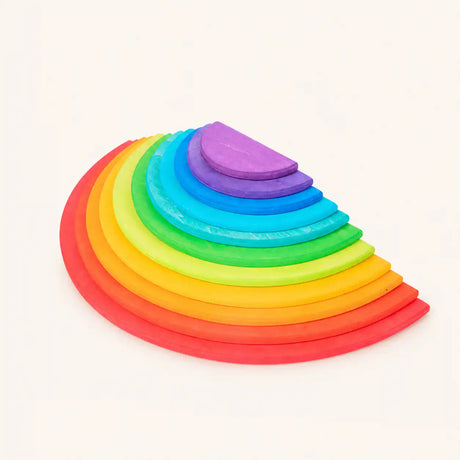
At that point, a sorting toy with more categories — like sorting by color, size, or animal type instead of just shape — keeps the same problem-solving skill growing instead of going stale.
Wood vs. Plastic, and a Quick Safety Note
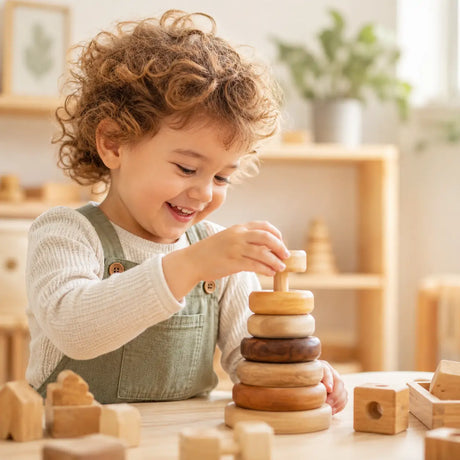
Shape sorters come in both wood and plastic, and the developmental value is largely the same either way — what matters most is size, sturdiness, and how the pieces are made. Many families lean toward wood for the natural weight and texture, and because it tends to hold up to years of drops, dumps, and mouthing better than thin plastic.
Whatever material you choose, shape sorter pieces are, by nature, small parts. Adult supervision is recommended during play, and it's worth checking piece sizing against your child's age and stage before buying — especially if there are younger siblings in the house. For a plain-language walkthrough of what to check, see our guide to small parts and choking hazards.

Simple Ways to Extend the Play
Once matching feels easy, a shape sorter still has plenty of life left in it:
- Add a guessing game. Hide a piece behind your back and ask your toddler to guess the shape before you reveal it.
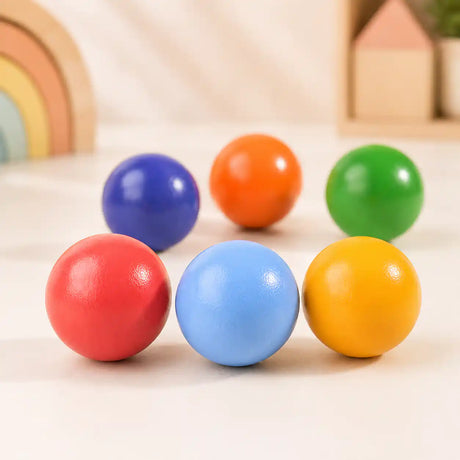
- Sort by color instead of shape. If the pieces come in multiple colors, challenge your toddler to group them a different way.
- Time-free races. "Can you find the triangle?" turns matching into a search-and-find game that keeps interest fresh.
- Combine with language. Talk through size ("this one's bigger"), count the pieces, or connect shapes to real objects around the house (a window is a square, a clock is a circle).
Frequently Asked Questions
What age is a shape sorter good for?
Most toddlers begin engaging with shape sorters somewhere between 12 and 18 months, with matching becoming more consistent between 18 and 24 months. Individual readiness varies, so let your child's skill level guide the timing more than the calendar.
My toddler just dumps the pieces out instead of sorting them. Is that normal?
Yes. Dumping and filling is an important, earlier stage of play than matching. It's building hand-eye coordination and object permanence, and matching usually follows once fine motor control catches up.
How many shapes should a first shape sorter have?
Two or three simple, visually distinct shapes (like a circle, square, and triangle) is a reasonable starting point. You can add more shapes in gradually as your toddler's accuracy improves.
Are wooden shape sorters better than plastic ones?
Not strictly "better" — both can support the same developmental skills. Wood tends to be sturdier over time and has a different sensory feel, which some families and Montessori-inspired setups prefer, but the key factors for any material are piece size, build quality, and age-appropriate design.
What comes after a shape sorter?
Simple puzzles, sorting-by-category toys, and stacking or nesting toys with more pieces are natural next steps once a basic shape sorter feels easy.
References
- Milestones by 18 Months — CDC, Learn the Signs. Act Early. (2026)
- Everything You Need to Know About Shape Sorters — Unprepared Mom
- Shape Sorters: A Classic Toy That Builds Big Skills — Vida Kids Therapy
- Support Your Child's Shape Sorter Skills With Clear, Age-Appropriate Guidance — Parenting Mentor
A shape sorter won't stay interesting forever — but while it lasts, it's quietly doing some of the most important early learning work in the toy box. Follow your toddler's lead, keep the early sessions short and low-pressure, and let the frustration be part of the process. That's where the real learning happens.