Montessori and Waldorf toys have a lot in common — both are usually natural, open-ended, and refreshingly screen-free. The difference is one of emphasis: Montessori toys lean toward the real world and one clear purpose, while Waldorf toys lean toward open-ended, imaginative play. Which is the better fit comes down to your child and what you value, not which philosophy is "right." This guide is part of our Montessori Basics hub, and it's a companion to our fuller breakdown of Montessori vs Waldorf toys and what makes them different.
Below is a simple way to decide between them — with a few questions to ask yourself and the kinds of toys each approach does best.

Key takeaways
- Both approaches favor natural materials, calm design, and screen-free, child-led play.
- Montessori toys tend to be reality-based and purposeful — a shape sorter, a stacking tower, a practical-life task.
- Waldorf toys tend to be open-ended and imaginative — rainbows, peg dolls, simple shapes a child can pretend with.
- Neither is better; the right choice depends on your child's temperament, age, and what you want to encourage.
- Most families happily mix both — the two styles sit beautifully on the same shelf.
Montessori and Waldorf: the quick version
Montessori, developed by Dr. Maria Montessori, is built around purposeful, reality-based activity — toys often isolate a single skill and let the child self-correct. Waldorf, rooted in the ideas of Rudolf Steiner, protects unhurried childhood and imaginative play — its toys are deliberately simple and open-ended so the child supplies the story. If you want the full side-by-side, our Montessori vs Waldorf comparison covers the origins, materials, and play styles in depth. Here, we're focused on helping you choose.
How to choose: three questions to ask yourself
1. What is your child drawn to right now?
Watch how your child already plays. A toddler who loves fitting, sorting, and "getting it right" will light up with Montessori-style toys. A child who narrates, pretends, and turns a scarf into a river will get more out of open-ended Waldorf pieces. Following the child is the most Montessori — and the most Waldorf — thing you can do.
2. How much structure do you want?
Montessori toys come with a built-in "right answer," which many toddlers find deeply satisfying. Waldorf toys leave the outcome entirely open, which invites longer, more imaginative play but less obvious mastery. Neither is better; it's a question of what you'd like the toy to offer.
3. What stage is your child at?
For younger toddlers, reality-based, single-purpose Montessori toys often click first, because the world still needs sorting out. As pretend play blooms — usually around two to three — open-ended Waldorf toys tend to come into their own. Our guide to what makes a toy Montessori can help you read a toy at a glance.
When Montessori-style toys shine
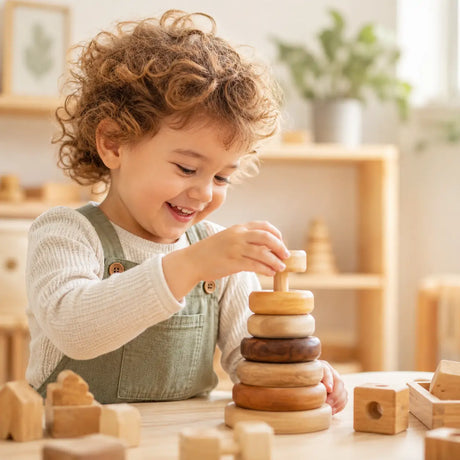
Reach for Montessori-style toys when your child is working hard to master a skill — matching, stacking, threading, pouring. These toys give a clear task and honest feedback, so the child can see their own progress. A wooden animal puzzle stacker is a lovely example: each piece has one right place. You'll find many more in our wooden toys collection.

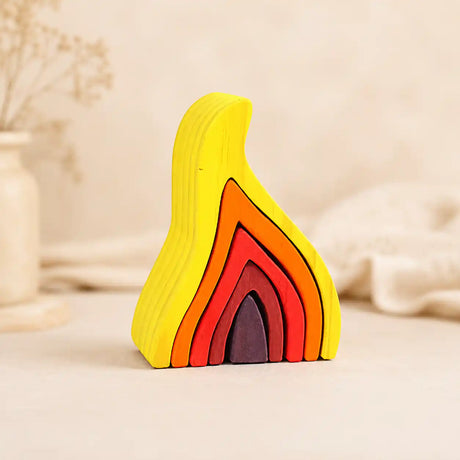
 Wooden Flame Stacking Puzzle
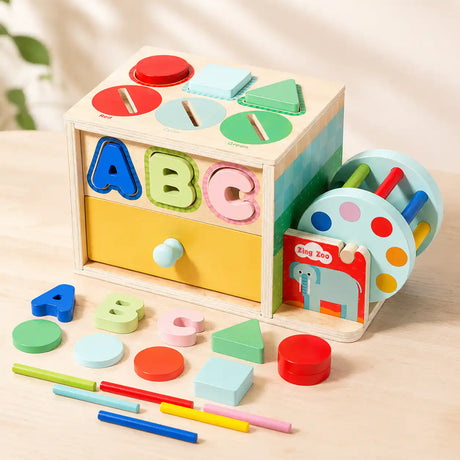
 Wooden 6-in-1 Activity Cube
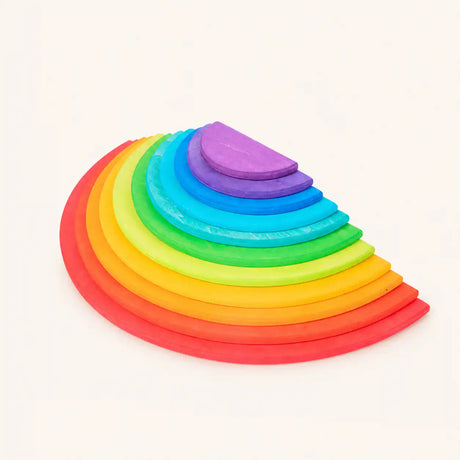
 Wooden Rainbow Semicircles
 Wooden Snail Pull-Along Rainbow Stacker
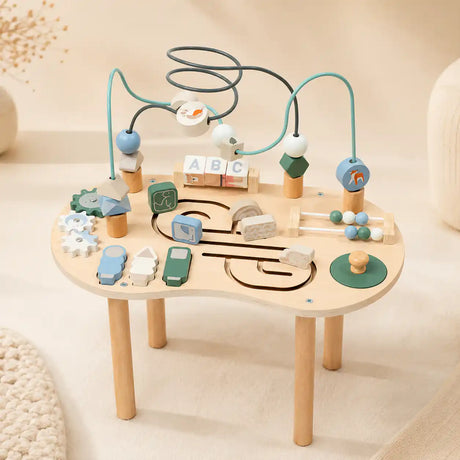
 Wooden Activity Table
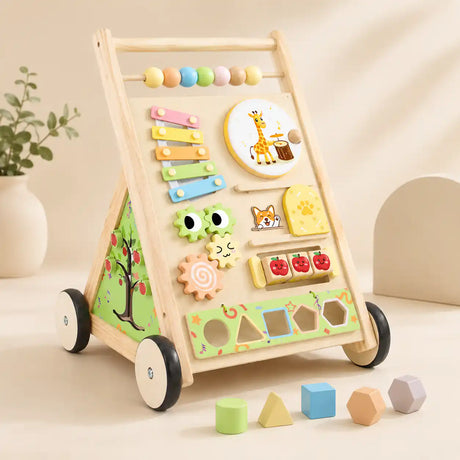
 Wooden 10-in-1 Activity Walker
When Waldorf-style toys shine
Reach for Waldorf-style toys when you want to feed imagination and open-ended play. A wooden rainbow becomes a bridge, a tunnel, a fence, a nest — whatever the child decides. Because the toy doesn't dictate, play tends to stretch longer and change day to day. A wooden rainbow arch stacker is a classic starting point, and our Waldorf & heirloom toys collection is full of pieces made to be handed down.


 Wooden Rainbow Stacking Discs Set
 Wooden Rainbow Stacking Tablets
A quick side-by-side
If you like to see it at a glance, here's how the two approaches tend to differ in practice.
| Montessori-style | Waldorf-style | |
|---|---|---|
| Play focus | Reality-based, purposeful | Imaginative, open-ended |
| Typical toys | Shape sorters, stackers, practical-life | Rainbows, peg dolls, play silks, blocks |
| Outcome | One right result to master | Whatever the child imagines |
| Best when | A child loves getting it right | A child loves to pretend and narrate |
| Shared ground | Natural materials, calm design, screen-free, child-led | |
Can you mix Montessori and Waldorf toys?
Absolutely — and most families do. The two share the same values of natural materials and unhurried, child-led play, so they sit happily side by side. A practical rhythm many parents like: a few purposeful Montessori toys for focused skill-building, plus a couple of open-ended Waldorf pieces for imaginative stretches. Watch which ones your child returns to, and let that guide what you add next.
Frequently asked questions
-
What is the main difference between Montessori and Waldorf toys?
Montessori toys are usually reality-based with a single clear purpose, so a child can master a specific skill. Waldorf toys are deliberately simple and open-ended, so the child supplies the imagination. Both use natural materials and encourage child-led play. -
Is Montessori or Waldorf better for a toddler?
Neither is better overall. Younger toddlers often connect first with purposeful Montessori toys, while open-ended Waldorf toys tend to shine as pretend play develops around two to three. The best choice follows your individual child. -
Can Montessori and Waldorf toys be used together?
Yes. They share the same emphasis on natural materials and child-led play, so they mix easily. Many families keep a few of each — purposeful toys for focused play and open-ended toys for imagination. -
Are Waldorf toys just wooden rainbows?
Rainbows are the most recognizable, but Waldorf-style toys also include peg dolls, play silks, simple wooden shapes, and natural building pieces — anything simple and open-ended enough for a child to imagine with. -
Which is more affordable, Montessori or Waldorf?
Both range widely in price. You can build either style gradually with a few well-chosen pieces rather than a full set. Focus on natural materials and open-ended or purposeful play rather than buying everything at once. -
Do Montessori and Waldorf toys avoid screens and batteries?
Yes. Both approaches favor quiet, screen-free toys where the child provides the energy and ideas, rather than lights, sounds, and batteries. That's one of the biggest things they have in common.
A note on development and safety: play supports growth, but every child develops at their own pace, and no single toy or approach guarantees a particular outcome. Always follow the age guidance and supervision notes on each product listing, and keep small parts away from children who still put things in their mouths. Adult supervision is recommended during play.
Last reviewed: July 2026.
Sources & further reading
- American Montessori Society — What Is Montessori
- NAEYC — 10 Things Every Parent Should Know About Play