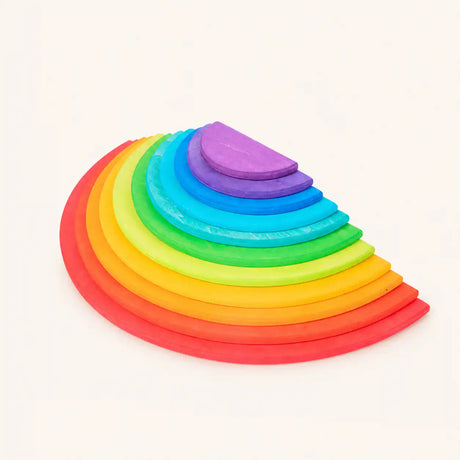
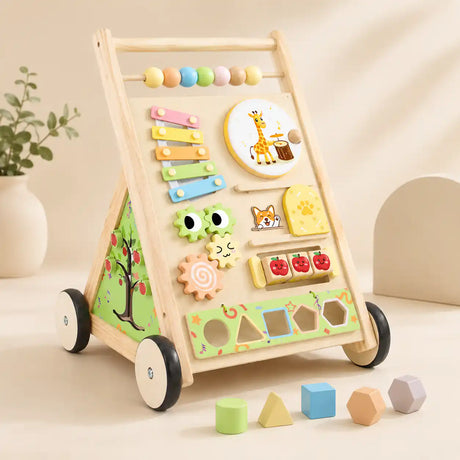
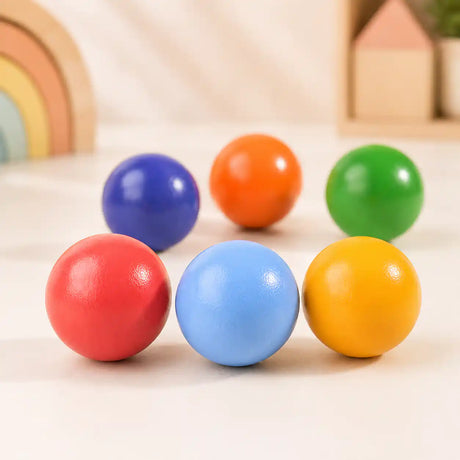
A "3+" label on a toy usually means it contains small parts that could pose a choking hazard to children under three. It's most often a safety warning about hazards — not a judgment that your child isn't clever enough for the toy. Toy age grading bundles together two different things: what tends to suit a child developmentally, and, crucially, what is safe for that age. This guide is part of our Toy Safety & Materials hub.
Below we explain what "3+" really signals, why a bright two-year-old might still be steered away from a toy, and how to read age labels wisely. For the official rules, the U.S. Consumer Product Safety Commission (CPSC) is always the authority.

Key takeaways
- A "3+" rating most often flags small parts that could be a choking hazard under three.
- Age grading combines developmental suitability and safety — the safety part usually drives a 3+.
- A capable toddler may love a 3+ toy; the label is about hazard, not ability.
- Always read the small-parts warning and follow it, especially for children who still mouth objects.
- The CPSC sets and enforces the rules — check cpsc.gov and each product's listing for specifics.
What does "3+" actually mean?
In the United States, toys intended for children under three must not contain small parts that could be swallowed or inhaled. When a toy does contain such parts, it's generally labelled for ages three and up and carries a small-parts choking warning. So "3+" is very often shorthand for "this has pieces small enough to be a choking risk for a younger child." The relevant framework comes from federal law (the Consumer Product Safety Improvement Act, or CPSIA) and the toy safety standard ASTM F963, both enforced by the CPSC.
Age grading is really two things at once
A toy's recommended age reflects a blend of factors: the skills and interests typical of that age (developmental fit) and whether the toy is safe for a child that age to handle (safety). Most of the time, when you see a jump to 3+, it's the safety side — small parts, long cords, or similar hazards — doing the deciding, even if the play itself would suit a younger child.
Why "3+" is often about hazards, not ability
This is the part that trips parents up. Your two-year-old might be perfectly able to enjoy a particular puzzle or building set — but if it has small pieces, it's rated 3+ because a younger child is more likely to put things in their mouth. The label isn't saying your child can't do it; it's saying the toy carries a hazard that matters most before age three. Reading it that way takes the pressure off and puts the focus where it belongs: on safety.

How to read age labels wisely
Treat the age rating as important information, not a personality test. A few habits help: read the small-parts warning and take it seriously; know your own child — some mouth objects well past their second birthday; supervise closely with any toy that has smaller components; and when a toy is borderline, err toward caution or save it for later. If you're ever unsure whether something is safe, the manufacturer's guidance and the CPSC are the right sources.
Wooden toddler toys and age ratings
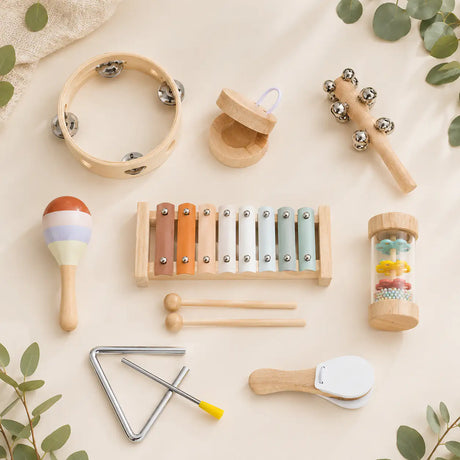
Many toys made for the youngest children are deliberately chunky and one-piece, precisely to avoid small-parts hazards. That's one reason solid wooden toddler toys are popular for under-threes. Whatever you're considering, check the age guidance and any small-parts note on the listing — every toy in our wooden toys collection includes age guidance so you can match the toy to the child and stage.

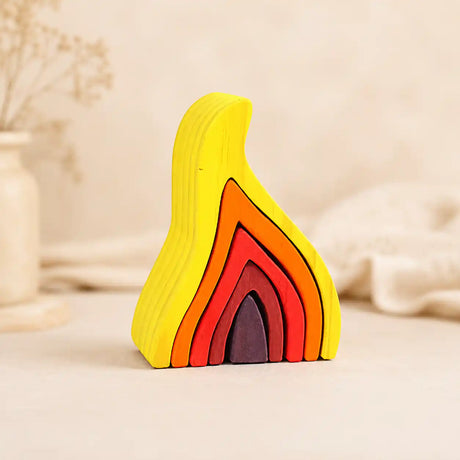
 Wooden Flame Stacking Puzzle
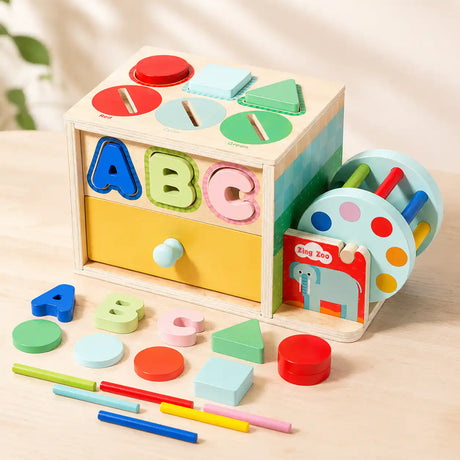
 Wooden 6-in-1 Activity Cube
 Wooden Rainbow Semicircles
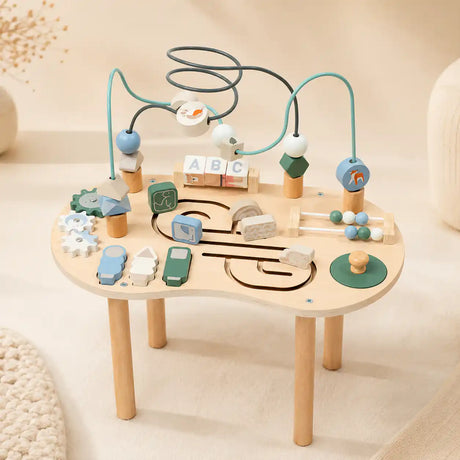
 Wooden Activity Table
 Wooden 10-in-1 Activity Walker
Common toy labels and what they usually signal
| Label | What it usually signals |
|---|---|
| Ages 0–6 / 0+ months | No small parts; suitable for mouthing (still supervise) |
| Ages 12m+ / 18m+ | Larger pieces; developmentally aimed at toddlers |
| 3+ with small-parts warning | Contains small parts — a choking risk under three |
| Adult supervision recommended | Best used with an adult nearby, at any listed age |
Frequently asked questions
-
Does "3+" mean my child isn't smart enough for the toy?
No. It usually means the toy has small parts that could be a choking hazard for a child under three. It's a safety warning about the toy, not a comment on your child's ability. -
Can my 2-year-old play with a 3+ toy?
Only with caution and close supervision, and ideally not if your child still mouths objects. The 3+ label is there because the toy carries a hazard for younger children, most often small parts. -
What counts as a "small part"?
Broadly, a piece small enough to fit entirely within a small-parts test cylinder used to model a young child's throat. If you're unsure, treat small, detachable pieces as a choking risk and supervise closely. -
Who decides toy age ratings?
Manufacturers assign them following federal law (CPSIA) and the ASTM F963 toy safety standard, all overseen by the U.S. Consumer Product Safety Commission (CPSC). Requirements can change, so check current guidance at cpsc.gov. -
Are wooden toys automatically safe for babies?
Not automatically — it depends on the size of the pieces and the finish. Many wooden toddler toys are chunky and one-piece, which helps, but always check the listed age and any small-parts note. -
Should I ignore the age label if my child seems ready?
Not for safety-driven labels. A child may be developmentally ready yet still at risk from small parts. Follow the safety guidance and supervise, rather than treating the label as optional.
A note on safety: this article is general information, not a substitute for the manufacturer's instructions or official guidance. Always read and follow the age grading and warnings on each toy, keep small parts away from children who still mouth objects, and consult the U.S. Consumer Product Safety Commission (cpsc.gov) for current requirements and recalls. Adult supervision is recommended during play.
Last reviewed: July 2026.