Researchers tracking 502 children from infancy into middle childhood have found that screen time during the first year of life is associated with weaker academic performance and working memory years later — and that age 1 appears to be the most sensitive window of all. The study, from Inserm and the National University of Singapore, was published online April 9, 2026 in the World Journal of Pediatrics. For parents of toddlers, it's a timely reminder that what fills a young child's early hours matters.
What happened
The research team followed 502 children from infancy through age 10.5, measuring screen exposure at several points and later testing academic performance and working memory. Higher screen viewing in infancy and again around school entry at age 6 was linked to reduced academic performance by age 9 and weaker working memory at age 10.5, according to the summary published via EurekAlert.
The strongest associations showed up earliest. “The effect sizes we saw at age 1 were the largest among all time points we examined,” the researchers noted, describing early infancy as a “window of heightened sensitivity.” Interestingly, screen time at ages 2 to 3 showed no strong associations in this cohort, but the effects re-emerged at age 6 — suggesting both early infancy and the school-entry period deserve attention.
Why it matters
This is an observational study, so it points to associations rather than proven cause and effect. But it adds to a growing body of research pointing in the same direction: the timing of screen exposure, not just the total amount, seems to matter. Major pediatric guidance has long discouraged screen media for children under 18 to 24 months outside of video chat, and findings like these help explain why that early window keeps drawing scrutiny.
What this means for parents of toddlers
The practical takeaway isn't guilt — it's substitution. When a screen is the easy default during a busy morning or a witching-hour meltdown, the useful question is: what could a one-, two-, or three-year-old reach for instead that keeps their hands and attention busy?
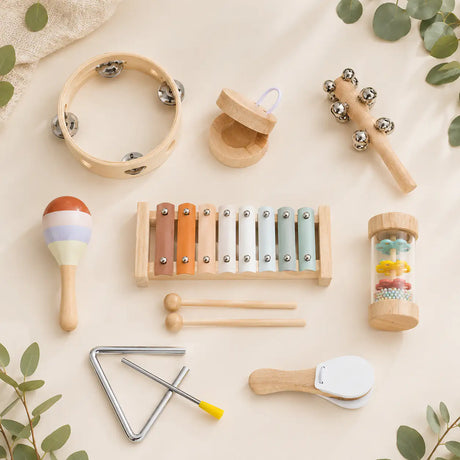
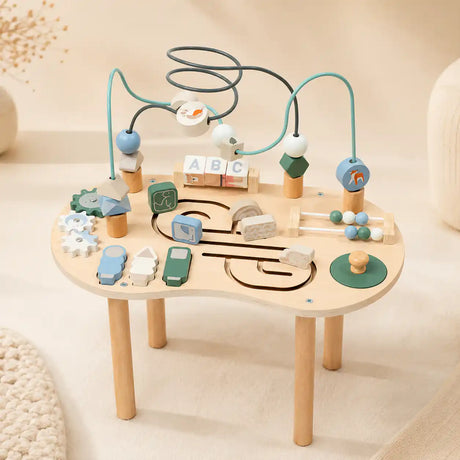
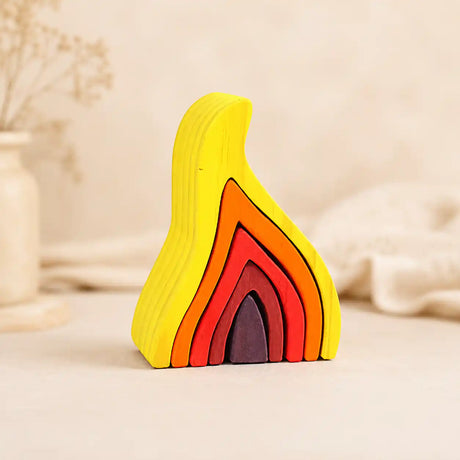
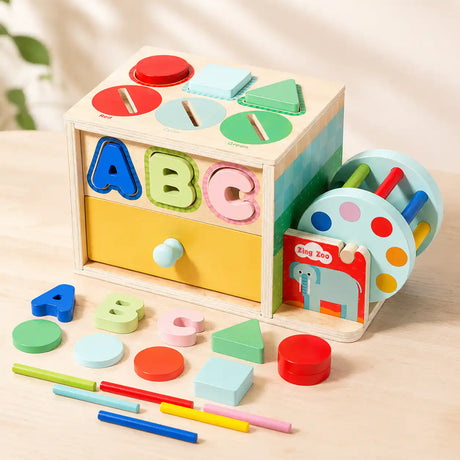
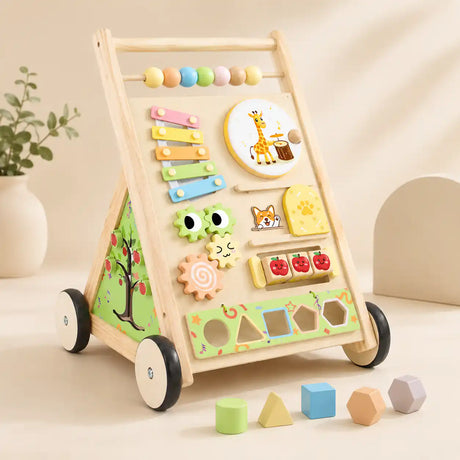
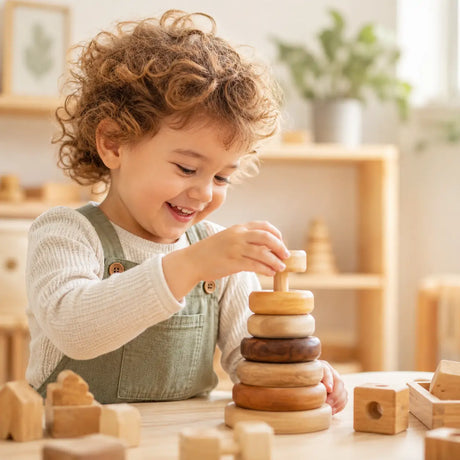
Open-ended, hands-on play is one of the most accessible answers. A simple wooden stacking set, a shape sorter, or a busy board gives a young child something to manipulate, repeat, and figure out on their own — the kind of self-directed problem-solving that Montessori-inspired play is built around. The goal isn't to replace one hour of screen with one “educational” object; it's to have a few genuinely engaging, screen-free things within arm's reach so that unplugged play becomes the path of least resistance. If you're putting together that first rotation, our Montessori toys for 1-year-olds are a gentle place to start.
“The effect sizes we saw at age 1 were the largest among all time points we examined.” — Study researchers, via EurekAlert
The bottom line
No single toy offsets a research finding, and no parent gets the balance perfect. But studies like this one reinforce a simple, doable habit: keep a small rotation of open-ended, screen-free play options where little hands can find them. In a year when the first birthday is getting fresh scientific attention, “something to figure out with their hands” is a quietly powerful thing to have on the shelf.