A large, rigorous study of public Montessori preschools is drawing new attention to an approach that's more than a century old — and the results are hard to ignore. Children who won a random lottery to attend Montessori programs were, by the end of kindergarten, stronger readers with better memory and focus than peers who didn't get in. The program also cost thousands less per child.
What happened
The findings come from a randomized controlled trial published in the Proceedings of the National Academy of Sciences and highlighted in a November 2025 Brookings commentary by Montessori researcher Angeline Lillard and developmental scientist Kathy Hirsh-Pasek. The study spanned 24 public Montessori schools across 10 U.S. states and regions. Because the programs were oversubscribed, admission ran through a random lottery — roughly 240 children who got in were compared with about 340 who did not, a design that lets researchers isolate the effect of the program itself.
At the start, and through the pre-K years, the two groups looked the same. By the end of kindergarten, clear differences emerged in favor of the Montessori children: they were better readers and showed stronger short-term memory, executive function, and social understanding. The gaps were large for an education study. As the authors put it, a child who would have landed at the 50th percentile in reading or memory in a traditional school would have reached the 71st percentile in a Montessori one.
Just as striking: the study found three years of public Montessori preschool cost $13,127 less per child than traditional public preschool, largely because of its intentionally higher child-to-teacher ratios.
Why it matters
Montessori is often assumed to be an expensive, boutique choice. This research pushes back on both halves of that assumption — showing strong outcomes and lower costs — and it isn't a one-off. The authors note that all three randomized trials of authentic public Montessori programs for ages 3 to 6 have found a similar array of positive results, a rarity in a field where most interventions show no effect at all.
What drives the results, researchers suggest, is the method itself: mixed-age classrooms, hands-on materials that carry the lesson, and children free to work with those materials and one another rather than sitting through instruction. Maria Montessori designed the approach by watching how children actually learn — through self-directed, hands-on discovery.
A child at the 50th percentile in reading or memory in a traditional school "would have been at the 71st percentile had they attended a study Montessori school." — Brookings, November 2025
What this means for parents
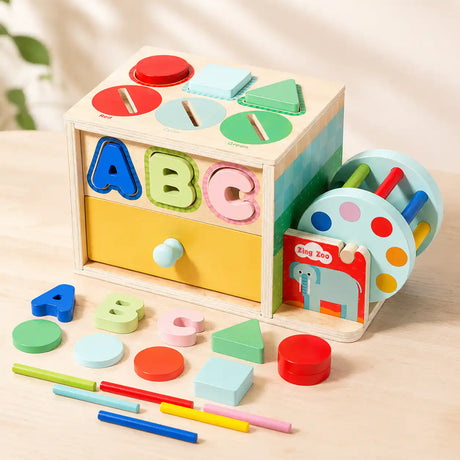
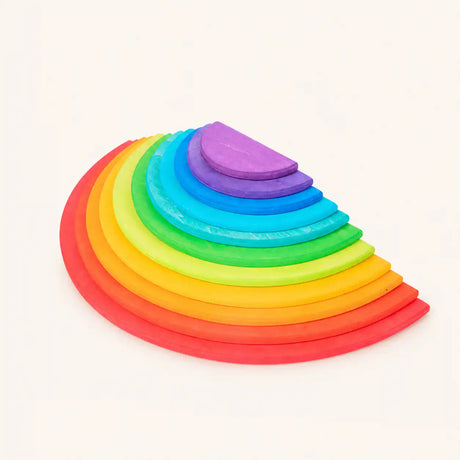
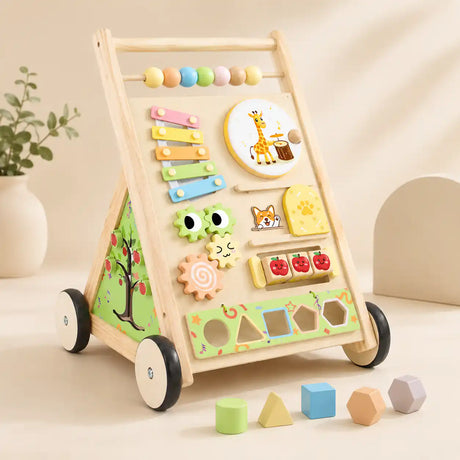
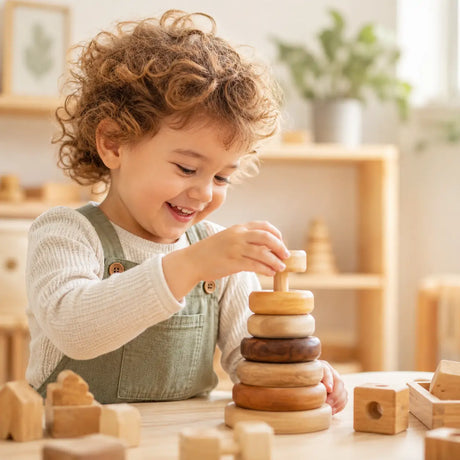
Not every family lives near a public Montessori school — but the principles behind the results travel home easily, and they cost nothing to adopt. The study points to what matters: hands-on materials a child can explore independently, freedom to repeat and self-correct, and learning that feels self-initiated rather than assigned. A toddler working a shape sorter or stacking rings until it "clicks" is practicing exactly the focus and problem-solving the classrooms cultivate.
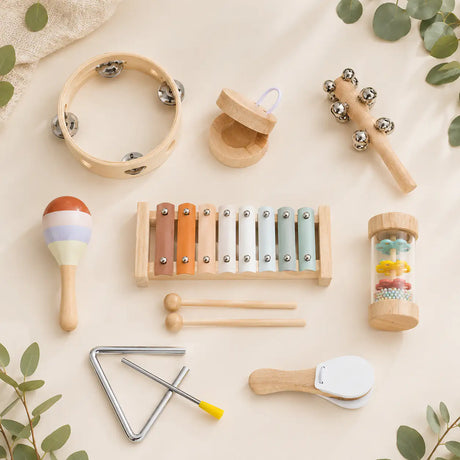
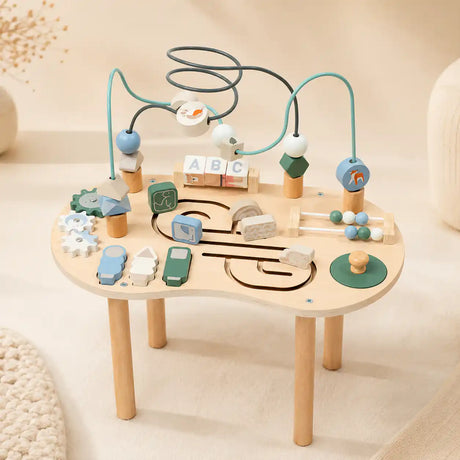
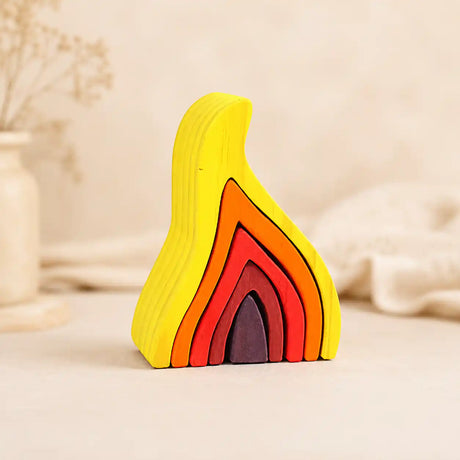
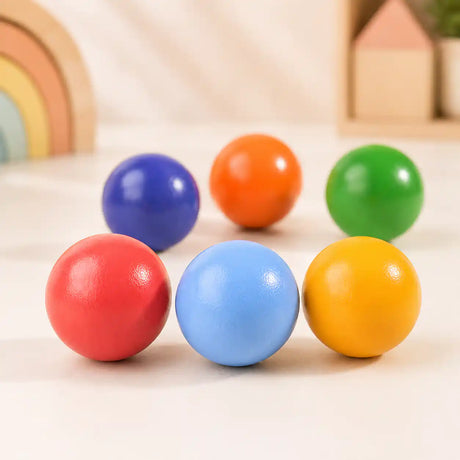
That's the thinking behind every toy at JuniSprouts. Our Montessori-inspired wooden toys are chosen to invite that kind of independent, hands-on discovery — sorting, stacking, matching, and pretend play that lets little ones learn for the joy of it. You don't need a classroom to bring the method home; you need the right materials and unhurried time to play.
The bottom line
A century after Maria Montessori first watched children closely and rethought how they learn, the evidence keeps pointing the same way: hands-on, self-directed play works. Whether or not a Montessori school is within reach, families can lean into its core idea at home — real materials, little hands, and room to explore.
This article summarizes published research for general educational purposes and is not a developmental or medical guarantee.