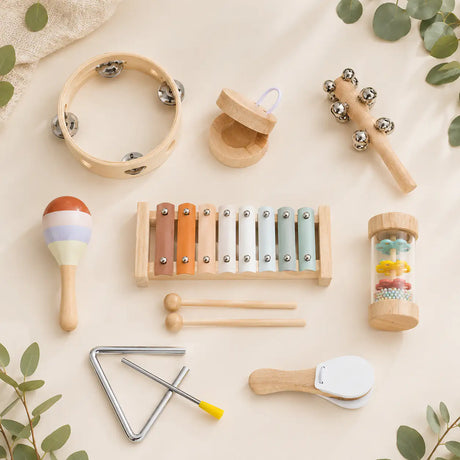
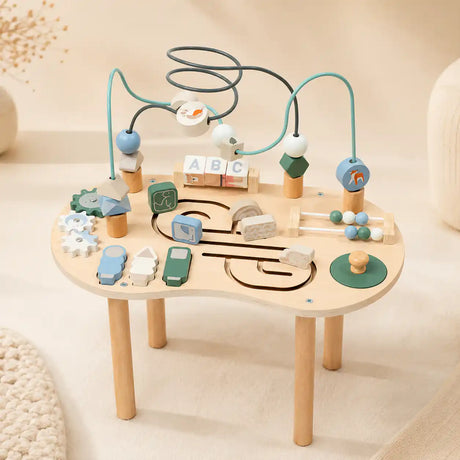
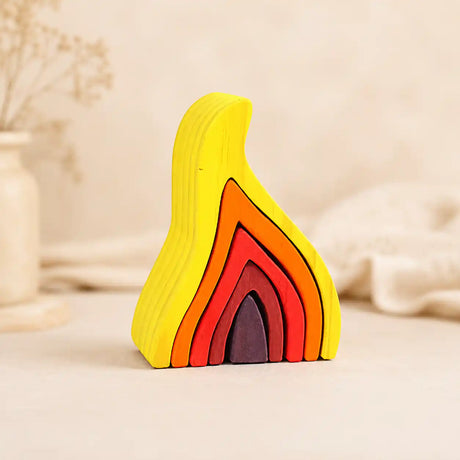
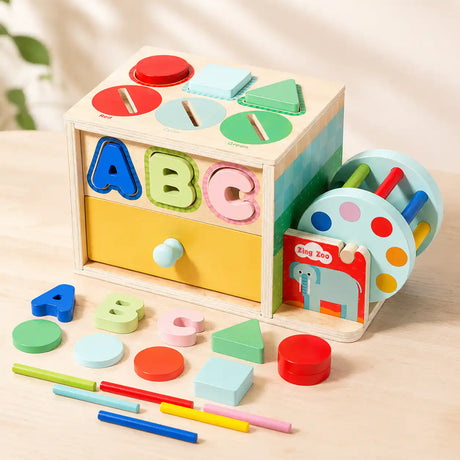
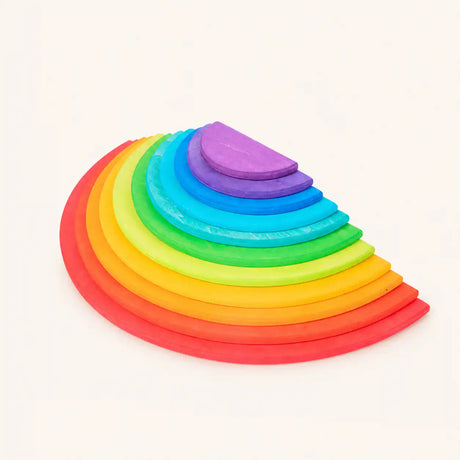
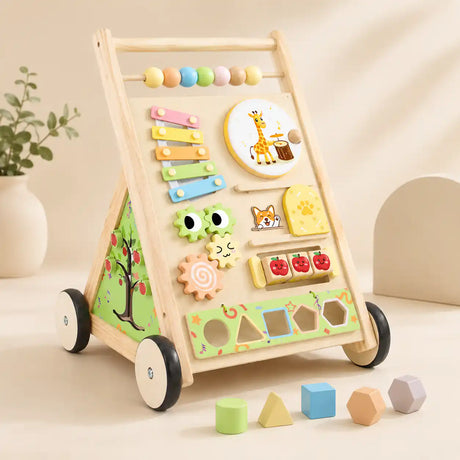
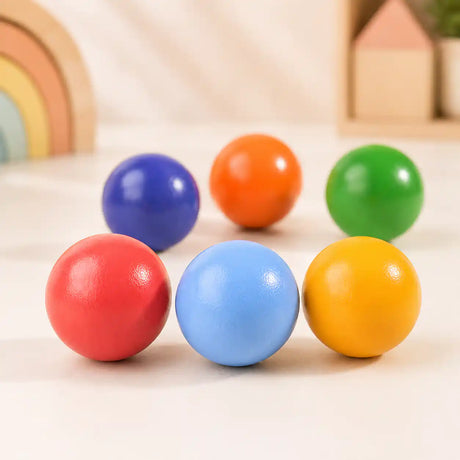
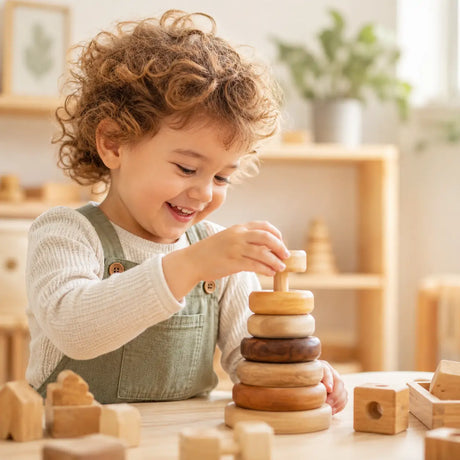
Walk into any toy aisle and the choices can feel overwhelming — flashing lights, loud sounds, and boxes promising the world. Montessori toys take a quieter path. They're designed to hand the discovery back to your child, with simple, natural materials and one clear purpose at a time.
If you're wondering how to choose Montessori toys that are genuinely worth it, this guide walks you through what to look for — from materials and age-fit to safety — so you can shop with confidence, whether it's for your own little one or a thoughtful gift.
What makes a toy "Montessori"?
There's no official certification, so the word gets used loosely. But a few principles hold true. A Montessori toy is usually made from natural materials, focuses on a single skill or concept, and lets the child lead the play rather than doing the work for them.
Think of a simple wooden shape sorter versus a plastic console with twenty buttons. The sorter invites your child to try, adjust, and try again. That gentle, self-directed problem-solving is the heart of the Montessori approach — and it's what to keep in mind as you choose.
Start with your child's age and stage
The best toy is one that meets your child exactly where they are. A toy that's too advanced gets abandoned; one that's too simple gets outgrown. Matching to the developmental stage keeps play engaging and builds real confidence.
Here's a rough guide to shop by:
- Under 1: grasping toys, high-contrast objects, and simple cause-and-effect play. Browse Montessori toys for babies.
- 1 year olds: stackers, shape sorters, and first puzzles that reward repetition. See toys for 1 year olds.
- 2 year olds: sorting, threading, and early pretend play. See toys for 2 year olds.
- 3 year olds: multi-step puzzles, counting sets, and imaginative play. See toys for 3 year olds.
- 4 year olds: early math, logic, and more involved building. See toys for 4 year olds.
Remember that these are guides, not rules. Many of the best wooden Montessori toys grow with your child, offering simpler play early on and richer challenges later.
Choose natural materials you can trust
Material matters more than it might seem. Natural wood is warm to the touch, durable enough to survive years of play, and has a satisfying weight that plastic can't match. It also tends to age beautifully rather than looking tired after a few months.
When you're comparing options, look for solid wood, smooth sanding, and non-toxic, water-based finishes. These are the details that make a toy safe to mouth, pleasant to hold, and built to be handed down.
Look for one clear purpose, not ten features
It's tempting to think more features mean more value. In practice, the opposite is often true. A toy that tries to do everything can overwhelm a young child and split their focus.
Montessori-inspired toys tend to do one thing well — sort, stack, thread, balance — which invites deeper, more absorbed play. That quiet concentration is where focus and patience actually develop, so simplicity is a feature, not a compromise.
Put safety first, especially for younger children
Safety is non-negotiable, and it changes with age. For toddlers and babies, small parts are a genuine choking hazard, and cords or strings should be avoided for the youngest children.
Before you buy, check a few things: the age grading on the listing, whether the toy contains small parts, and whether it carries a Children's Product Certificate (CPC) confirming it meets applicable U.S. safety requirements. And whatever the age, adult supervision is always recommended for young children at play.
A quick checklist before you buy
- Is it matched to my child's current age and stage?
- Is it made from natural materials with safe, non-toxic finishes?
- Does it focus on one clear skill or concept?
- Does it let my child lead the play?
- Is it age-appropriate and free of small-parts risks for their age?
- Will it grow with them, or be outgrown in a month?
Choosing with confidence
Choosing a Montessori toy doesn't have to be complicated. Lead with your child's stage, favor natural materials and simple purpose, and keep safety front and center — and you'll end up with toys that get played with again and again, not left in a corner.
Ready to find the right fit? Shop by age to see toys thoughtfully chosen for every stage — smart play for little growing minds.