A new long-term study has added weight to something many parents already sense in their gut: the earliest years may be the ones where screens matter most. Researchers who tracked children from infancy into middle childhood found that more screen time in the first year of life was linked to poorer academic performance and weaker working memory years later — a finding that puts fresh value on simple, hands-on play.
What happened
The study, published in the World Journal of Pediatrics and released in mid-2026, followed 502 children from age 1 through 8 as part of Singapore's long-running GUSTO birth cohort. Researchers from Inserm in France and the National University of Singapore measured parent-reported screen time at six points in early childhood, then assessed the children's academic achievement at age 9 and working memory at age 10.5.
Higher screen viewing time was consistently associated with poorer later academic performance and weaker working memory. The associations were strongest for screen exposure during infancy and around school-entry age, suggesting these are especially sensitive windows for the developing brain.
"The effect sizes we saw at age 1 were the largest among all time points we examined," the authors reported, describing early infancy as "a window of heightened sensitivity, when the developing brain is particularly vulnerable to the displacement of learning interactions by screen time." Notably, screen use at ages 2 and 3 showed no significant link — but the association re-emerged at age 6, as children entered formal schooling.
Why it matters
For years, guidance from the World Health Organization and the American Academy of Pediatrics has recommended no screen time before 18 to 24 months and less than an hour a day for children ages 2 to 5. This study helps explain the "why" behind those numbers — and reframes the question. It isn't only about how many minutes of screen time a child gets, but when. The researchers' phrase for the mechanism is telling: screens displace "learning interactions." Every minute a baby spends watching a screen is a minute not spent handling, stacking, babbling, and problem-solving with a caregiver nearby.
The authors were careful not to overstate individual risk — an extra hour here or there is unlikely to visibly harm any one child. But across a whole population, they note, even modest shifts could nudge a meaningful number of children toward lower academic performance.
"That suggests early infancy may be a window of heightened sensitivity, when the developing brain is particularly vulnerable to the displacement of learning interactions by screen time." — Study authors, World Journal of Pediatrics, 2026
What this means for parents
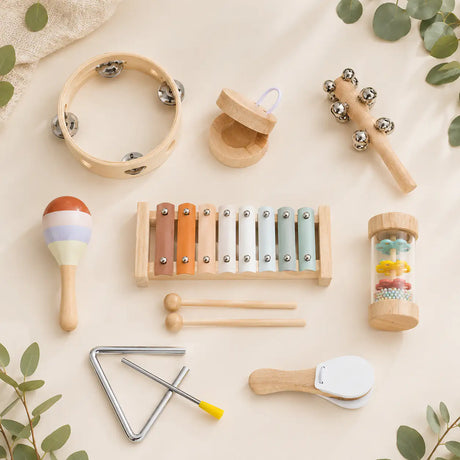
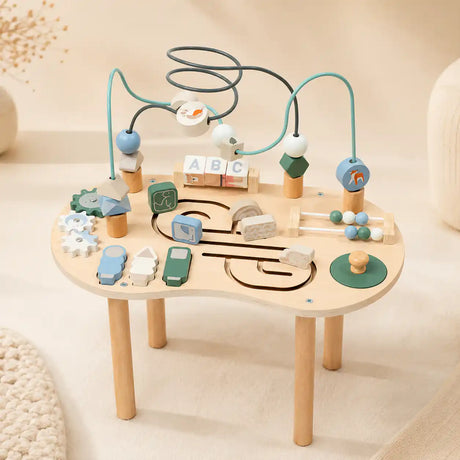
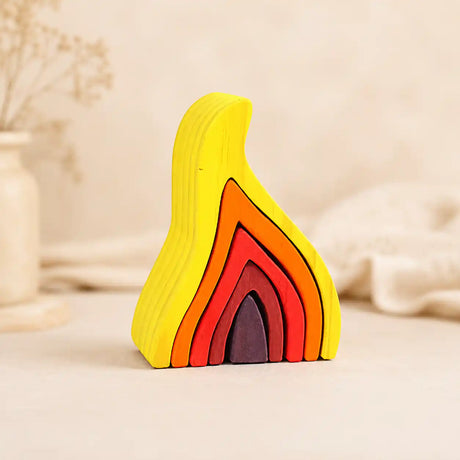
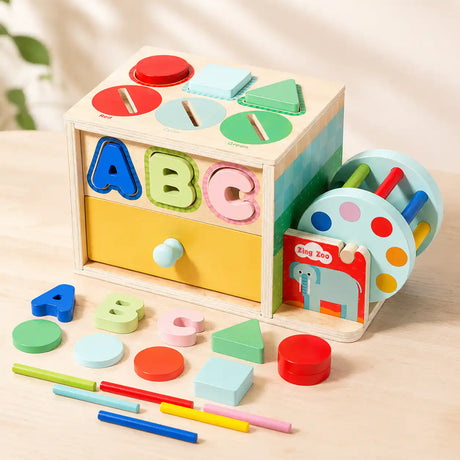
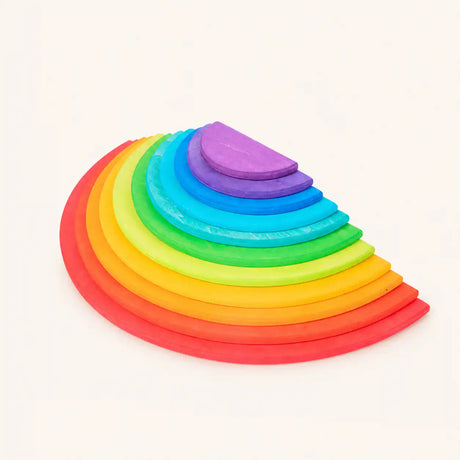
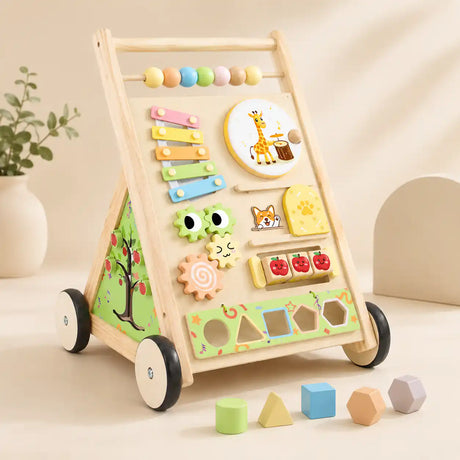
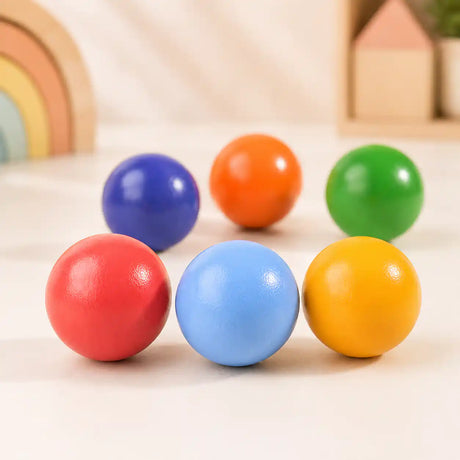
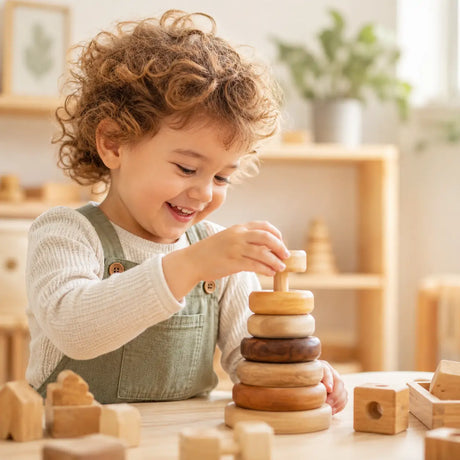
The encouraging takeaway is that the alternative to a screen is not something expensive or complicated — it's ordinary, hands-on play. Sorting, stacking, threading, and pretend play are exactly the kinds of "learning interactions" the researchers describe: they build the fine motor skills, focus, and working memory that screens tend to crowd out.
This is the heart of what JuniSprouts is built around. Our Montessori-inspired wooden toys are made for screen-free, open-ended discovery — the stacking, sorting, and imaginative play that invites a toddler to think, try, and try again. Toys that grow with your child give those early "learning interactions" somewhere to happen, day after day, without a battery or a screen in sight.
The bottom line
The research is a reminder, not a reason to panic. The first years are a powerful window — and the best thing to fill it with is often the simplest: warm attention, real objects in little hands, and unhurried time to play. Reach for the wooden blocks before the tablet, especially in that first year, and you're giving your child exactly what the science points toward.
This article summarizes published research for general educational purposes and is not medical advice.