The American Academy of Pediatrics has retired its long-standing "hard hour limits" on screens for young children, replacing them with a framework that asks parents to weigh the quality and context of what their kids watch rather than simply counting minutes. For families of toddlers, the shift lands on one clear message: screens should never crowd out sleep, movement, connection, or free play.
What happened
In its updated policy on digital ecosystems for children and adolescents, the AAP moved away from firm screen-time caps toward "a more nuanced approach focused on the quality of content," according to Florida State University, which published expert guidance on the change on February 2, 2026. The report continues to warn parents about content that is highly commercialized and algorithmic — the kind engineered to keep children watching — while acknowledging that thoughtfully designed, age-appropriate media can offer benefits.
One line in the sand didn't move: children 18 months and younger are still advised to avoid screen time, which the AAP attributes to their "immature cognitive processing."
Leah Singh, director of FSU's Children's Learning Clinic, called the update "a welcomed and appropriate adjustment" that "align[s] much more closely with advances in research." As she put it, the new guidance "acknowledges that screen time alone does not adequately address all the factors that help children develop a healthy relationship with media."
Why it matters
For a decade, parents treated the daily screen-time number as the whole ballgame. The 2026 reframe says that number was always too blunt an instrument. What a child watches, whether it's interactive or passive, whether a caregiver is involved, and whether it's displacing sleep or play — those factors matter as much as the clock.
Crucially, the AAP didn't loosen its stance so much as sharpen it. Low-quality, algorithm-driven content is still flagged as a risk to sleep, relationships, and emotional regulation "regardless of the amount of time spent on a device," Singh noted. And the guidance repeatedly returns to a single protective factor: real-world, screen-free experiences.
What this means for parents of toddlers
For the under-4 crowd, the practical takeaway is almost old-fashioned. Because screens are still discouraged before 18 months and kept minimal after, the hours a toddler isn't on a device are the ones that do the developmental heavy lifting — and open-ended, hands-on play is how those hours are best spent.
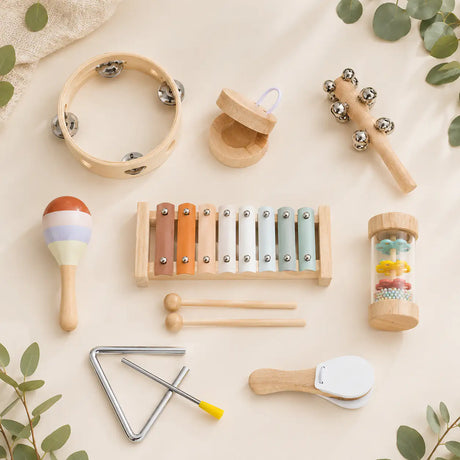
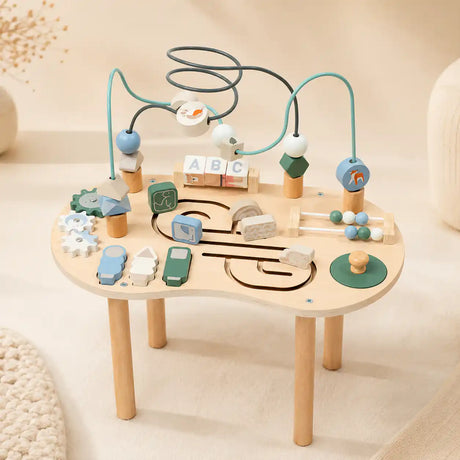
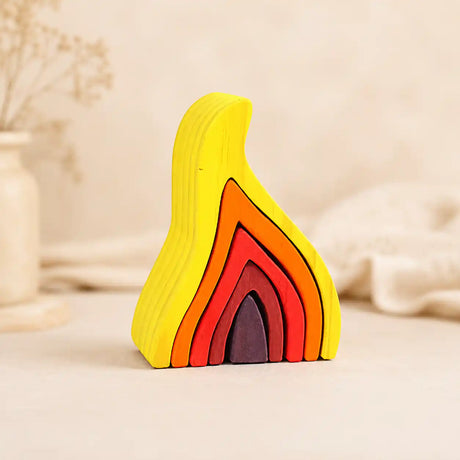
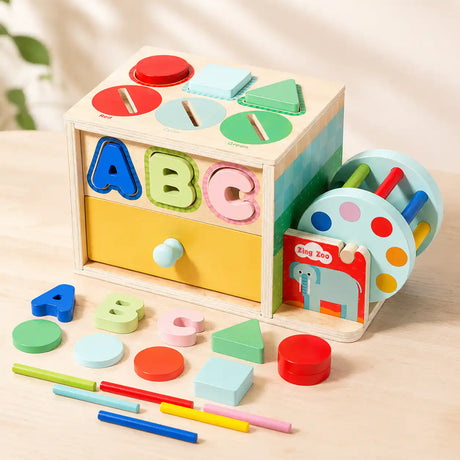
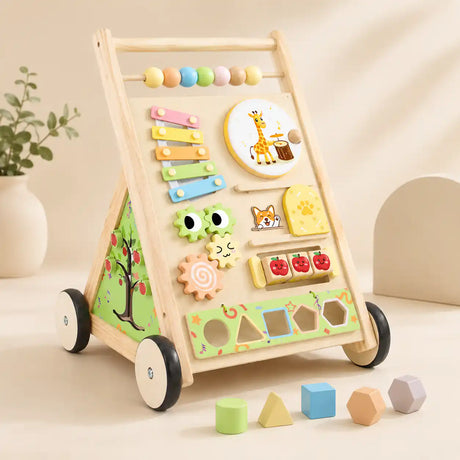
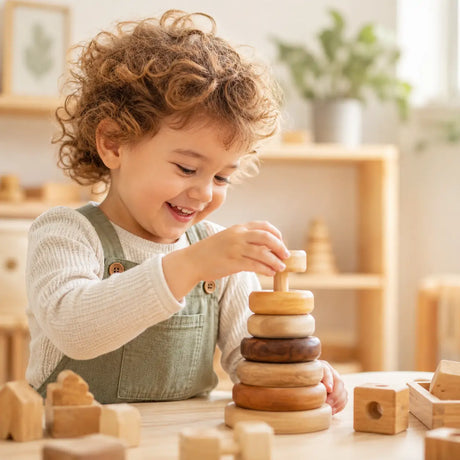
Singh's own advice points straight at it: watch for irritability, sleep disruption, or "reduced interest in play and social interaction," and protect "active play, creativity or family connection" from being edged out. The tools that fill that space don't need to do anything at all. A stacking set, a set of wooden animals, a sorting tray — toys with no screen, no soundtrack, and no single "right" answer — invite exactly the child-led exploration the guidelines are trying to preserve. That's the whole idea behind Montessori-inspired wooden toys: they meet a child where they are and let the play unfold on the child's terms.
"Screens should not crowd out sleep, active play, creativity or family connection." — Leah Singh, director, FSU Children's Learning Clinic
The bottom line
The rules changed, but the north star didn't. Pediatricians are telling parents to worry less about a magic number and more about what fills a child's day. For toddlers, the best answer is still the simplest one: calm, screen-free, open-ended play — and plenty of it.
This piece summarizes evolving guidance on children's media use. For decisions specific to your child, talk with your pediatrician; the AAP's family media plan is a useful starting point.