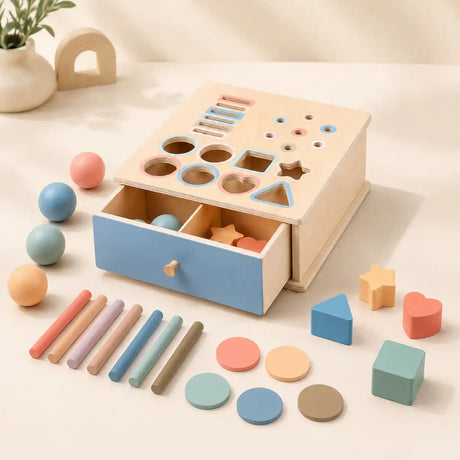
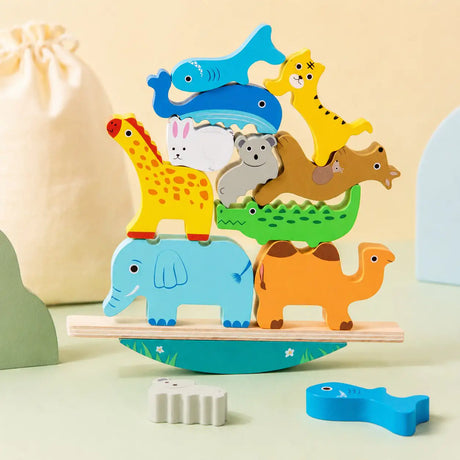
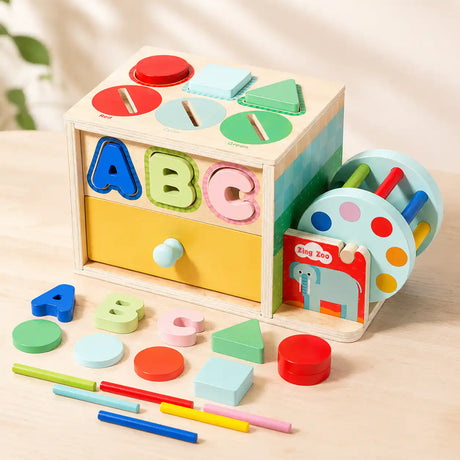
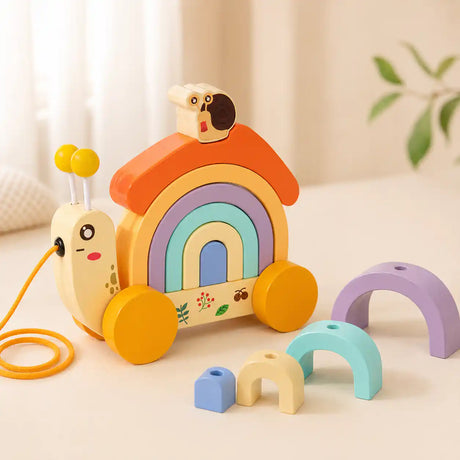
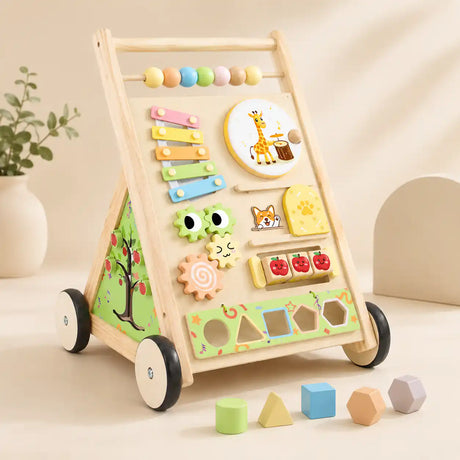
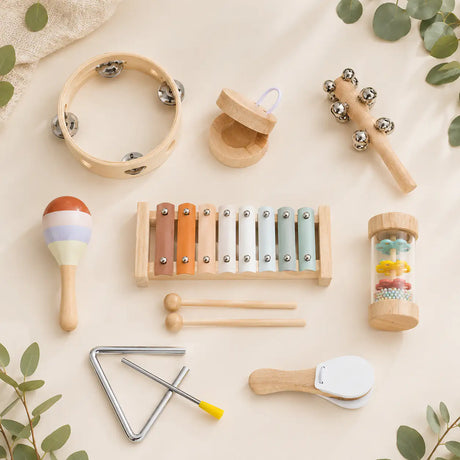
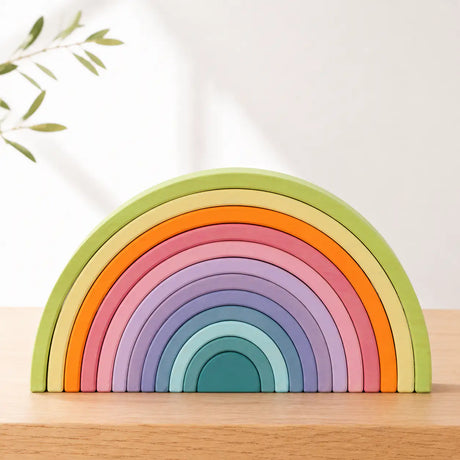
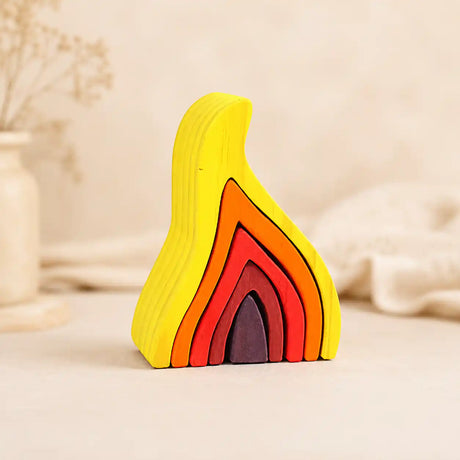
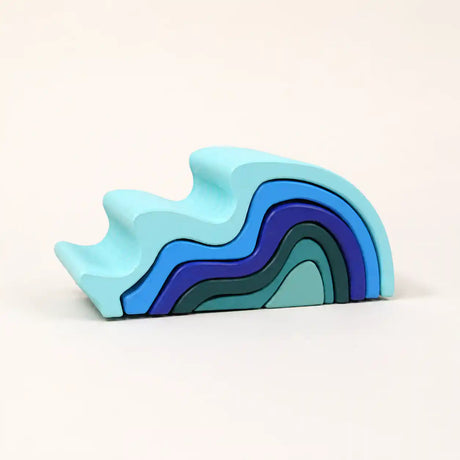
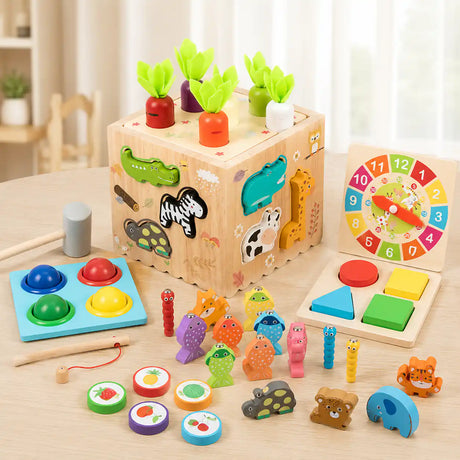
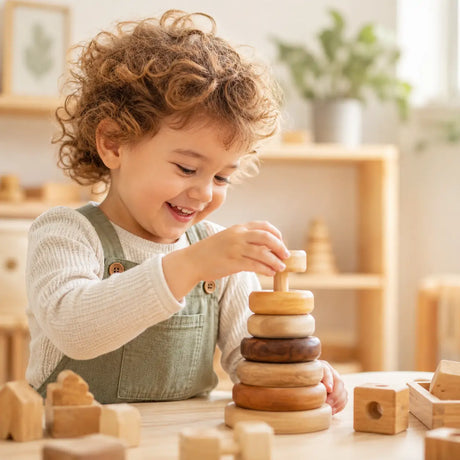
Fine motor toys designed to strengthen little hands the gentle Montessori way. Each toy here invites toddlers to pinch, twist, thread, sort, and grasp — building the small-muscle control that makes drawing, buttoning a coat, and holding a pencil feel easier later on.
 2-3 year31% off
-
1-2 yearSold out
-
1-2 year31% off


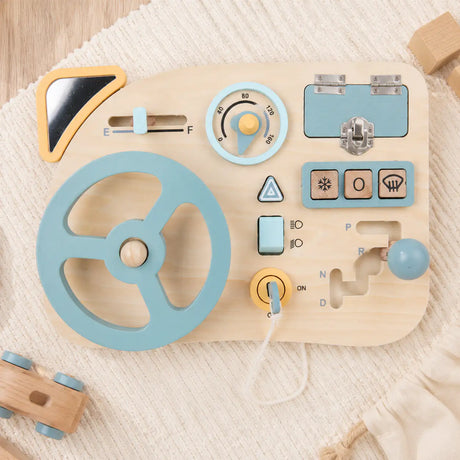

What Are Fine Motor Skills?
Fine motor skills are the small, precise movements of the hands and fingers, as distinct from the large movements of running and climbing. They develop through repetition, and they underpin an enormous amount of what a child will be asked to do at school — writing, cutting, fastening, turning pages.
- Pincer grip — picking up small objects with thumb and forefinger
- Hand-eye coordination — guiding a piece precisely to where it needs to go
- Bilateral coordination — using both hands together, one steadying while the other works
- Hand strength — the endurance to keep going without fatigue
How These Toys Help
Threading a bead onto a lace is one repetition. Doing it thirty times in a sitting, because the activity is absorbing rather than assigned, is what builds the skill. Our Montessori fine motor toys are chosen for that quality — activities a child returns to willingly, with enough challenge to hold attention and enough success to keep them coming back.
Fine Motor Skills Questions
What toys help develop fine motor skills?
Threading and lacing sets, shape sorters, peg boards, stacking rings, tongs and scooping activities, and anything requiring a precise placement. The common thread is a small, repeatable hand movement with clear feedback — the piece either fits or it doesn't.
At what age do fine motor skills develop?
They develop continuously from infancy through early school years. A one-year-old works on grasp and release; a two-year-old refines the pincer grip and starts threading; a three- or four-year-old manages buttons, scissors, and controlled drawing. Progress is uneven and individual — a child may leap ahead in one area and take longer in another.
How can I tell if a toy is at the right level?
Watch for the sweet spot between frustration and boredom. If your child abandons it within seconds, it's too hard; if they complete it perfectly first try and walk away, it's too easy. The right toy produces a few failed attempts followed by success, and then a request to do it again.
Why does fine motor development matter?
Beyond handwriting, it supports independence in daily tasks — dressing, eating, managing zips and lids. Children who can do these things for themselves tend to want to, and that self-reliance is a large part of what Montessori practice is aiming at.
Are these toys suitable for children with delayed fine motor skills?
Many families use toys like these alongside occupational therapy, and hands-on repetition is generally encouraged. We'd suggest choosing by the skill your child is currently working on rather than by their age, and speaking with their therapist about which activities fit their plan.
Many toys in this collection contain small parts. Adult supervision is recommended; see each product page for age guidance.
Read more about Fine Motor Toys Show less
You May Also Like
View all-
1 year30% off
-
1 year31% off
-
1 year29% off
-
1 year31% off
-
1 year30% off
-
2-3 year31% off
-
1 year30% off
-
3-4+ year31% off
-
2-3 year31% off
-
1-2 year30% off