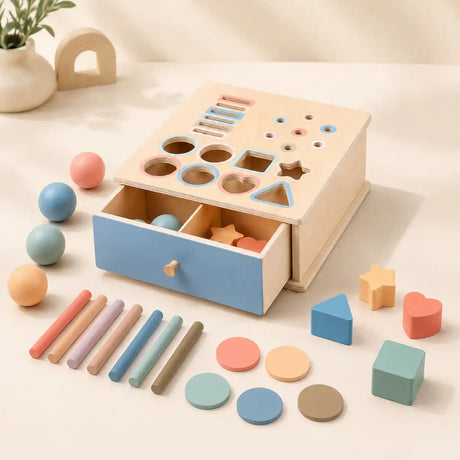
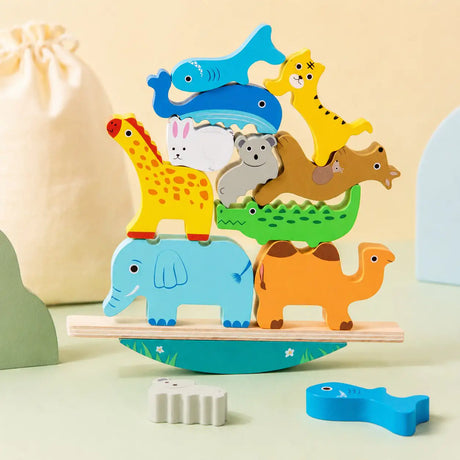
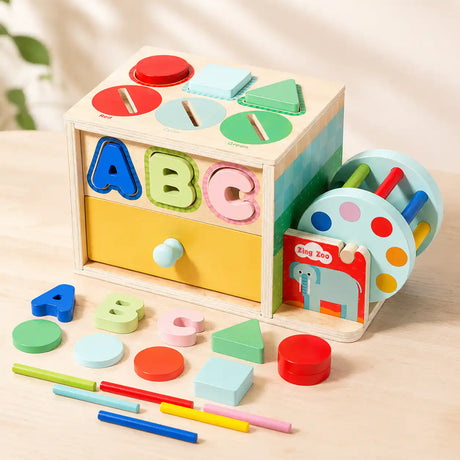
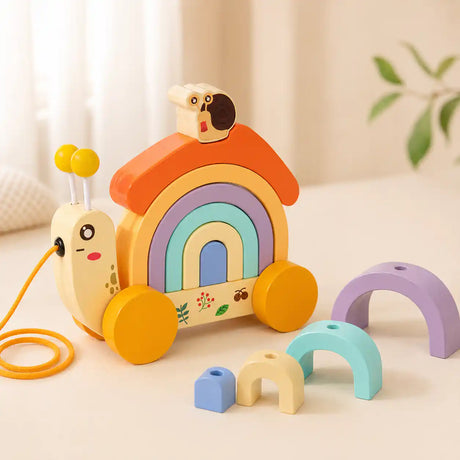
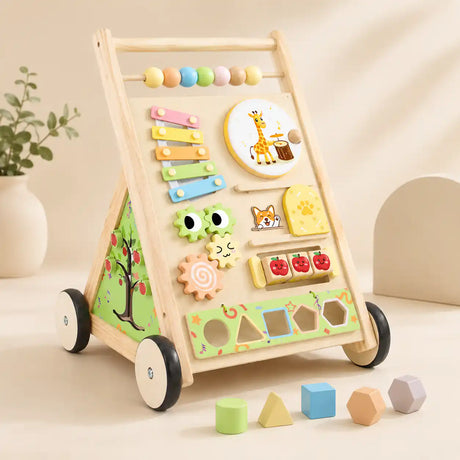
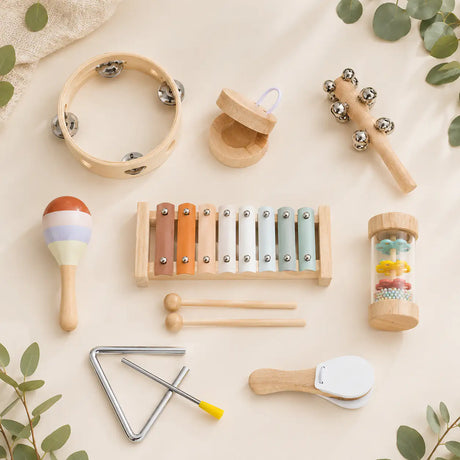
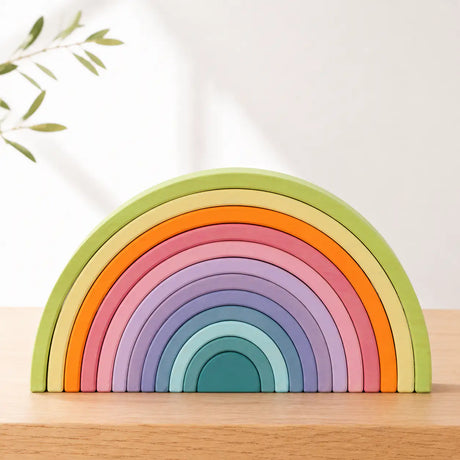
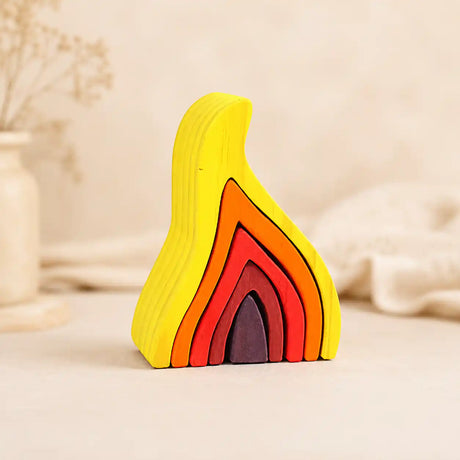
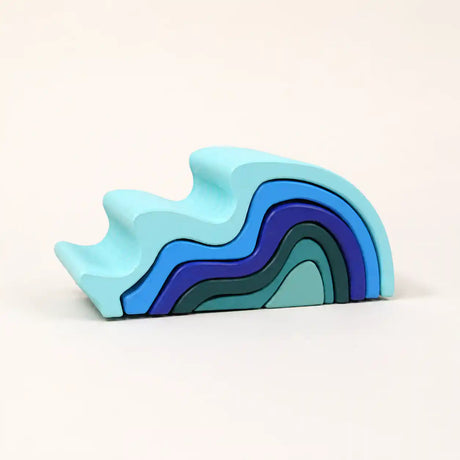
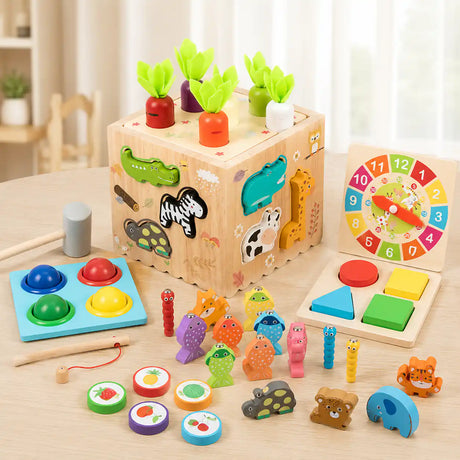
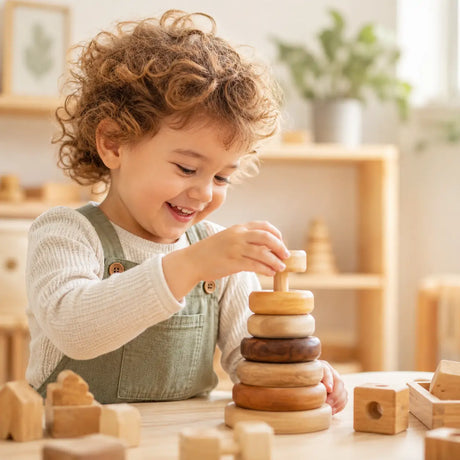
Counting toys and early math sets designed to make numbers feel approachable. From wooden balance scales to magnetic fishing games, each toy turns number recognition and early counting into something a child does with their hands.


How Early Math Actually Begins
Number sense doesn't start with symbols. It starts with quantity — noticing that this pile is bigger, that these two groups match, that one more makes a difference. Physical counting toys build that foundation before a child is asked to work with written numerals.
- Counting with meaning — one object, one number word, and a total that means something
- Comparison — more, fewer, heavier, lighter, longer, shorter
- Number recognition — matching a written numeral to an actual quantity
- Early operations — combining and separating groups, which is addition before it has a name
What's in This Collection
Balance scales, numbered fishing games, counting and threading sets, stacking number blocks, and sorting trays — Montessori counting and math toys for toddlers and preschoolers meeting numbers for the first time.
Counting & Math Questions
At what age do children learn to count?
Most can recite numbers to ten around two or three, but true counting — understanding that the last number is the total — usually arrives between three and four. Both stages matter, and the gap between them is normal and often several months wide.
What is number sense?
The intuitive grasp of quantity and relationships between numbers — knowing that six is more than four without counting, or that seven is close to eight. It predicts later mathematical ability better than early memorization does, and it's built through handling real objects.
How do balance scales teach math?
They make comparison physical. A child sees that three blocks on one side outweigh two on the other, and can adjust until it balances. That's equivalence and inequality experienced directly — the concept behind the equals sign, met years before the symbol.
My child can count to twenty but can't count five objects. Why?
Because reciting and counting are different skills. Reciting is memorized sequence, like a song. Counting requires tracking each object, saying one word per item, and knowing the last word is the answer. The second takes longer and comes with practice on real objects.
What's the best way to introduce math at home?
Fold it into what you're already doing. Counting stairs, setting the table, dividing snacks, comparing shoe sizes. Everyday quantity conversations do more than any structured session, and they don't feel like being taught.
Adult supervision is recommended. Some sets contain small parts and magnets; see each product page for age guidance.
Read more about Counting & Math Toys Show less
You May Also Like
View all-
 1 year30% off
 -
1 year31% off
-
1 year29% off
-
1 year31% off
-
1 year30% off
-
2-3 year31% off
-
1 year30% off
-
3-4+ year31% off
-
2-3 year31% off
-
1-2 year30% off