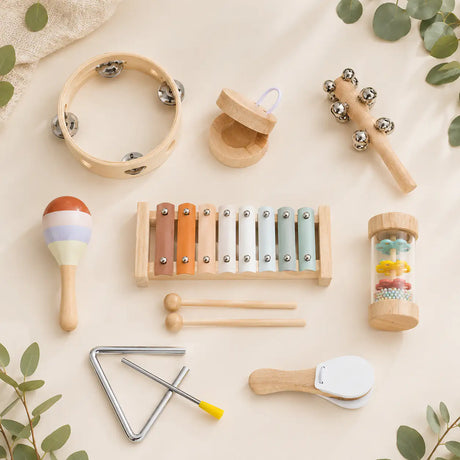
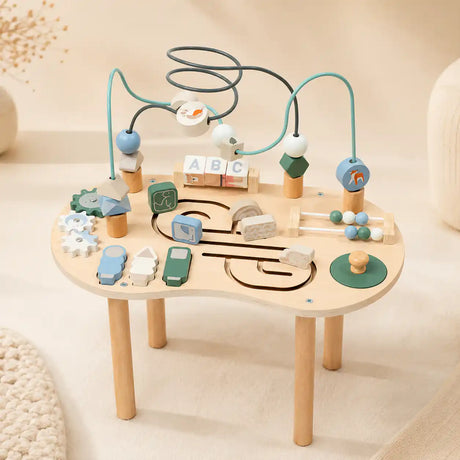
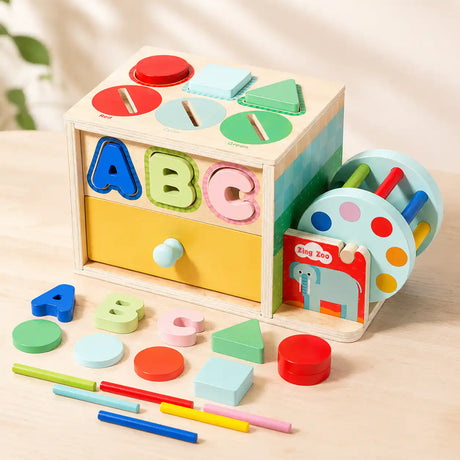
A string of children's toys marketed for babies and toddlers has been pulled from shelves and online marketplaces this year, and several of them borrowed the “Montessori” and “busy board” labels that so many parents now shop for. The U.S. Consumer Product Safety Commission (CPSC) recalls point to a hazard worth understanding before your next purchase: a good-looking developmental toy is only as safe as the way it's actually built.
What happened
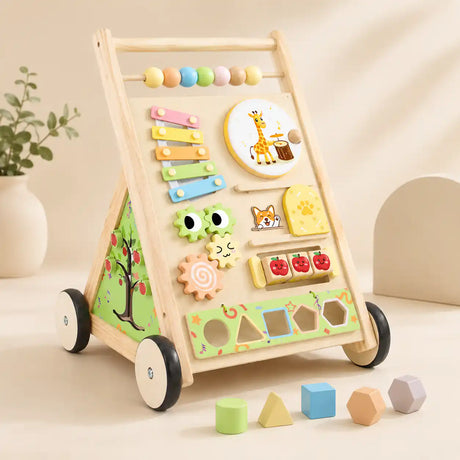
On February 26, 2026, the CPSC announced a recall of Joyreal-branded busy board toys sold on Amazon, warning that the toy's small mirror can detach and pose a “deadly choking hazard,” while the mirror's sharp edges create a laceration risk. The agency said the product violated both the federal small parts ban and the mandatory toy safety standard, and told owners to stop using it immediately (CPSC, recall 26-303).
It wasn't an isolated case. In the CPSC's own “related recalls” for that alert and others, the pattern repeats across cheaply made, imported toys: a separately recalled Montessori Busy Board was pulled because high-powered magnets could detach and be swallowed — a scenario the agency warns can cause magnets to “attract each other… and become lodged in the digestive system,” leading to perforations, blockage, blood poisoning and death.
The hazards weren't limited to marketplace sellers. On July 2, 2026, Target recalled about 49,000 Gigglescape Under the Sea Popping Toys after the clear plastic dome could detach and release small balls a child could choke on. Target said it had received nine reports of the dome detaching, including one report of a child who began to choke, per the CPSC notice (recall 26-598).
Why it matters
Two things stand out. First, the word “Montessori” on a listing is a marketing term, not a safety certification — some of the recalled products used exactly that language. Second, the recurring culprits are predictable: detachable small parts, accessible button batteries, and loose high-powered magnets. Those three hazards drive a large share of toddler toy recalls, and they tend to show up in electrified, battery-lit, or glued-together products rather than in simple, solid construction.
What this means for parents shopping for toddlers
You don't need to memorize recall numbers to shop safely — you need a short checklist. Before buying a toy for a child under three, it's worth asking: Does it have small parts, mirrors, or trims that could pop off in a determined toddler's hands? Does it contain button or coin batteries behind a compartment a child could pry open? Does it use loose magnets? Is it solid, sealed wood with a non-toxic finish, or a thin shell holding smaller pieces together?
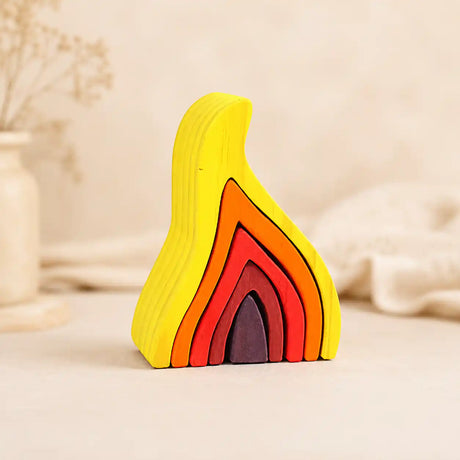
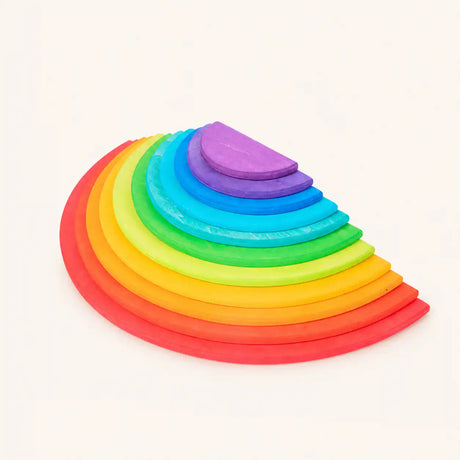
This is also the practical case for buying fewer, better-made toys from sources you can vet, rather than the cheapest lookalike from an unfamiliar marketplace seller. A well-built wooden toy with no batteries, no loose magnets, and no detachable trim simply removes the three hazards that generate most of these alerts. It's the quiet advantage of open-ended, screen-free design: fewer moving parts means fewer ways to fail.
“The busy boards violate the mandatory safety standard for toys because magnets can detach, posing a deadly ingestion hazard.” — U.S. Consumer Product Safety Commission
The bottom line
Recalls are a reminder, not a reason to panic. Check the CPSC recall list before big purchases, note where a toy was bought, and favor toys whose construction gives a toddler nothing small, sharp, magnetic, or battery-powered to pull free. The safest developmental toy is usually the simplest one — and that's a standard worth keeping on the shelf.