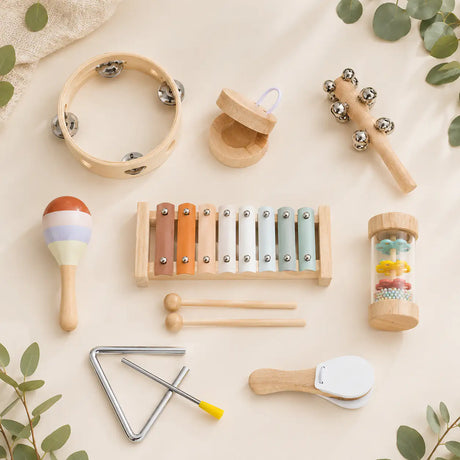
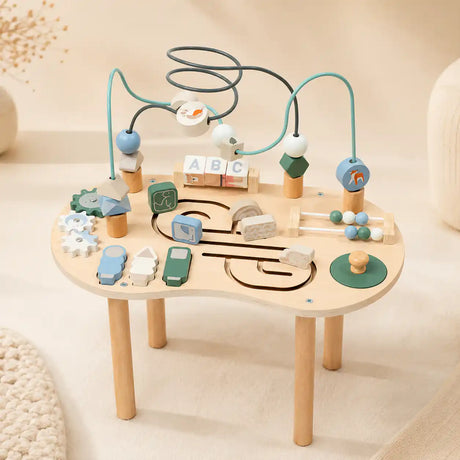
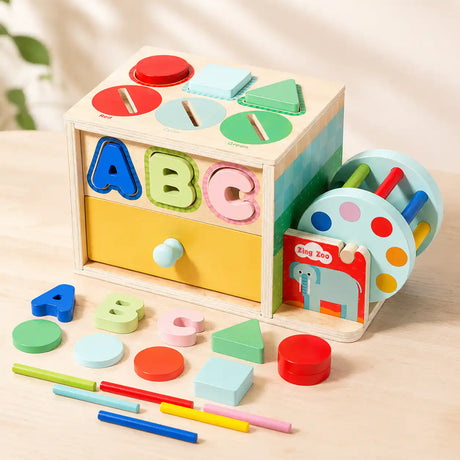
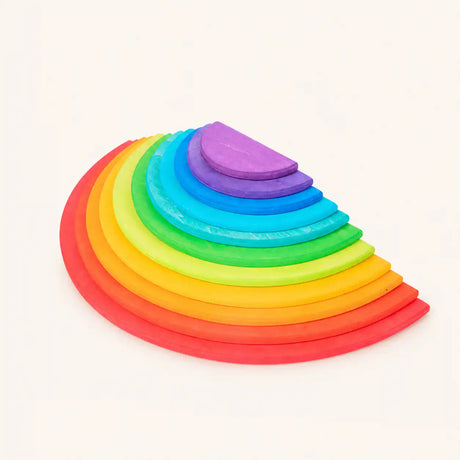
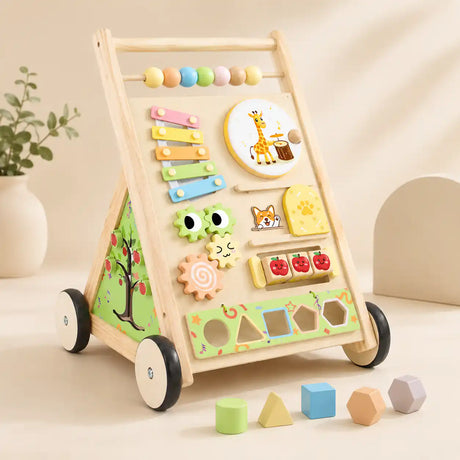
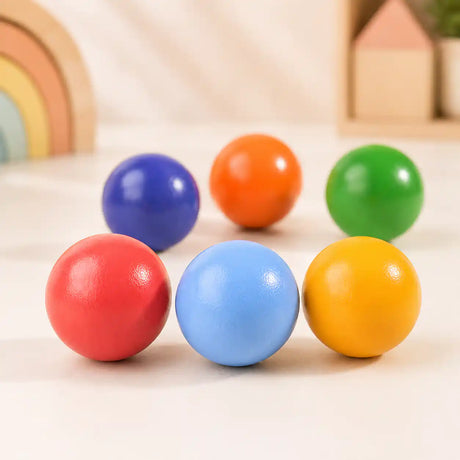
If your social feeds are full of beautiful wooden "Montessori" toys right now, you're not imagining it — and neither are federal regulators. Over the past several months the U.S. Consumer Product Safety Commission (CPSC) has issued a run of warnings and recalls on toys sold under the Montessori and "wooden learning" banner, several of them aimed at children under three. The hazards are exactly the ones the label is supposed to protect against: choking on small parts, and swallowing high-powered magnets.
For parents who chose wooden, open-ended toys specifically to avoid junk, that's an unsettling turn. The good news is that the recalls follow a clear pattern, and once you can see it, safe toys aren't hard to identify.
What happened
In a warning dated December 5, 2025, the CPSC urged consumers to "immediately stop using" TooyBing Wooden Toys — a set marketed as a "Montessori Wooden Toy" and "Fun Bead Sequencing Games." According to the agency, the toys are intended for children under three but violate the federal small parts ban because the 25 wooden beads are small parts that pose "a deadly choking hazard." The sets sold on Shein.com for about $20 between July and September 2025. The CPSC noted that the firm behind them, Equiature LLC of Denver (doing business as "01451"), "has not agreed to recall these toys or offer a remedy to consumers" — meaning there's no refund, just a directive to throw them away.
Magnets are the other recurring danger. On January 8, 2026, the CPSC announced a recall of the Lterfear Multifunction Pounding Game, a wooden whack-a-mole/fishing/xylophone toy sold on Amazon for $24 to $28. The problem: it "contain[s] high-powered magnets, which can detach, posing an ingestion hazard to children." The agency's related listings from the same stretch include Montessori Busy Board Toys recalled for the same magnet hazard, plus wooden and plush toys pulled for detachable small parts.
The CPSC's language on magnets is blunt for a reason. "When high-powered magnets are swallowed, the ingested magnets can attract each other, or other metal objects, and become lodged in the digestive system," the recall notice states. "This can result in perforations, twisting, and/or blockage of the intestines, blood poisoning, and death."
Why it matters
"Montessori" is not a regulated or trademarked safety term. Any seller can print it on a box. Most of the recalled items in this wave share a profile: low-cost, imported, sold through third-party marketplace or fast-fashion storefronts, often with little or no manufacturer marking. In the Lterfear recall, the CPSC noted plainly, "There are no markings on the product."
That matters because the aesthetic parents trust — natural wood, muted colors, "learning" language — has been widely copied by sellers who skip the testing that makes a toy safe. The look is easy to fake. The compliance behind it is not.
What this means for parents choosing wooden toys
The fix isn't to abandon wooden, open-ended play — it's to buy it from makers who can prove their toys are tested. A few practical checks:
Look for CPC certification. A Children's Product Certificate means the toy has been tested by an accredited lab against the federal safety standards for toys, including the small parts and magnet rules the recalled products failed. It's the paperwork behind the promise. (JuniSprouts, for example, holds toys to CPC-certified standards — the same benchmark the recalled products didn't meet.)
Match the toy to your child's age, honestly. The small parts ban exists because kids under three put things in their mouths. If a bead, peg, or magnet fits through a toilet-paper tube, it's a choking risk for that age group, no matter how educational the packaging looks.
Be wary of unbranded marketplace listings. If you can't identify the manufacturer, find a CPC certificate, or reach anyone for a recall, that's the profile regulators keep flagging.
Check before you toss or gift. The CPSC keeps a running recall list at CPSC.gov, and its guidance on recalled toys is the same every time: stop using them immediately, and don't resell or give them away.
"The Montessori wooden bead toys are intended for children under three years of age and violate the small parts ban because the beads are small parts, posing a deadly choking hazard." — U.S. Consumer Product Safety Commission, December 2025 warning
The bottom line
The recalls aren't an indictment of wooden toys — they're an indictment of a label being used without the testing behind it. Parents don't need to give up the simple, screen-free play they were reaching for. They just need to buy it from someone who can show their work. In a market where anyone can print "Montessori" on a box, a real safety certificate is the difference that counts.
This article is for general information and isn't safety or medical advice. Always check the current recall status of any toy at CPSC.gov.