The American Academy of Pediatrics (AAP) has released updated guidance that steps away from firm daily screen-time caps and toward a more nuanced focus on the quality of what children watch and how they use it. For parents of toddlers, one line survives the rewrite unchanged — and it's the one that matters most for the youngest kids.
What happened
The AAP's new policy on digital ecosystems for children and adolescents shifts the emphasis away from rigid time limits toward content quality, context, and how media fits into a child's overall well-being. The report still warns that commercialized, algorithm-driven content with addictive design features can carry negative consequences, while child-centered, age-appropriate content that encourages critical thinking and social connection can offer benefits.
Crucially, the update keeps a firm line for the youngest children. As Florida State University's coverage of the guidance notes, children 18 months and younger are still advised to limit screen use because of "immature cognitive processing." Leah Singh, director of FSU's Children's Learning Clinic, called the changes "a welcomed and appropriate adjustment" that "align much more closely with advances in research," while stressing that screens "should not crowd out sleep, active play, creativity or family connection." She added that the update "acknowledges that screen time alone does not adequately address all the factors that help children develop a healthy relationship with media."
Why it matters
It would be easy to read "the AAP loosened the rules" as permission to hand a toddler a tablet. That's a misreading. If anything, the update sharpens its warnings rather than softening them: low-quality, algorithm-driven content is still flagged as a risk to sleep, relationships, and emotional regulation "regardless of the amount of time spent on a device." The shift is about older kids and the reality that not all screen time is equal — a video call with grandparents is not a doomscroll. For babies and toddlers, the guidance still points toward less screen time and more of everything else. And that "everything else" — hands-on play, caregiver interaction, unstructured exploration — is exactly what builds early language, attention, and motor skills during the window when the brain is most plastic.
What this means for parents of toddlers
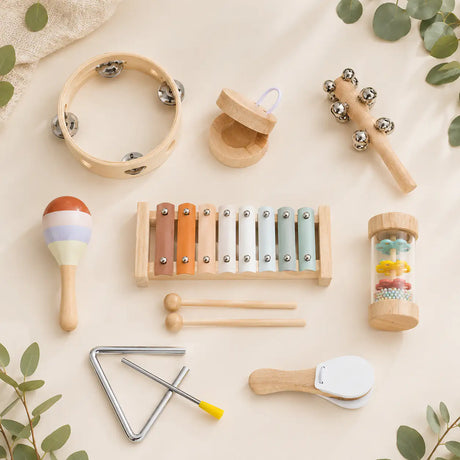
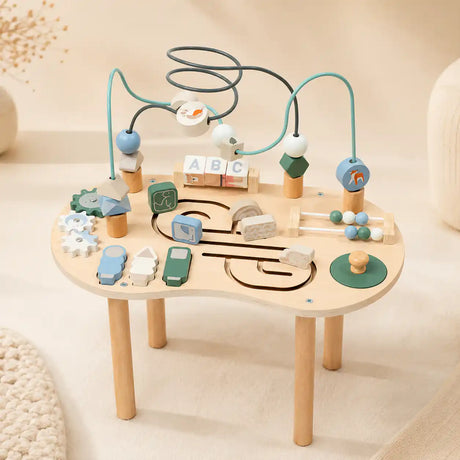
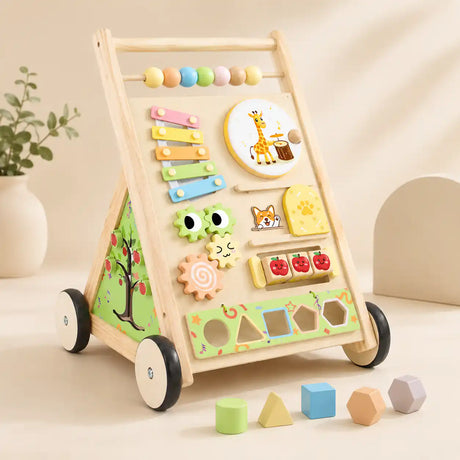
The practical translation of the new guidance is not "count the minutes" but "protect the alternatives." Singh's advice is concrete: build simple, predictable routines like screen-free meals, device-free bedrooms, and consistent play times. She also suggests watching for signs that media is edging those alternatives out — irritability, disrupted sleep, or reduced interest in play and social interaction. The easiest way to make those routines stick with a young child is to have something genuinely absorbing within arm's reach when the screen goes off. Open-ended, hands-on toys — a stacker, a set of wooden blocks, a shape sorter — do the quiet work here, because they invite the kind of self-directed concentration that a passive video never will. The goal isn't a screen-free household by willpower; it's a room where the most interesting thing to do doesn't have a battery.
"Screens should not crowd out sleep, active play, creativity or family connection." — Leah Singh, director, FSU Children's Learning Clinic
The bottom line
The headline is that pediatricians are done treating screen time as a stopwatch problem. The subtext, for families with toddlers, is that hands-on play matters more than ever — not as a punishment for screens, but as the richer thing screens were quietly displacing. Set up the alternatives, and the limits mostly take care of themselves.
This piece touches on child development and media use. It's general information, not medical advice; the AAP's family media plan and your pediatrician are the right places to turn for guidance specific to your child.
Sources & further reading
- American Academy of Pediatrics, Pediatrics — Digital Ecosystems, Children, and Adolescents: Policy Statement
- Florida State University News — FSU psychologist offers guidance on new screen time recommendations for children