
Toy safety
Materials & Finishes
A plain-language guide to the woods, boards and finishes you'll see in our wooden toys, what each one means, and why natural wood varies from toy to toy.
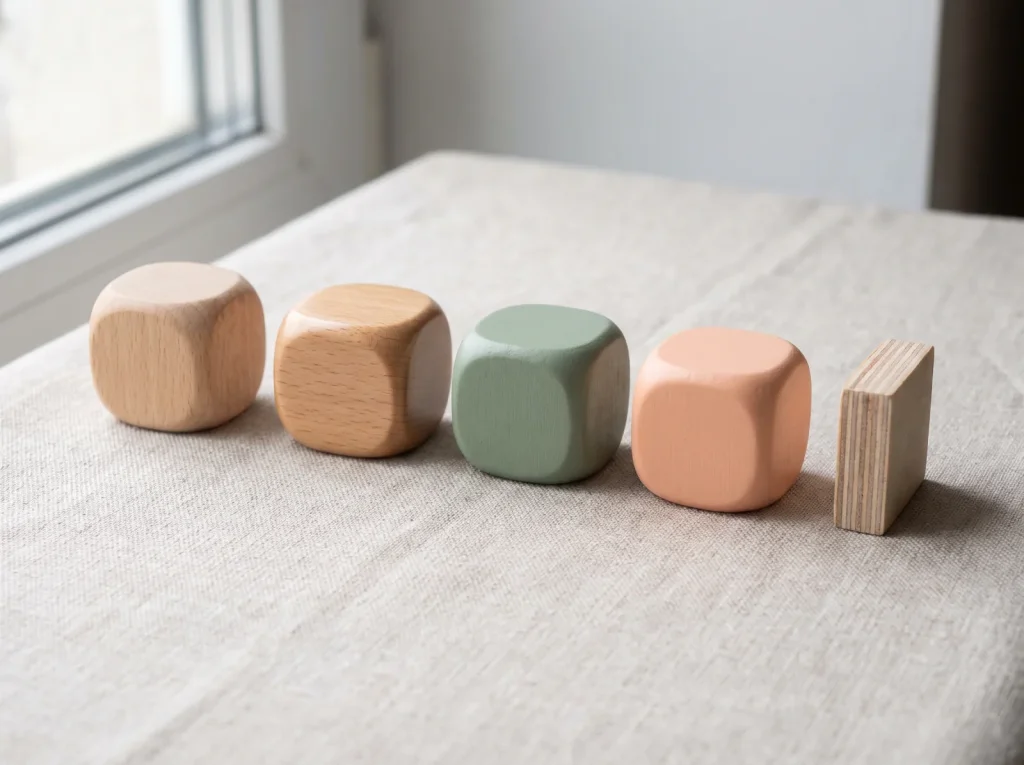
On this page6 sections
- Solid woodsHardwoods and softwoods, like beech and pine
- Wood boardsPlywood and MDF for flat pieces
- FinishesNatural, clear-coated, stained or painted
- Listed per toySee Details & care on each toy page
Where to find a toy’s materials
Each toy’s page lists what it’s made of under Details & care, along with its size, what’s included and any care notes. If you need more detail than the listing gives, email us at support@junisprouts.com and we’ll find out.
This guide explains the materials and finishes you’ll see most often, so the words on a listing mean something.
Woods and boards you’ll see
| Material | What it is | Why toy makers use it |
|---|---|---|
| Beech | A dense, pale hardwood with a fine, even grain. | Smooth to the touch, sturdy and slow to dent. A classic choice for stackers and blocks. |
| Pine | A lighter softwood with a visible, warm grain. | Light enough for little hands. It can dent more easily than hardwood. |
| Rubberwood | A hardwood from rubber trees, harvested once they stop producing latex. | Even, pale and durable, so it’s common in toys and children’s furniture. |
| Schima | A light, fine-grained hardwood (also called schima superba). | Machines smoothly into rounded shapes, which is why it’s popular for wooden toys. |
| Plywood | Thin sheets of wood, often birch, layered and bonded together. | Strong and stable for flat pieces like puzzle boards, trays and panels. |
| MDF | Medium-density fiberboard, made from fine wood fibers pressed with a binder. | Very smooth and even, so it takes paint well. Often used for puzzle bases and boards. |
Finishes you’ll see
A finish protects the wood and adds color. Many toys combine more than one, such as a natural wooden body with painted details.
- Natural or unfinished. Bare, sanded wood. It shows the grain and can feel slightly dry. It’s the most likely to mark or absorb water, so wipe it dry quickly.
- Clear coat. A transparent lacquer or varnish that seals the surface while letting the grain show. Easy to wipe clean.
- Stain or dye. Color that soaks into the wood, so the grain still shows through.
- Paint. A solid, opaque color layer. Light chips at edges can happen with years of play; flaking paint is a reason to take a toy out of play.
- Wax or oil. A soft, low-sheen finish found on some natural toys. It can be refreshed over time.
Paint and other surface coatings on toys sold in the U.S. must meet federal lead limits, and the federal toy safety standard also limits certain heavy elements in coatings. When a toy has a Children’s Product Certificate, it lists the rules the toy was tested to. You can open it from the toy’s page or our certificate library.
Why you won’t see “non-toxic” on every listing. We only use words like non-toxic, BPA-free, water-based or eco-friendly when the maker’s documentation supports them for that specific toy. We’d rather say less than say something we can’t back up.
Other materials you may find
Some toys pair wood with other materials so they work, roll or make sound:
- Metal, such as screws, axles, bells, hinges and xylophone keys.
- Magnets, sealed inside wooden pieces. Toys with magnets are always listed for ages 3+.
- Cord and rope on pull-along and lacing toys.
- Fabric and felt on some pretend play pieces.
- Plastic, acrylic or silicone parts, such as some wheels, mirrors or grips.
If a toy uses any of these, its listing says so under Details & care.
Why every wooden toy looks a little different
Wood is a natural material, so no two toys are exactly alike. You may notice:
- Grain lines, small knots or color shifts across a piece
- Slight differences in tone between pieces in the same set
- Painted colors that look a little different on light and dark grain
These are part of what makes wooden toys feel special, not defects. What isn’t normal: splinters, cracks, sharp edges, loose parts or flaking paint. If you see any of these on a new toy, take it out of play and email us a photo. Our return & refund policy explains how we make it right.
Material questions
Are your toys made of solid wood?
Many are. Some toys use plywood or MDF for flat parts like puzzle boards and bases, because these boards stay flat and stable. Each toy’s Details & care section lists its materials.
Is the paint safe if my toddler mouths a toy?
Paint and coatings on toys sold in the U.S. must meet federal limits for lead and certain heavy elements, and a toy’s certificate lists the rules it was tested to. Toys still aren’t made to be chewed, so supervise play, follow the age on each toy, and take a toy out of play if its paint starts to chip or flake.
Why does my new wooden toy have a smell?
New wooden toys can have a light wood or finish scent from being sealed in packaging. Unwrap the toy and let it air out in a well-ventilated room for a day or two.
Can wooden toys get wet?
A quick wipe with a damp cloth is fine, but wooden toys shouldn’t be soaked or left wet. Water can swell the wood, lift paint and loosen joints. See our toy care & cleaning guide.
Still have a question?
Write to us about a toy, an order or a gift. A real person on our small team will reply, usually within 1–2 business days.
- support@junisprouts.com
- Monday–Friday, 9 AM–5 PM Central
- Humble, Texas