
Learn
Montessori Play & Development Guides
Play is how little minds make sense of the world. Explore our guides, activity ideas and age-by-age advice to support your child’s learning and curiosity every day.
Start here
Our guides for parents
Plain-language guides to the questions parents ask us most. Start with whichever one is on your mind.
Montessori Basics
What Montessori really means at home, and how to choose toys that fit.Read the guide
Play by Age
What children are working on at each stage, from 6 months to 5 years.Read the guide
Skills & Development
Fine motor, sorting, early math and language: what each skill means.Read the guide
Toy Safety & Materials
Age ratings, small parts, magnets and finishes, in plain language.Read the guide
Montessori vs Waldorf Toys
How the two approaches differ, and how to choose for your child.Read the guide
Play by age & stage
Find play ideas for their age
Pick your child’s age to see what they’re often working on, simple activity ideas, toys that suit the stage and articles worth reading. Every child develops at their own pace, so treat these as a guide rather than a checklist.
0–12 months
Discovering the world
The first year is all about sensory exploration, bonding, and big beginnings: reaching, mouthing, and learning that actions make things happen.
Milestones
- Focuses on faces and high-contrast patterns
- Reaches, grasps, and mouths objects
- Develops head control and rolling
- Responds to sounds and voices
- Begins to grasp cause and effect
Activity ideas
- Tummy time with a mirror or contrast cards
- Sensory play with different textures
- Sing simple songs and read together
- Gentle rolling and reaching games
- Shake, rattle, and explore
Trusted resources: CDC: Milestones by 9 Months · AAP HealthyChildren: Baby · Zero to Three: Age-Based Tips
1 year
On the move
Newly upright and mobile, one-year-olds love to carry, fill, empty, and figure out how things fit: the earliest problem-solving.
Milestones
- Pulls up, cruises, and takes first steps
- Fills containers and empties them again
- Puts objects in and takes them out
- Points, waves, and imitates actions
- Says first words, understands more
Activity ideas
- Filling and dumping games with baskets
- Simple posting and dropping toys
- Push-along walking play
- Naming objects as you play
- Big stacking rings and nesting cups
Trusted resources: CDC: Milestones by 1 Year · Zero to Three: 12–24 Months · AAP HealthyChildren: Toddler
2 years
Imitating and pretending
Two-year-olds want to do what they see you doing: cooking, feeding, loading, and driving — and can follow short sequences of steps.
Milestones
- Runs, climbs, and kicks a ball
- Copies adults and older children
- Follows two-step instructions
- Sorts by shape and color
- Uses short two- to three-word phrases
Activity ideas
- Pretend cooking and feeding toys
- Simple shape sorting and matching
- Two- and three-piece knob puzzles
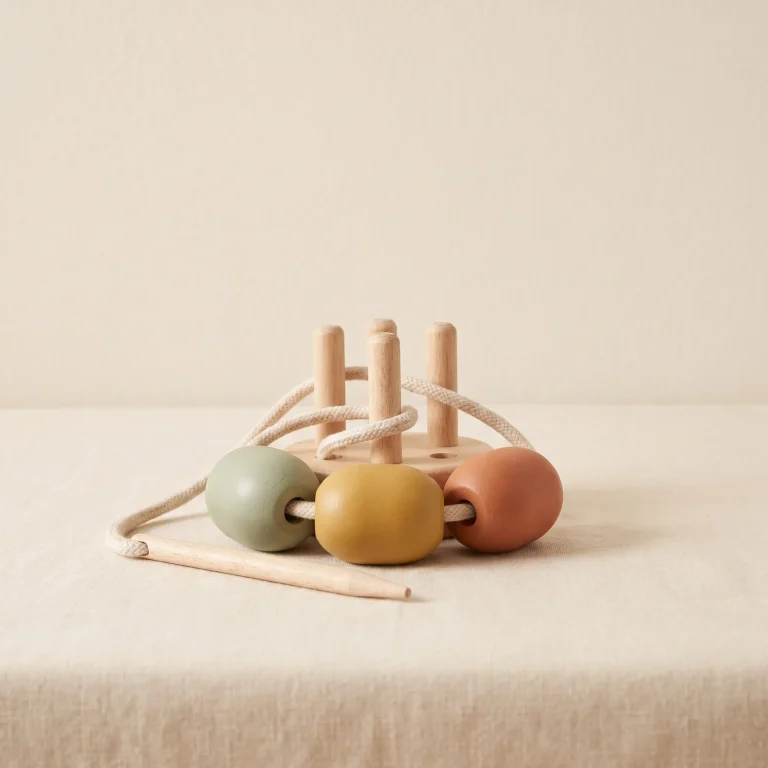
- Threading large wooden beads
- Naming and sorting by color
Trusted resources: CDC: Milestones by 2 Years · Zero to Three: 24–36 Months · AAP HealthyChildren: Toddler
3 years
Pretend play and early math
Pretend play gets inventive and early math thinking appears: counting, patterns, quantity, and a real interest in letters and numbers.
Milestones
- Builds elaborate pretend stories
- Counts a few objects one by one
- Recognizes and extends simple patterns
- Completes more complex puzzles
- Shows interest in letters and numbers
Activity ideas
- Open-ended building projects
- Counting and pattern games
- Storytelling with figures and animals
- Matching letters and numbers
- Sorting and grouping collections
Trusted resources: CDC: Milestones by 3 Years · AAP HealthyChildren: Preschool
4+ years
Rules, logic and building
Four- and five-year-olds plan ahead, follow rules, and will happily return to the same project across several days.
Milestones
- Holds a goal in mind and plans ahead
- Plays simple rule-based games
- Builds and engineers with more parts
- Sorts, sequences, and reasons
- Returns to projects over several days
Activity ideas
- Simple memory and matching games
- STEM building and engineering play
- Balance and coordination challenges
- Multi-step building projects
- Early logic and sequencing games
Trusted resources: CDC: Milestones by 4 Years · AAP HealthyChildren: Preschool
Featured guide
Why play is the foundation of learning
See how everyday play supports the fine motor, language and problem-solving skills children carry into school and life, and why repetition is a sign that learning is happening.
Read the full guideFrom the blog
Latest articles
 News
Toy-Related Injuries in Kids Under 5: What the Latest CPSC Data Means for Holiday Gifts
 Toy Spotlight
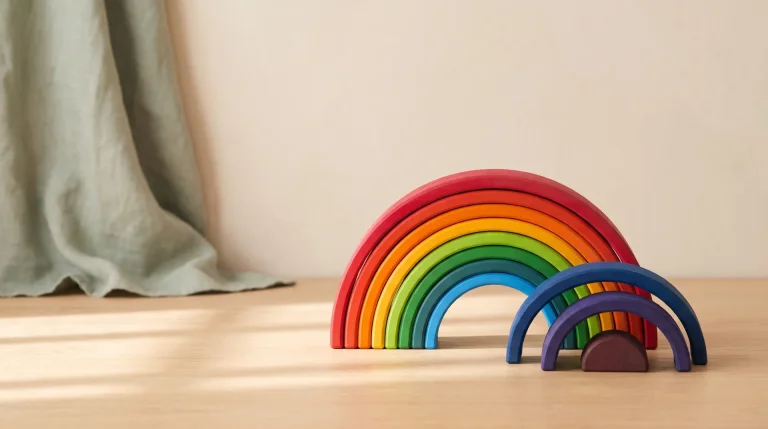
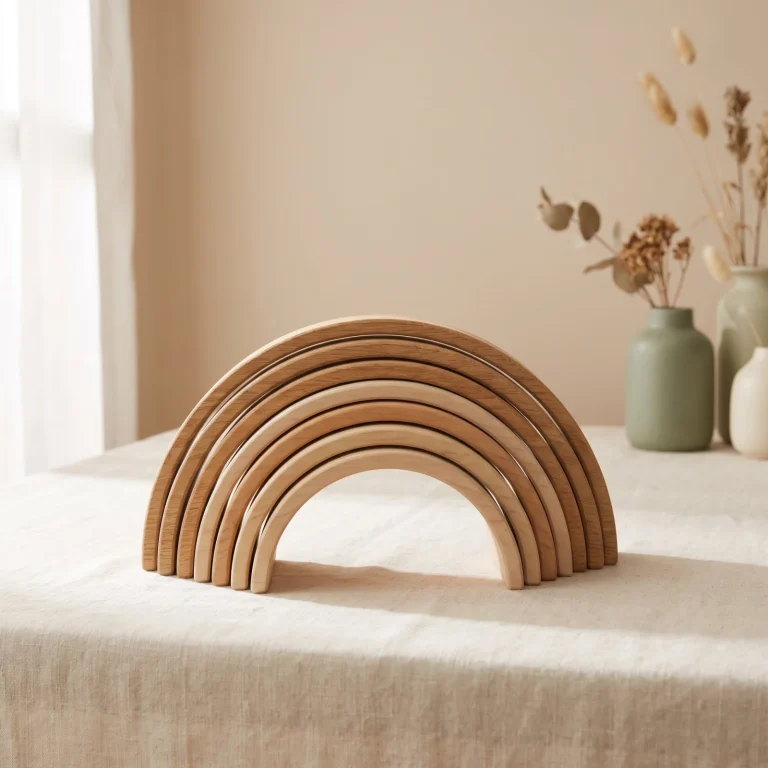
Wooden Rainbow Stacker: What It Teaches, What Age, and 12 Ways to Play
 Parenting Tips
Toddler Won’t Share? What’s Normal by Age and What to Do Instead
 Gift Guides
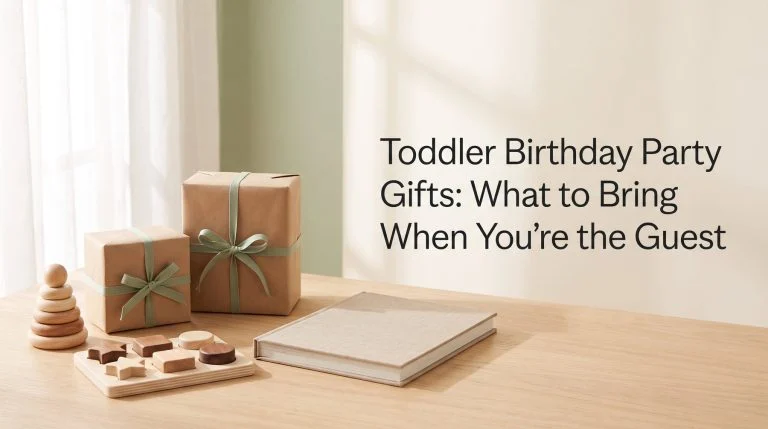
Toddler Birthday Party Gifts: What to Bring When You’re the Guest
Shop by learning goal
Toys for the skills they’re building
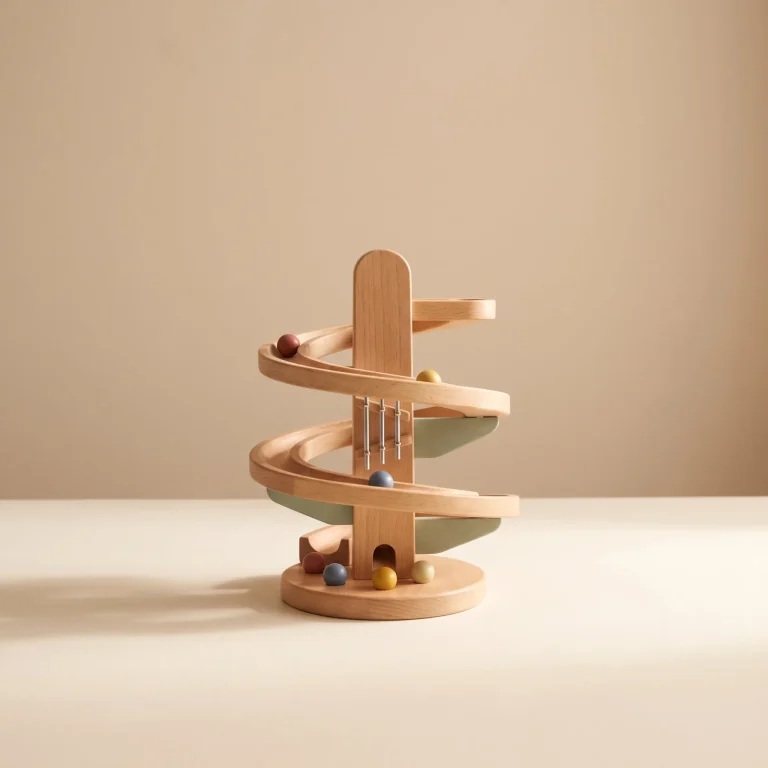
Find toys that support what your child is working on right now.

Free printable
Montessori at home: a free printable guide
Fun, simple activities to support everyday learning at home. Download it, print it and keep it near the toy shelf.
Questions
Frequently asked questions
What is Montessori-inspired play?
Montessori-inspired play is open-ended, child-led play using simple materials. Rather than lighting up or doing the work for a child, these toys invite little ones to explore, repeat and problem-solve at their own pace, quietly supporting focus, coordination and independence. Our Montessori Basics guide explains it in plain language.
How do I choose the right toys for my child?
Start with your child’s current stage and interests, then look for toys that offer a gentle challenge: not too easy, not too hard. Open-ended toys like stackers and sorters grow with your child over time. Our Play by Age guide walks through what children are typically working on at each stage.
What age are your toys best for?
Most of our toys are chosen for toddlers and preschoolers, roughly ages 1 to 5, with age guidance noted on each toy page. Age ratings are a helpful starting point rather than a strict rule, and you know your child best. Please review each listing’s details and follow any supervision notes.
How can I support learning at home?
You don’t need a dedicated playroom. A small, tidy selection of toys on a low shelf, rotated now and then, keeps play fresh and focused. Following your child’s lead and letting them repeat activities does more than any single toy. Our Skills & Development guide shares simple, everyday ideas.
How do I know a toy is right for my child’s safety?
Each toy page lists its age grading, what’s included and any supervision notes. Where a toy has a Children’s Product Certificate (CPC), it’s linked on that toy’s page. Please review the details, follow the age guidance and supervise young children at play, especially where small parts are involved. Our Toy Safety & Materials guide explains what age ratings and certificates mean.
Where can I find more activity ideas?
Our Parenting Tips articles are full of hands-on activity ideas, and the free printable above offers simple ways to learn and play at home. New guides are added regularly.