
Toy-Related Injuries in Kids Under 5: What the Latest CPSC Data Means for Holiday Gifts
Children 4 and under made up about a third of the 267,100 toy-related ER visits in CPSC’s latest report and had the highest injury rate of any age group it tracks. Here’s what the data shows, what’s new this holiday season, and 7 checks before you wrap a gift.

By Chloe M.Early Learning Writer
10 min read

In this article8 sections
Children under 5 have the highest rate of toy-related emergency room visits of any age group in the U.S. Consumer Product Safety Commission’s latest toy injury report. CPSC’s Toy-Related Deaths and Injuries, Calendar Year 2024, released in April 2026, estimates 91,600 ER-treated toy injuries among children 4 and younger. That is about a third of the 267,100 toy-related ER visits that year, and a rate of 497 per 100,000 young children. For this age group, swallowing an object and internal injuries were the second and third most common diagnoses, right after cuts.
None of this means toys are unsafe as a category. Legitimate toys sold in the U.S. must meet more than 100 federal safety standards, and about 95% of toy-related ER patients are treated and released. What the numbers show is a clear, predictable pattern for babies, toddlers and preschoolers: small things that end up in mouths, falls and bumps to the head and face, and a few rare but serious hazards that are easy to plan around once you know them.
The timing matters, too. November is Toy Safety Awareness Month, the busiest gift-buying weeks of the year are here, and a Toy Association survey released on November 2, 2026 found that 35% of parents still believe age recommendations on toys are merely suggestions. Among Baby Boomers, many of whom are now grandparents doing the gift shopping, that figure rises to 49%. Below, we break down what the latest toy injury data actually says, what’s new this season, and the seven checks that matter most before you wrap a gift for a child under 5.
What CPSC’s latest toy injury report found
Each year, CPSC estimates toy-related injuries using the National Electronic Injury Surveillance System (NEISS), a nationally representative sample of hospital emergency departments. The newest edition covers calendar year 2024 and was published on April 20, 2026. Here are the headline numbers by age group.
| Age group | Estimated ER-treated toy injuries (2024) | Share of all toy injuries | Injuries per 100,000 people |
|---|---|---|---|
| All ages | 267,100 | 100% | 79 |
| 14 and younger | 180,900 | 68% | 306 |
| 12 and younger | 175,400 | 66% | 346 |
| 4 and younger | 91,600 | 34% | 497 |
A few other findings stand out for families with young children:
- Most injuries are treated and released. About 95% of patients went home from the ER, and roughly 3% were admitted or transferred to another hospital.
- The head and face take the brunt. Forty-five percent of injuries were to the head and face, the most commonly injured area in every age group.
- Cuts lead the diagnoses. Lacerations were the most common diagnosis overall, at 19% of injuries. For children 4 and under, ingestion and internal injury ranked second and third.
- Scooters dominate overall, but not for toddlers. Nonmotorized scooters were the largest single category across all ages (61,800 injuries, or 23%), yet they made up just 6% of injuries in children 4 and under. For the youngest group, the top category was “toys, not specified,” at about 30,000 injuries.
- Water beads still show up. About 6,000 toy-related injuries in 2024 involved water beads, roughly 37% of the “toys, not elsewhere classified” category.
One caveat is worth knowing. CPSC revised the NEISS hospital sample in 2024, and the report notes that the linear trend analyses it published in past years aren’t currently available. In other words, treat 2024 as a reliable snapshot rather than proof that toy injuries are rising or falling. For context, the estimated injury rate for children 4 and under was 487 per 100,000 in 2017 and 497 per 100,000 in 2024.
Why toddlers and preschoolers top the list
The under-5 numbers make sense when you look at how young children play. Babies and toddlers explore with their mouths. They are still mastering walking, climbing and balance, so tumbles are part of everyday life. And they can’t read a warning label, judge whether a piece is too small, or tell the difference between a toy and a toy-like decoration.
That is why the injury mix looks different for the youngest children. For older kids, bruises, scrapes and fractures follow cuts, which fits with scooters and active outdoor play. For children 4 and under, swallowing something and internal injuries come next. That second pattern is the one most closely tied to what’s inside the gift box: pieces small enough to fit in a mouth, button batteries, loose magnets and water beads.
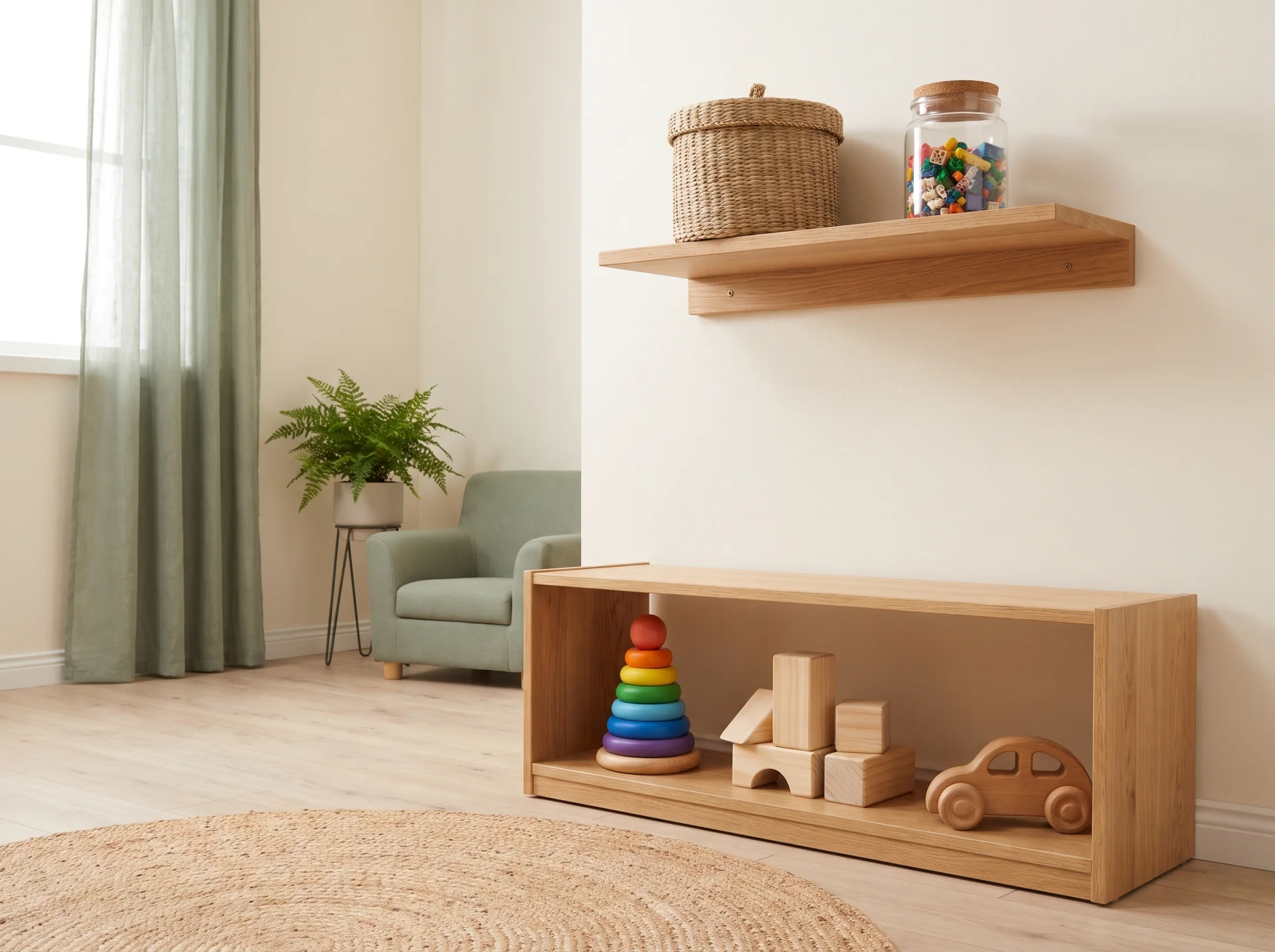
The encouraging part is that these are well-understood hazards. Federal rules ban small parts in toys intended for children under 3, require choking-hazard warnings on certain toys with small parts made for older children, and set standards that cover magnets, batteries and chemical content. Problems tend to appear when a toy ends up with a child younger than it was designed for, when an older sibling’s set is within reach, or when a product comes from a seller that never had it tested.
What the 2024 toy-related deaths show
Deaths linked to toys are rare, and the report notes that its counts are minimums because reporting is still coming in. CPSC recorded six toy-related deaths among children 14 and under in 2024. Each one is a family’s loss, and each points to a hazard adults can plan around:
- Three drownings involved flotation toys, in children aged 3, 4 and 4. Pool floats and inflatable rings are toys, not safety devices.
- A 6-month-old choked on a small toy shaped like a mushroom.
- An 18-month-old died after the bib he was wearing became entangled in the handle of a riding horse toy.
- An 11-year-old riding a nonmotorized scooter was struck by a truck.
Across 2022 to 2024, CPSC counted 54 toy-related deaths among children 14 and under, most often involving flotation toys, nonmotorized scooters and bouncy balls. The practical takeaways are simple: keep small toys and small balls away from babies and toddlers, take off bibs, necklaces and anything with a cord before active or ride-on play, and treat all water play as eyes-on, within-reach supervision.
What’s new this holiday season
Many parents still see age labels as optional
The Toy Association’s 2026 Toy Safety Awareness Month survey of 1,000 U.S. parents, conducted by Wakefield Research, found that 35% believe toy age recommendations are merely suggestions, and 49% of Baby Boomers feel the same. Age grading is safety guidance, not a measure of how clever a child is. A 3+ label in particular usually signals small parts that could pose a choking hazard for younger children.
Knockoffs are cheaper for a reason
In the same survey, 87% of parents said a knockoff’s lower price isn’t worth the potential safety risk. The Association’s release also notes that 84% of parents believe knockoff squishy toys are safe to play with. Counterfeit toys often skip federal testing and can break into small parts or contain banned chemicals. The red flags are worth memorizing: very few or negative reviews, misspellings, poorly edited photos, and missing age or safety information.
“Wooden” and “Montessori” describe a style, not a safety test
In August 2026, CPSC announced the recall of about 21,758 TooyBing Wooden Bead Stacking Toys sold on Amazon from July 2023 through December 2025 for around $10. The packaging described it as a “Montessori Wooden Toy.” Because the toy was intended for children under 3, its small wooden beads violated the federal small parts ban. No injuries were reported, but the lesson applies to every listing this season. Natural materials and Montessori language describe a look and a philosophy. They don’t tell you whether a toy was tested for the age it’s sold for.
Not everything that looks like a toy is one
Party favors, home décor, desk gadgets, costume pieces and small electronics don’t have to meet toy safety standards, and some contain button batteries, water beads or high-powered magnets. If something is headed into a toddler’s stocking, make sure it was made and labeled as a toy for that age.
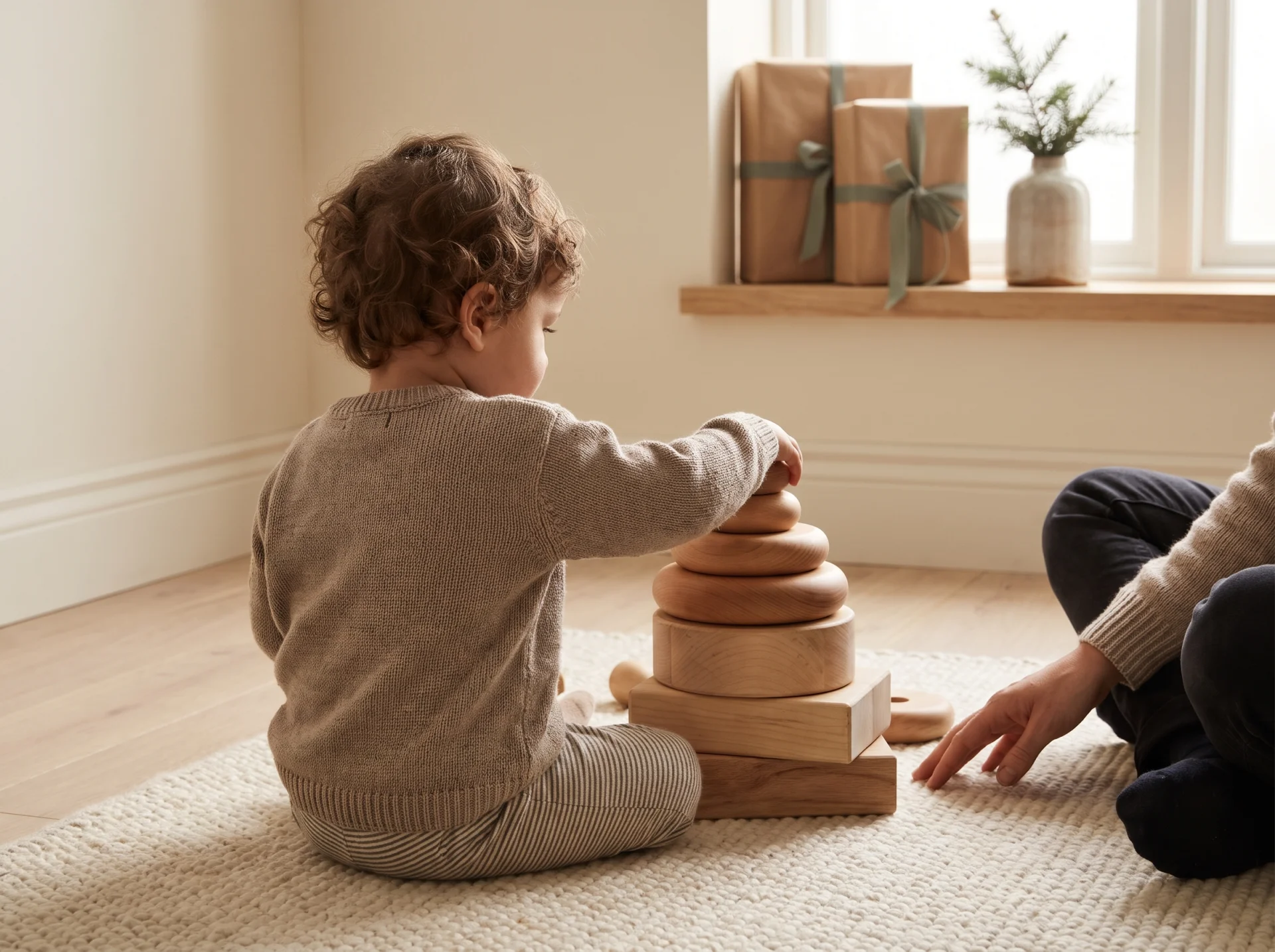
7 checks before you wrap a gift for a child under 5
None of these takes more than a minute, and together they cover the patterns in CPSC’s data. They are worth sharing with grandparents and anyone else on the gift list.
- Read the age grade, and treat 3+ as a safety line. The age on the box reflects the maker’s safety and developmental assessment. If a toy says 3+ and the child is 2, it’s a gift to save for later. Our age-grading guide explains how we label every toy we sell.
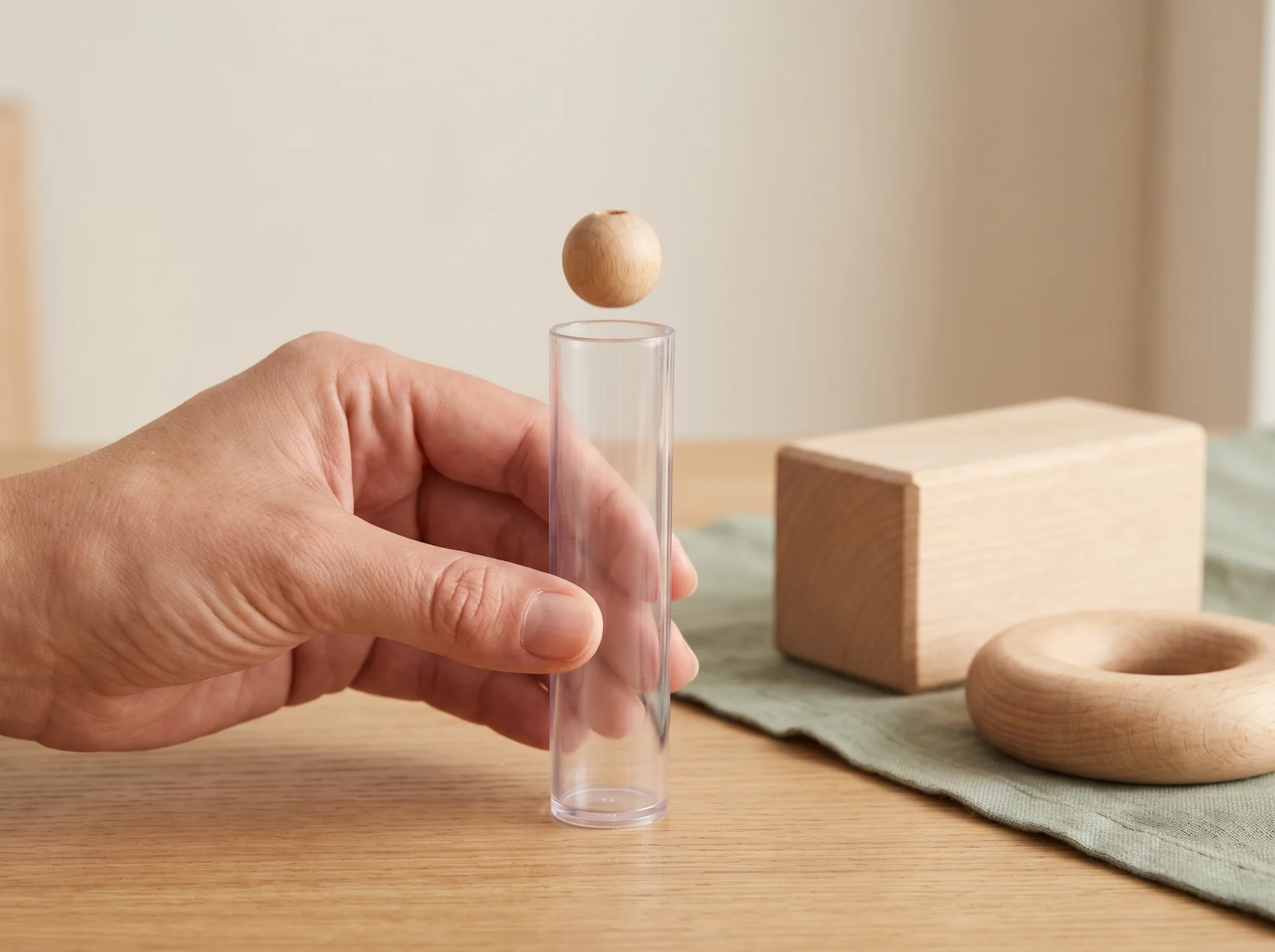
- Do the small-parts check. The federal test uses a cylinder about 1¼ inches wide, sized to approximate the throat of a child under 3. At home, the American Academy of Pediatrics suggests a quick stand-in: if a toy or part fits through a toilet paper roll, it’s too small for children under 3. Check pieces that could come loose, too, such as wheels, eyes and beads.
- Look for button batteries and loose magnets. Battery compartments should close with a screw, and magnets should be fully enclosed in sturdy pieces. If you think a child has swallowed a battery or magnet, get medical care right away.
- Buy from sellers you can trust, and look for the CPC. Toys made for children 12 and under need a Children’s Product Certificate based on testing by a CPSC-accepted third-party lab. Shops that take safety seriously make it easy to find. We publish ours on our CPC certificates page.
- Check recalls before you accept hand-me-downs. Search CPSC.gov/Recalls or Recalls.gov for anything secondhand. Reputable sellers won’t sell recalled products, but older toys can stay in circulation for years.
- Keep older siblings’ small-piece sets out of reach. Building sets, marbles, craft beads and game pieces belong in lidded containers on a high shelf, with big, chunky toys on the low shelves where little hands can reach.
- Clear the ribbons, cords and packaging. Once gifts are open, remove ribbons, tags, plastic film and twist ties, and keep cords and long strings out of play spaces for babies and toddlers.
Giving a scooter, balance bike or ride-on to an older child? Add a properly fitted helmet and pick a safe place to ride, away from driveways and streets. Scooters were behind nearly a quarter of all toy-related ER visits in 2024.
Frequently Asked Questions
How many children are injured by toys each year?
CPSC’s most recent report estimates that 267,100 toy-related injuries were treated in U.S. emergency departments in 2024, including 180,900 among children 14 and under and 91,600 among children 4 and under. The report also recorded at least six toy-related deaths among children 14 and under that year.
Which age group has the most toy-related injuries?
Children 4 and younger had the highest injury rate in CPSC’s report: 497 ER-treated toy injuries per 100,000 children in 2024, compared with 306 per 100,000 for children 14 and under. They accounted for about 34% of all toy-related ER visits.
What are the most common toy injuries in toddlers?
Across all ages, lacerations are the most common diagnosis and the head and face are the most frequently injured area. For children 4 and under, ingestion (swallowing an object) and internal injuries ranked second and third, which is why small parts, button batteries, magnets and water beads deserve extra attention.
Is the age on a toy just a suggestion?
No. Age grading is safety guidance based on how children of that age typically play, including whether they still put objects in their mouths. A 3+ label often means the toy has small parts that could pose a choking hazard for younger children.
Are wooden or Montessori toys automatically safer?
Not automatically. Wood and Montessori-inspired design describe materials and a play philosophy, not test results. The 2026 recall of a Montessori-labeled wooden bead stacker sold for children under 3 is a good reminder to check the age grade, the size of every piece and the seller, and to look for a Children’s Product Certificate.
How can I check whether a toy has been recalled?
Search the toy’s name and brand at CPSC.gov/Recalls or Recalls.gov. It’s especially worth doing for secondhand toys and hand-me-downs, since recalled products can stay in homes long after a recall is announced.
The bottom line
CPSC’s latest numbers aren’t a reason to worry about every gift. They’re a map. For children under 5, the risks cluster around a few things: small pieces and swallowed objects, falls that injure the head and face, and rare hazards like water, cords and loose magnets. Choose toys made for your child’s age, buy from sellers who can show their testing, and keep older kids’ small-piece sets up high.
At JuniSprouts, every toy shows a recommended starting age, and you can shop toys by age to find big, chunky pieces for first birthdays and finer-skill sets for preschoolers. Smart play for little growing minds starts with the right toy at the right time.
References
- Toy-Related Deaths and Injuries, Calendar Year 2024 — U.S. Consumer Product Safety Commission (April 2026)
- Toy Safety Awareness Month Kicks off with Holiday Guidance: Buy Smart, Play Safe — The Toy Association (November 2026)
- TooyBing Wooden Bead Stacking Toys Recalled Due to Risk of Serious Injury or Death from Choking — U.S. Consumer Product Safety Commission (August 2026)
- Small Parts for Toys and Children’s Products — U.S. Consumer Product Safety Commission
- 16 CFR 1501.4: Size requirements and test procedure (small parts cylinder) — Electronic Code of Federal Regulations
- Children’s Product Certificate (CPC) — U.S. Consumer Product Safety Commission
- American Academy of Pediatrics Top 10 Tips for Buying Safe Toys This Season — American Academy of Pediatrics (2021)
- Recalls — U.S. Consumer Product Safety Commission
Popular with parents right now
Our best-selling wooden toys, each age-graded and gift-ready.


Keep reading
More News
Water Beads and the 2026 Federal Toy Rule: What Parents Should Know
A federal safety standard for water bead toys took effect in March 2026, yet toys with oversized beads are still being recalled.…
AI Companion Toys Are Everywhere in 2026 — What Parents Should Know Before Buying One
AI companion toys are the toy industry's biggest 2026 trend — but many function like a screen even without a display. Here's…
2026 Toy Trends: Why Cozy, Screen-Free Play Is Winning for Toddlers
The 2026 toy trends favor warm, screen-free, open-ended play. Here's what The Toy Association's "Cozy Culture" theme means for toddlers—plus what the…